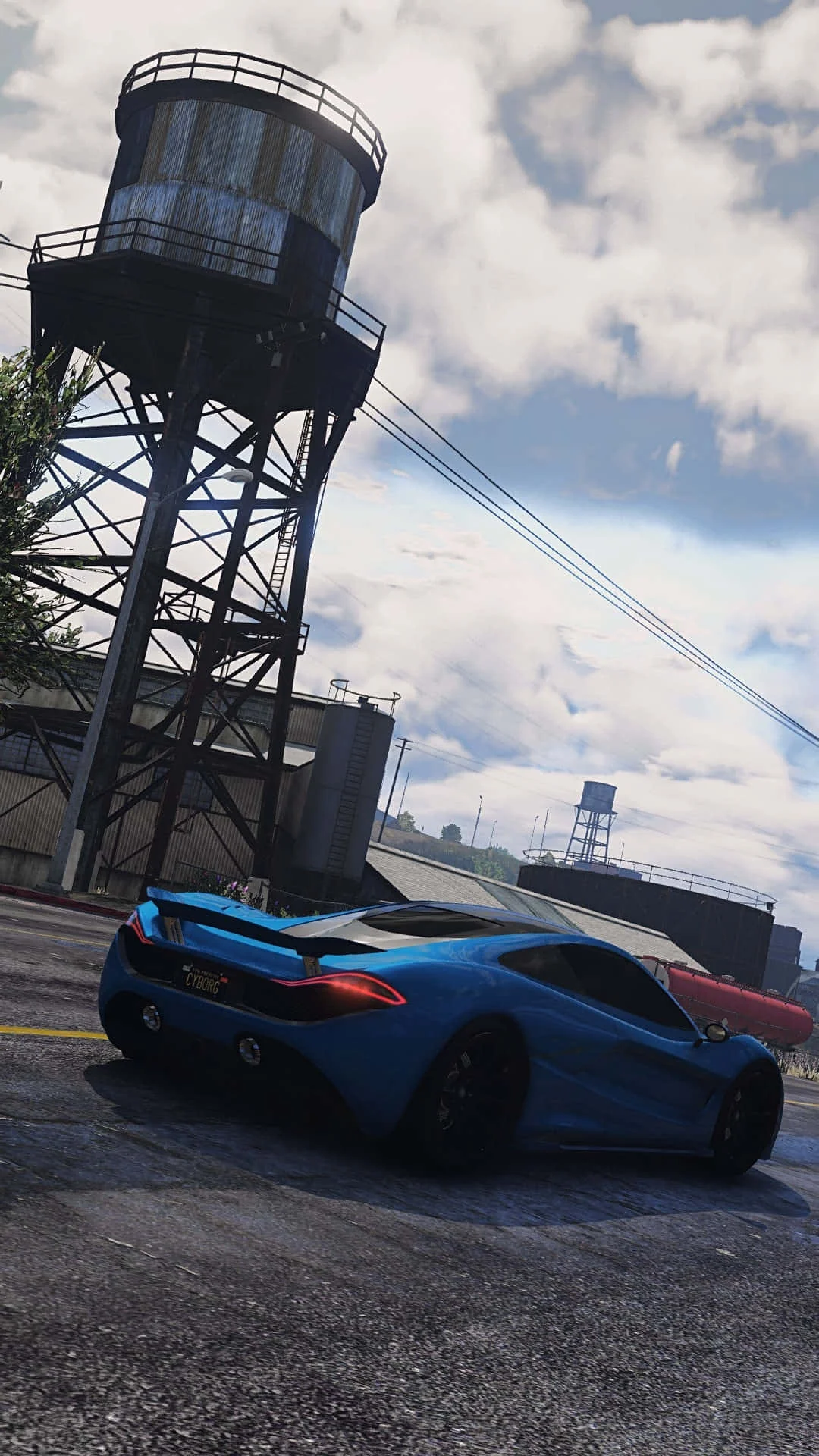
Fivem
This combination delivers exceptional performance with an average of 123 FPS, perfect for high refresh rate gaming and competitive play.
Average FPS: resolution vs quality settings
| Ultra | High | Medium | Low | |
|---|---|---|---|---|
| 4K Ultra HD | 46 | 60 | 75 | 95 |
| 1440p QHD | 84 | 108 | 135 | 171 |
| 1080p Full HD | 127 | 163 | 196 | 213 |
Cell color: green is 120+ FPS, teal is 60+, amber is 30+, red is below 30.
Fivem with Intel Core i5-9400 + NVIDIA GeForce RTX 3080 Ti, In-Depth Analysis
Fivem is a demanding multiplayer modification, and the data for the Intel Core i5-9400 + NVIDIA GeForce RTX 3080 Ti combo shows a clear pattern of CPU limitation at lower resolutions, with the GPU taking over as the primary bottleneck at 4K. The benchmark results indicate that this pairing delivers a playable experience across most settings, but the scaling between resolutions reveals where the system's strengths and weaknesses lie. At 1080p, the average frame rates are exceptionally high, ranging from 127 FPS on Ultra to 213 FPS on Low, with Medium hitting 196 FPS and High at 163 FPS. These figures suggest that the CPU is the limiting factor at this resolution, as the GPU is not being fully utilized. Moving to 1440p, the frame rates drop proportionally, with Ultra at 84 FPS, High at 108 FPS, Medium at 135 FPS, and Low at 171 FPS, which is a typical pattern for a system where the CPU is still holding back the GPU. However, at 4K, the scales tip, and the GPU becomes the clear bottleneck. Here, Ultra drops to 46 FPS, High to 60 FPS, Medium to 75 FPS, and Low to 95 FPS, showing a much steeper performance cliff that is characteristic of GPU-bound scenarios.
Resolution Scaling
The frame rate scaling from 1080p to 4K is a textbook example of how different components limit performance at different resolutions. At 1080p, the system is heavily CPU-bound. The difference between Low (213 FPS) and Ultra (127 FPS) is 86 FPS, which shows that the CPU is able to feed the GPU enough data to maintain very high frame rates, but the GPU's performance is not the deciding factor. The jump from 1080p Low to 1440p Low is a 42 FPS drop (213 to 171 FPS), which is a 19.7% reduction in performance. This is a moderate drop, suggesting that the CPU is still keeping up reasonably well, but the increased pixel count is starting to put more strain on the GPU. The drop from 1440p Low to 4K Low is a 76 FPS drop (171 to 95 FPS), a 44.4% reduction, which is a massive hit. This indicates that at 4K, the GPU's fill rate and memory bandwidth are no longer sufficient to maintain the same frame rates, and the CPU is no longer the primary bottleneck.
The pattern is consistent across all settings. For example, on High settings, the drop from 1080p to 1440p is 55 FPS (163 to 108 FPS), a 33.7% reduction. The drop from 1440p to 4K is 48 FPS (108 to 60 FPS), a 44.4% reduction. This shows that the performance penalty for moving to 4K is consistently around 44% regardless of the preset, which strongly suggests that the GPU is the limiting factor at that resolution. The data indicates that the sweet spot for this combo is at 1440p, where the frame rates are high enough to be smooth on a high-refresh-rate monitor, and the system is not as severely constrained as it is at 4K. At 1080p, the system is leaving performance on the table, as the CPU cannot push the GPU to its full potential. At 4K, the system is overburdened, and the GPU cannot maintain high frame rates on the more demanding presets.
GPU Role
The NVIDIA GeForce RTX 3080 Ti is a high-end graphics card with 12 GB of GDDR6X memory on a 384-bit bus, providing a memory bandwidth of 912.4 GB/s. This is a significant amount of memory bandwidth, which is crucial for high-resolution gaming. The GPU has a base clock of 1365 MHz and a boost clock of 1665 MHz, with 10,240 shading units and 112 ROPs. These specifications are directly reflected in the 4K benchmark results. At 4K, the card's performance is strong enough to deliver 60 FPS on High settings, but it falls to 46 FPS on Ultra. This is a 14 FPS drop, which is a 23.3% reduction in performance from High to Ultra. This indicates that the Ultra preset is particularly demanding on the GPU's compute and memory resources. The data shows that the GPU is the primary bottleneck at 4K, as the CPU's performance is less relevant at that resolution. The frame rates at 4K are largely determined by the GPU's ability to process the increased pixel count.
The GPU's performance in synthetic benchmarks also provides context. Its 3DMark Steel Nomad DX12 score is 5077, and its PassMark G3D score is 26896. These scores indicate that the GPU is a top-tier performer, ranking in the 83rd percentile of all GPUs. However, the game's performance shows that even a high-end GPU can be brought to its knees by the Ultra preset at 4K in Fivem. The GPU's VRAM capacity of 12 GB is likely sufficient for this game at these resolutions, as the frame rates do not show signs of texture thrashing or stuttering. The data suggests that the GPU is capable of handling the game's demands, but the Ultra preset at 4K is simply too much for it to maintain high frame rates. The GPU's role is clear: it is the deciding factor at 4K, and its performance is the reason why the system struggles to maintain 60 FPS on Ultra at that resolution.
FAQ
Q: What is the average frame rate for this combo at 1080p on High settings?
A: The average frame rate at 1920x1080 on High settings is 163 FPS. This is a very playable frame rate for most monitors, and the data shows that the system is CPU-bound at this resolution.
Q: How does the combo perform at 4K on the Medium preset?
A: At 3840x2160 on Medium settings, the average frame rate is 75 FPS, with a minimum of 63 FPS and a maximum of 86 FPS. This is a playable experience, but the frame rate is significantly lower than at lower resolutions.
Q: Is the CPU or GPU the bottleneck at 1440p?
A: The data indicates that at 2560x1440, the system is still somewhat CPU-bound, but the gap is closing. The frame rate drop from 1080p to 1440p on Low settings is 42 FPS, which is a moderate drop. The CPU still appears to be the limiting factor, but the GPU is becoming more relevant.
Q: What is the highest average frame rate recorded for this combo?
A: The highest average frame rate recorded is 213 FPS at 1920x1080 on Low settings. This shows that the CPU can push very high frame rates when the GPU is not under heavy load.
Q: Does the combo maintain a stable 60 FPS at 4K on High settings?
A: Yes, the average frame rate at 3840x2160 on High settings is exactly 60 FPS. This is a perfect 60 FPS average, but the data does not provide a minimum frame rate to confirm stability.
Q: How does the Ultra preset at 1440p compare to the High preset at 4K?
A: The Ultra preset at 2560x1440 achieves an average frame rate of 84 FPS, while the High preset at 3840x2160 achieves 60 FPS. This shows that the higher resolution has a more significant impact on performance than the preset level.
How This Combo Ranks
This specific combination of the Intel Core i5-9400 and the NVIDIA GeForce RTX 3080 Ti ranks 1041 out of 3707 tested combos in Fivem. This places it in the upper third of all tested configurations, which is a respectable position given the age of the CPU. The Intel Core i5-9400 has an average benchmark score of 2254, which puts it in the 47th percentile of all CPUs. Its nearest rivals include the Intel Core i7-1068NG7 with a score of 2259 (a 0.2% difference) and the Intel Core i7-10710U with a score of 2248 (a 0.3% difference). These rival CPUs perform almost identically to the i5-9400, which shows that the CPU's performance is not a major differentiator in this combo. The GPU, on the other hand, is a much stronger component. The NVIDIA GeForce RTX 3080 Ti has an average benchmark score of 41187, placing it in the 83rd percentile of all GPUs. Its nearest rivals include the AMD Radeon Pro 5300 with a score of 40870 (a 0.8% difference) and the NVIDIA Tesla M40 24 GB with a score of 41707 (a -1.2% difference).
The high rank of 1041 out of 3707 is likely driven by the GPU's strong performance, as the CPU is a mid-range part from 2018. The data shows that the combo's performance in Fivem is heavily influenced by the GPU, especially at 4K. The ranking indicates that this is a solid combination for this game, but it is not at the very top of the charts. The CPU's lower percentile ranking suggests that it might be holding the system back in CPU-bound scenarios, such as at 1080p. However, the overall rank is still good, which means that the GPU is able to compensate for the CPU's limitations in most situations. The combo's rank is a direct reflection of the balance between the CPU and GPU, and the data shows that the GPU is the dominant factor in determining the frame rates in this game.
Measured FPS Breakdown
The measured FPS data provides a comprehensive picture of the combo's performance across all tested resolutions and settings. At 1920x1080, the system delivers its highest frame rates. On Low settings, the average FPS is 213. On Medium settings, the average FPS is 196, with a minimum of 166 and a maximum of 225. On High settings, the average FPS is 163. On Ultra settings, the average FPS drops to 127. This shows a clear progression, where the frame rate decreases as the settings are increased. The delta between Low and Ultra is 86 FPS, which is a 40.4% reduction in performance. This is a significant difference, but the frame rates are all high enough for smooth gameplay.
At 2560x1440, the frame rates are lower, but still very playable. On Low settings, the average FPS is 171. On Medium settings, the average FPS is 135, with a minimum of 114 and a maximum of 155. On High settings, the average FPS is 108. On Ultra settings, the average FPS is 84. The delta between Low and Ultra is 87 FPS, which is a 50.9% reduction. This is a larger percentage drop than at 1080p, which indicates that the GPU is becoming more of a factor. At 3840x2160, the frame rates are the lowest. On Low settings, the average FPS is 95. On Medium settings, the average FPS is 75, with a minimum of 63 and a maximum of 86. On High settings, the average FPS is 60. On Ultra settings, the average FPS is 46. The delta between Low and Ultra is 49 FPS, which is a 51.6% reduction. This shows that the Ultra preset at 4K is extremely demanding, and the system is clearly GPU-bound. The data shows that the combo can handle 1080p and 1440p with ease, but it struggles to maintain high frame rates at 4K on the higher presets.
Settings Recommendations
Based on the measured data, the best experience for this combo depends on the user's monitor resolution and preference for frame rate versus visual fidelity. For users with a 1080p monitor, the High preset is the best choice. It delivers an average of 163 FPS, which is well above the 144 Hz refresh rate that many gamers use, and it offers a significant visual improvement over the Medium preset. The Ultra preset at 1080p is also viable, with an average of 127 FPS, but the 36 FPS drop from High to Ultra might not be worth the visual gain. For a 1440p monitor, the High preset is again the recommended choice. It delivers an average of 108 FPS, which is a great frame rate for a high-refresh-rate 1440p display. The Medium preset is also a good option, with an average of 135 FPS, but the High preset offers a better balance of visual quality and performance. The Ultra preset at 1440p, with an average of 84 FPS, is also playable, but it might not be smooth enough for fast-paced multiplayer action.
For users with a 4K monitor, the situation is more complex. The High preset delivers an average of exactly 60 FPS, which is the minimum for a smooth experience on a 60 Hz display. This is a viable option, but the user should be aware that the minimum frame rate is not recorded, so there could be dips below 60 FPS. The Medium preset delivers an average of 75 FPS, with a minimum of 63 FPS, which provides a more comfortable margin above 60 FPS. This is the recommended preset for 4K, as it offers a good balance of visual quality and performance. The Low preset at 4K delivers an average of 95 FPS, which is the highest frame rate at this resolution, but the visual quality is significantly reduced. The Ultra preset at 4K, with an average of 46 FPS, is not recommended, as it falls below the 60 FPS threshold and will likely result in a less smooth experience. The data clearly shows that the Medium preset at 4K is the safest choice for maintaining a playable frame rate without sacrificing too much visual fidelity.
Hardware Specifications
Intel Core i5-9400
NVIDIA GeForce RTX 3080 Ti
FPS Benchmarks by Resolution & Settings
Performance data for Intel Core i5-9400 + NVIDIA GeForce RTX 3080 Ti in Fivem
| Resolution | Settings | Avg FPS |
|---|---|---|
| 3840x2160 | Low | 95.0 |
| 3840x2160 | Medium | 75.0 |
| 3840x2160 | High | 60.0 |
| 3840x2160 | Ultra | 46.0 |
| 2560x1440 | Low | 171.0 |
| 2560x1440 | Medium | 135.0 |
| 2560x1440 | High | 108.0 |
| 2560x1440 | Ultra | 84.0 |
| 1920x1080 | Low | 213.0 |
| 1920x1080 | Medium | 196.0 |
| 1920x1080 | High | 163.0 |
| 1920x1080 | Ultra | 127.0 |
Fivem with ii5-9400 + Other GPUs
See how Fivem performs with the same CPU but different graphics cards.
Other Games with ii5-9400 + RTX 3080 Ti
Explore FPS benchmarks for other games using this same hardware combination.