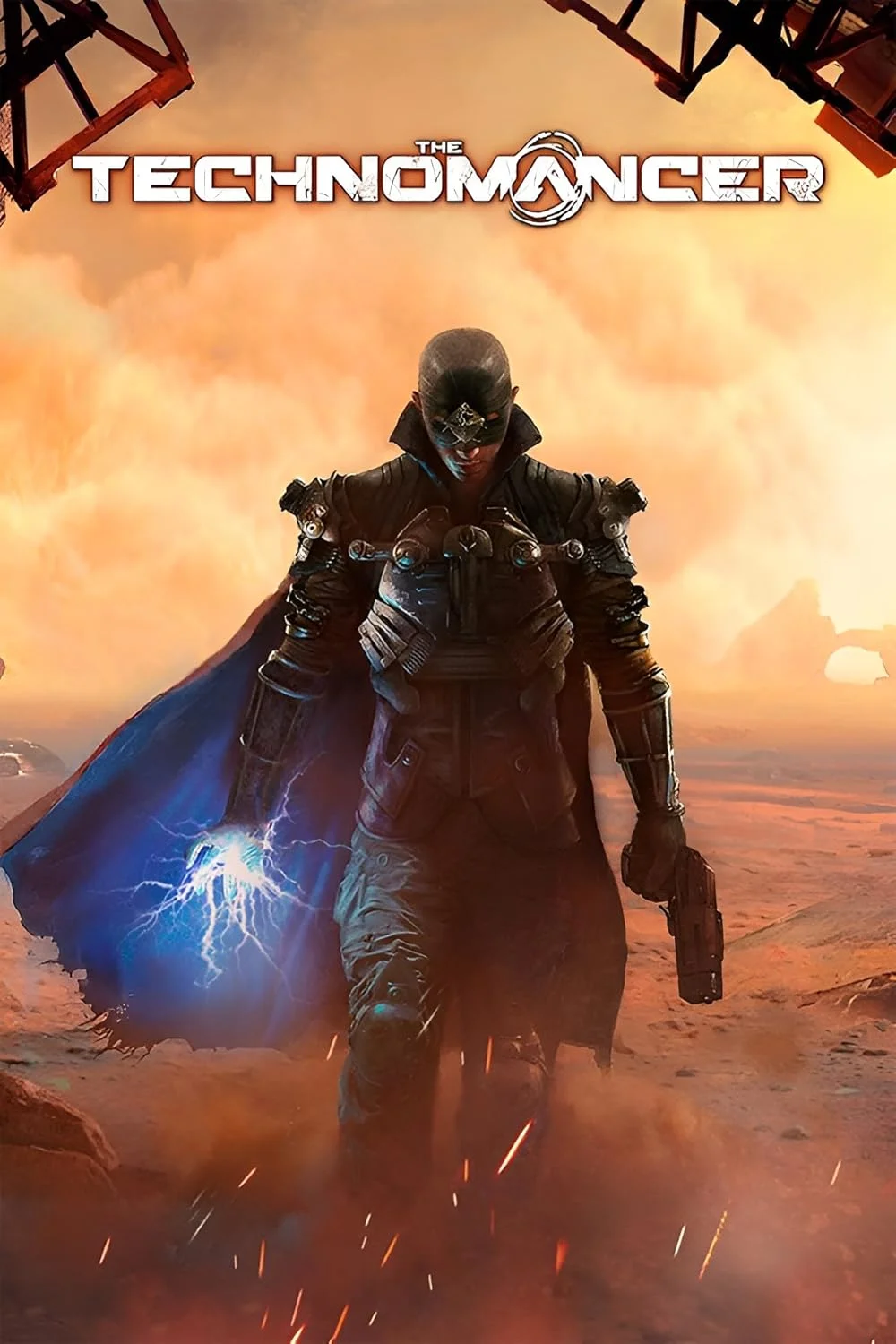
The Technomancer
This combination provides smooth gameplay with an average of 96 FPS, suitable for most gaming scenarios.
Average FPS: resolution vs quality settings
| Ultra | High | Medium | Low | |
|---|---|---|---|---|
| 4K Ultra HD | 36 | 46 | 54 | 70 |
| 1440p QHD | 66 | 84 | 98 | 128 |
| 1080p Full HD | 100 | 128 | 150 | 196 |
Cell color: green is 120+ FPS, teal is 60+, amber is 30+, red is below 30.
The Technomancer with Intel Core Ultra 7 155H + NVIDIA GeForce RTX 5070 Ti Mobile, In-Depth Analysis
The Technomancer, an action RPG released in 2016, is a lightly demanding title by modern standards, and pairing it with a modern mobile platform produces frame rates that are effectively capped only by the resolution the player chooses. This page analyzes measured results for the Intel Core Ultra 7 155H paired with the NVIDIA GeForce RTX 5070 Ti Mobile — a Meteor Lake mobile CPU from Intel's Core Ultra Series 1 combined with a Blackwell 2.0 laptop GPU from NVIDIA's GeForce 50-series. The data shows a combination that clears 100 FPS at 1080p Ultra and still sustains playable frame rates at native 4K, a strong result for a pairing built entirely from mobile-class silicon.
FAQ
Q: What frame rate does this combo deliver in The Technomancer at 1080p?
A: Measured averages range from 196 FPS on Low settings to 128 FPS on High and 100 FPS on Ultra at 1920x1080. Medium sits at 150 FPS, with a measured minimum of 128 and maximum of 173.
Q: Can the RTX 5070 Ti Mobile handle The Technomancer at 4K?
A: Yes, though with diminishing returns. At 3840x2160 the combo averages 70 FPS on Low, 54 FPS on Medium, 46 FPS on High, and 36 FPS on Ultra. High settings remain playable; Ultra lands below the commonly cited 40 FPS comfort threshold for action games.
Q: How does the CPU in this pairing stack up against rivals?
A: The Core Ultra 7 155H sits in the 83rd percentile of all CPUs tested. Its nearest rivals by average benchmark score are the Intel Core i5-14600T, AMD Ryzen AI 7 PRO 360, AMD Ryzen 5 7400F, and AMD Ryzen 7 PRO 6850H, all within a fraction of a percent of its average score.
Q: How much VRAM does the GPU have, and does it matter for this game?
A: The RTX 5070 Ti Mobile ships with 12 GB of GDDR7 on a 192-bit bus, delivering 672.0 GB/s of memory bandwidth. That is generous headroom for a 2016-era action RPG, which is why the game scales almost purely with GPU throughput rather than memory limits.
Q: Where does this combo rank among all tested combinations in The Technomancer?
A: It ranks 1395 out of 3696 tested combinations in this game — roughly the middle of the field, which reflects the game's age more than any weakness in the hardware.
Q: Is the data on this page measured or estimated?
A: All frame rate figures are measured. The dataset flags `dataIsMeasured: true`, so the numbers reflect actual runs rather than projections.
GPU Role
The NVIDIA GeForce RTX 5070 Ti Mobile is the decisive component in this pairing. Built on TSMC's 5 nm process with the GB205 chip, it packs 31,100 million transistors into a 263 mm² die — a transistor density of 118.3 million per square millimeter. That density, paired with the Blackwell 2.0 architecture, translates into 5888 shading units, 184 texture mapping units, 80 render output units, 46 ray tracing cores, and 184 tensor cores. The raw throughput numbers: 17.04 TFLOPS of FP32 compute, 266.2 GTexel/s of texture fill, and 115.8 GPixel/s of pixel fill.
Clocks are conservative by desktop standards but appropriate for a 60 W mobile part. The GPU runs at an 847 MHz base and boosts to 1447 MHz, with memory clocked at 1750 MHz — 28 Gbps effective — feeding that 672.0 GB/s of GDDR7 bandwidth across a 192-bit interface.
Against the wider GPU field, the card sits in the 80th percentile of all tested GPUs with an average benchmark score of 35435. Its nearest rivals are an eclectic set: the NVIDIA Quadro GV100 (avgScore 35520, deltaPct -0.2), the AMD Radeon Pro Duo (avgScore 35860, deltaPct -1.2), the NVIDIA A2 (avgScore 34690, deltaPct 2.1), and the NVIDIA T1000 (avgScore 36289, deltaPct -2.4). In other words, the 5070 Ti Mobile trades blows with professional workstation parts while operating at a 60 W envelope — a sign of how far mobile Blackwell has pushed efficiency. In specific tests it scores 143870 in Geekbench OpenCL and 139213 in Geekbench Vulkan, with a PassMark G3D score of 24004.
How does this map to The Technomancer? A 2016 action RPG simply does not stress a GPU of this class. The 115.8 GPixel/s pixel fill rate is the number that matters most at 4K, where the display demands over 8 million pixels per frame. Even at Ultra settings and 4K, the game averages 36 FPS — well under the card's ceiling — indicating the engine itself, not the silicon, is the ultimate limiter. At 1080p, the 100 FPS Ultra average confirms the GPU is barely breathing: the game runs at roughly half the framerate the card could theoretically push, which points to CPU or engine-side constraints at lower resolutions.
Resolution Scaling
The measured data shows a clean, predictable scaling pattern that tells a clear story about which component limits performance at each resolution.
At Low settings, moving from 1920x1080 to 2560x1440 drops the average from 196 FPS to 128 FPS — a reduction of roughly a third. Pushing to 3840x2160 cuts it further to 70 FPS. Medium follows the same shape: 150 FPS at 1080p, 98 FPS at 1440p, 54 FPS at 4K. High goes 128, 84, 46. Ultra goes 100, 66, 36.
The pattern is nearly linear at the top end. From 1440p to 4K — a 2.25x increase in pixel count — Low drops by about 45%, Medium by about 45%, High by about 45%, and Ultra by about 45%. When frame rate falls in near lockstep with pixel count, the GPU is the limiting component. That is exactly what the data shows for the upper two resolutions: the RTX 5070 Ti Mobile is doing the heavy lifting, and every additional pixel costs measurable framerate.
At 1080p, the picture shifts. The gap between Low (196 FPS) and Ultra (100 FPS) is large, which shows the game still responds to settings even when the resolution burden is light. But the fact that Low caps out at 196 FPS rather than climbing into the several-hundreds suggests the engine or the CPU puts a soft ceiling on frame rate. The Medium run at 1080p recorded a minimum of 128 and a maximum of 173 against a 150 FPS average — a tight spread indicating consistent frame delivery rather than stutter-prone variance.
The practical takeaway: 1440p is the sweet spot for this combo in The Technomancer. At that resolution the pairing delivers 128 FPS on Low, 98 on Medium, 84 on High, and 66 on Ultra — comfortably above 60 across nearly the entire settings range. 4K is viable but demands compromise: Medium at 54 FPS or High at 46 FPS keeps the experience smooth, while Ultra at 36 FPS will feel sluggish in combat-heavy sequences of an action RPG.
Measured FPS Breakdown
All figures below are measured average frame rates; the Medium runs at each resolution also include recorded minimum and maximum values.
At 1920x1080, the combo delivers its strongest results. Low settings average 196 FPS. Medium averages 150 FPS, with frame times spanning from a minimum of 128 to a maximum of 173. High averages 128 FPS — notably identical to the Medium minimum, which suggests the card settles into a stable state under moderate load. Ultra averages 100 FPS, clearing the triple-digit-adjacent mark for a maxed-out image.
At 2560x1440, Low drops to 128 FPS — the same number High managed at 1080p, a useful illustration of how resolution cost and settings cost roughly offset one another here. Medium averages 98 FPS with a minimum of 84 and a maximum of 113. High averages 84 FPS, and Ultra averages 66 FPS. Every settings tier remains above 60.
At 3840x2160, the demands of native 4K assert themselves. Low averages 70 FPS, Medium averages 54 FPS with a minimum of 46 and a maximum of 62, High averages 46 FPS, and Ultra averages 36 FPS. The Medium minimum of 46 matters more than the average here: dips to the mid-40s in an action RPG will be perceptible during fast encounters, so players prioritizing smoothness at 4K should consider High settings at 46 FPS average — effectively trading visual detail for a higher floor — or accept Medium's 54 FPS average with its 46 FPS worst case.
Across all twelve measured configurations, the spread between the best and worst results is enormous: 196 FPS at 1080p Low versus 36 FPS at 4K Ultra, a more than fivefold difference. That breadth of usable configurations is the signature of a pairing where the GPU has abundant headroom for a game of this vintage, and the only real decision for the player is where on the resolution-versus-settings spectrum they want to land.
How This Combo Ranks
Within The Technomancer's database of tested hardware combinations, the Core Ultra 7 155H + RTX 5070 Ti Mobile ranks 1395 out of 3696 — a mid-field position. That placement deserves context.
The Technomancer launched in 2016, meaning the database includes combinations spanning many hardware generations, and the game's own engine limits how much modern hardware can differentiate itself. A mid-table rank for a modern mobile pairing is not a poor showing; it reflects the reality that older games flatten the differences between contemporary GPUs because none of them are genuinely challenged. The measured results back this up: even at 4K Ultra the game runs at 36 FPS on a 60 W mobile GPU, and at 1080p the Low-settings result of 196 FPS appears to bump against an engine or platform ceiling rather than a graphics limit.
Component-level rankings add nuance. The RTX 5070 Ti Mobile's 80th percentile standing among all GPUs, with its average score within a percentage point of parts like the Quadro GV100 and Radeon Pro Duo, indicates graphics hardware well above the median. The Core Ultra 7 155H's 83rd percentile CPU ranking sits it alongside the Core i5-14600T, Ryzen AI 7 PRO 360, Ryzen 5 7400F, and Ryzen 7 PRO 6850H — a cluster of capable processors separated by fractions of a percent. Both components individually rank higher than the in-game combination does, which reinforces the conclusion that the game, not the hardware, is the binding constraint for this title.
CPU Role
The Intel Core Ultra 7 155H is a 16-core, 22-thread Meteor Lake processor on Intel's 7 nm process, running a 3.80 GHz base clock with boosts to 4.80 GHz. It carries 112 KB of L1 and 2 MB of L2 cache per core plus 24 MB of shared L3, supports dual-channel DDR5 with 89.6 GB/s of bandwidth, and integrates Arc Xe-LPG 128EU graphics. Its launch MSRP was $503. TDP is 28 W, and the chip uses the Intel BGA 2049 socket — soldered mobile packaging with no multiplier unlock.
For The Technomancer, the CPU's role is mostly about not being the bottleneck, and the data suggests it largely succeeds. Single-threaded performance is the traditional driver for older action RPG engines, and the 155H posts a Cinebench R23 single-core score of 1743, an R20 single-core score of 1235, and an R15 single-core score of 255. On the PassMark side, single-thread performance comes in at 3468. These are solid rather than exceptional figures, but The Technomancer's 2016-era workload does not demand more.
Multi-threaded headroom is ample when called upon: 15028 in Cinebench R23 multi-core, 8754 in R20, and 2450 in R15, plus a PassMark multithread score of 24873 backed by physics (1727), integer math (86870), floating point math (63703), data compression (277353), and encryption (16358) results. In the percentile rankings the chip lands at 83 against all CPUs with an average benchmark score of 32697.
Against its nearest rivals, the margins are effectively zero: the Intel Core i5-14600T matches it at deltaPct 0, the AMD Ryzen AI 7 PRO 360 sits 0.1 percent behind, the AMD Ryzen 5 7400F is 0.2 percent ahead, and the AMD Ryzen 7 PRO 6850H is 0.4 percent ahead. Any of these processors would produce indistinguishable results in The Technomancer, and the measured framerates support that: the 196 FPS ceiling at 1080p Low is the one data point where CPU or engine limits may be visible, and even there the 16-core, 22-thread Meteor Lake chip with its 4.80 GHz boost is unlikely to be the weakest link in this pairing. The bottleneck story in The Technomancer on this combo is a GPU-resolution story at 1440p and 4K, and an engine story at 1080p — the processor simply supplies the frames as fast as the game asks for them.
Hardware Specifications
Intel Core Ultra 7 155H
NVIDIA GeForce RTX 5070 Ti Mobile
FPS Benchmarks by Resolution & Settings
Performance data for Intel Core Ultra 7 155H + NVIDIA GeForce RTX 5070 Ti Mobile in The Technomancer
| Resolution | Settings | Avg FPS |
|---|---|---|
| 3840x2160 | Low | 70.0 |
| 3840x2160 | Medium | 54.0 |
| 3840x2160 | High | 46.0 |
| 3840x2160 | Ultra | 36.0 |
| 2560x1440 | Low | 128.0 |
| 2560x1440 | Medium | 98.0 |
| 2560x1440 | High | 84.0 |
| 2560x1440 | Ultra | 66.0 |
| 1920x1080 | Low | 196.0 |
| 1920x1080 | Medium | 150.0 |
| 1920x1080 | High | 128.0 |
| 1920x1080 | Ultra | 100.0 |
The Technomancer with iUltra 7 155H + Other GPUs
See how The Technomancer performs with the same CPU but different graphics cards.
The Technomancer with RTX 5070 Ti Mobile + Other CPUs
See how The Technomancer performs with the same GPU but different processors.
Other Games with iUltra 7 155H + RTX 5070 Ti Mobile
Explore FPS benchmarks for other games using this same hardware combination.