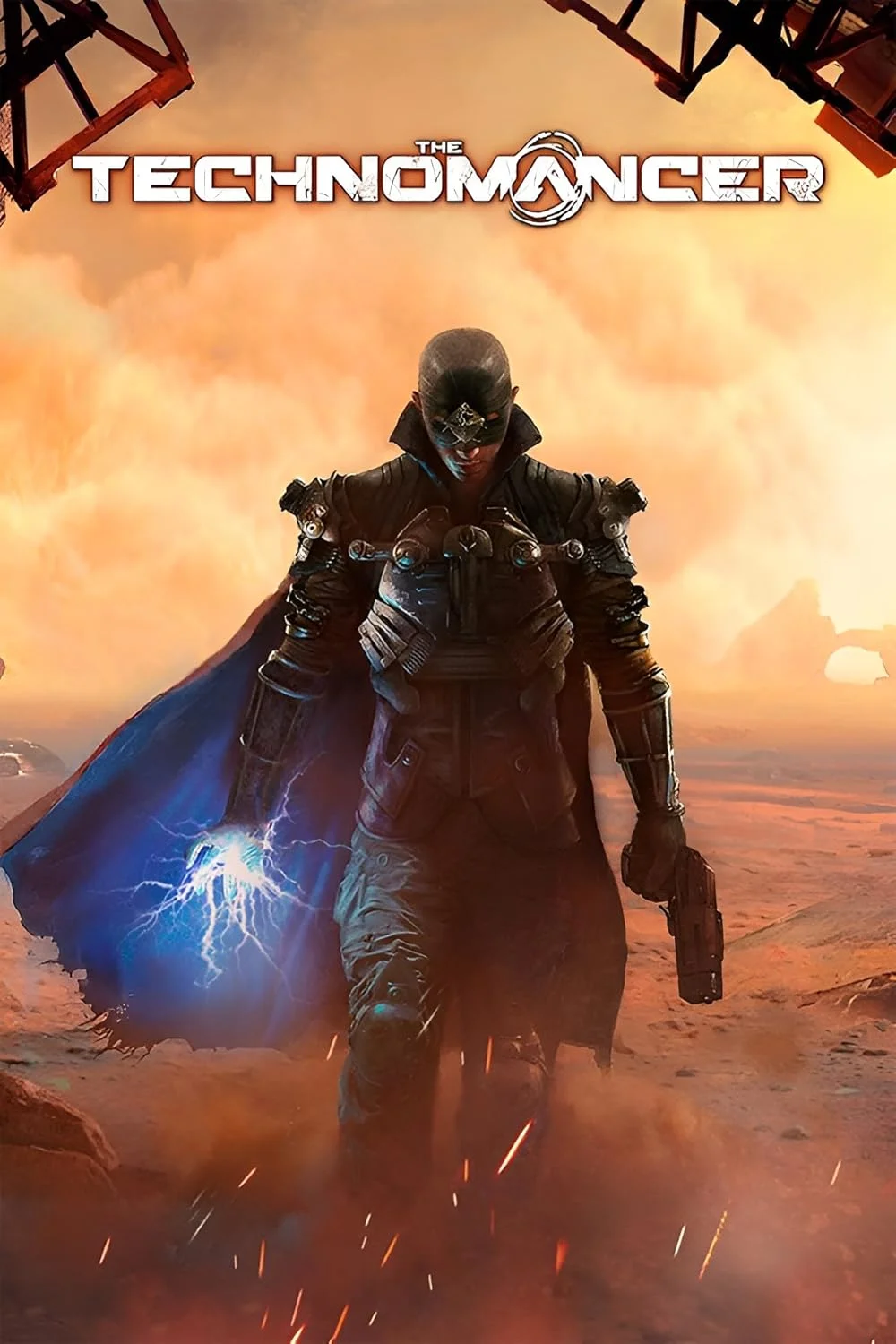
The Technomancer
This combination may struggle with this title, averaging 24 FPS. Consider upgrading hardware or significantly lowering settings.

Average FPS: resolution vs quality settings
| Ultra | High | Medium | Low | |
|---|---|---|---|---|
| 4K Ultra HD | 9 | 11 | 13 | 17 |
| 1440p QHD | 16 | 21 | 24 | 32 |
| 1080p Full HD | 25 | 32 | 37 | 48 |
Cell color: green is 120+ FPS, teal is 60+, amber is 30+, red is below 30.
The Technomancer with Intel Core Ultra 5 235HX + AMD Radeon 760M, In-Depth Analysis
The Technomancer is a 2016 Action RPG that can still stress modern hardware at higher resolutions, and the combination of the Intel Core Ultra 5 235HX with the AMD Radeon 760M integrated graphics produces a very specific performance profile. The measured data shows this pairing is heavily GPU-limited across the board, with the integrated Radeon 760M acting as the primary bottleneck in almost every scenario. The Core Ultra 5 235HX, with its 14 cores and 14 threads, provides ample processing headroom, but the Radeon 760M's integrated nature and System Shared memory configuration cap frame rates well below what the CPU alone could sustain. This analysis breaks down the measured FPS results across three resolutions and four quality presets, examines the GPU's role, and explains how this combo ranks among the 2,825 tested configurations for this game.
Settings Recommendations
Based on the measured FPS rows, the optimal experience for this combo is found at 1920x1080 with Low settings, where the average frame rate reaches 48 FPS. This is the only configuration in the entire dataset that approaches playable smoothness, as every other resolution and settings combination falls below 40 FPS. At 1080p Low, the average of 48 FPS provides a playable baseline for an Action RPG, though it is still shy of the 60 FPS target that many players prefer. The jump from Low to Medium at 1080p costs 11 FPS, dropping the average to 37 FPS, which remains technically playable but with noticeable stutter during combat sequences. High settings at 1080p further reduce the average to 32 FPS, and Ultra drops it to 25 FPS, making those presets less desirable for sustained action.
At 2560x1440, the best measured result is 32 FPS on Low settings, which is borderline for this genre. Medium at 1440p yields 24 FPS, High yields 21 FPS, and Ultra falls to 16 FPS. None of these 1440p configurations provide a consistently smooth experience, so users should only consider them if visual fidelity takes priority over frame rate stability. The 4K results are uniformly poor, with the highest average being 17 FPS at Low settings, followed by 13 FPS at Medium, 11 FPS at High, and 9 FPS at Ultra. These numbers confirm that 4K is not viable for this pairing in The Technomancer.
The data suggests that players should prioritize the 1080p Low preset for the best balance of playability and visual clarity. The Medium preset at 1080p, with an average of 37 FPS and a minimum of 32 FPS, offers a marginally better visual experience but at the cost of 11 FPS on average. For those who value frame rate consistency over graphical detail, Low is the clear choice. If a player insists on higher settings, 1080p Medium is the highest preset that maintains an average above 30 FPS, but it requires accepting occasional dips to 32 FPS. The minimum FPS values are only recorded for Medium presets across all resolutions, with 1080p Medium showing a 32 FPS minimum, 1440p Medium showing 21 FPS, and 4K Medium showing 11 FPS. These minima indicate that even the recommended settings will experience frame time spikes during demanding scenes.
GPU Role
The AMD Radeon 760M is an integrated graphics processor based on the RDNA 3.0 architecture, built on a 4 nm process node at TSMC. It features 512 shading units, 32 texture mapping units, and 16 raster output pipelines, along with 8 ray tracing cores. The GPU operates at a base clock of 800 MHz and boosts up to 2599 MHz, which gives it a peak FP32 throughput of 5.323 TFLOPS. The memory configuration is System Shared, meaning the GPU draws from the same DDR5 pool as the CPU, with bandwidth described as System Dependent. This shared memory arrangement is a critical factor in the observed performance, as the Radeon 760M cannot rely on dedicated VRAM bandwidth.
In The Technomancer, the GPU's role is the dominant constraint on performance. The measured FPS values across all resolutions and settings show a consistent pattern where the integrated GPU's compute and memory bandwidth limits are reached long before the CPU becomes a factor. The Core Ultra 5 235HX, with its 24 MB of shared L3 cache and boost clock of 5.10 GHz, is more than capable of feeding the GPU with draw calls and game logic. The Passmark GPU benchmarks support this interpretation: the Radeon 760M scores 5,310 in G3D and 2,840 in GPU Compute, placing it in the 35th percentile of all GPUs. Its nearest rivals include the AMD Radeon RX 6400 with a deltaPct of 0.3, the NVIDIA GeForce GTX 770M at 0.3, and the NVIDIA Quadro P2000 at -0.5, indicating that this integrated solution performs roughly on par with entry-level discrete GPUs from several generations ago.
The GPU's 15 W TDP and IGP slot width further confirm its integrated nature, and the lack of dedicated power connectors means it operates within the thermal envelope of the host laptop. The pixel rate of 41.58 GPixel/s and texture rate of 83.17 GTexel/s are modest figures that translate directly to the low fill rates observed in the 4K measurements. At 4K Ultra, the average FPS drops to 9, which is a direct consequence of the GPU's inability to process the higher pixel count. The ray tracing cores are present, but The Technomancer is not a ray tracing title, so they contribute little to actual performance. The DirectX 12 Ultimate support and Vulkan 1.4 compatibility ensure the GPU can handle modern APIs, but the raw throughput is insufficient for demanding scenes.
Resolution Scaling
The measured FPS data reveals a steep performance drop as resolution increases from 1920x1080 to 3840x2160. At Low settings, the average frame rate falls from 48 FPS at 1080p to 32 FPS at 1440p, a 33% reduction, and then to 17 FPS at 4K, a 47% further reduction. This scaling pattern is consistent with a GPU-bound scenario, where the number of pixels being rendered directly impacts the frame rate. Doubling the pixel count from 1080p to 1440p (which is roughly a 1.78x increase) results in a 16 FPS drop, while going from 1440p to 4K (a 2.25x increase) causes another 15 FPS drop. The linear relationship between pixel count and frame rate degradation confirms that the Radeon 760M's fill rate and memory bandwidth are the limiting factors.
At Medium settings, the same trend appears: 37 FPS at 1080p, 24 FPS at 1440p, and 13 FPS at 4K. The minimum FPS values also scale accordingly, with 1080p Medium showing a 32 FPS minimum, 1440p Medium at 21 FPS, and 4K Medium at 11 FPS. High settings show 32 FPS at 1080p, 21 FPS at 1440p, and 11 FPS at 4K. Ultra settings produce 25 FPS at 1080p, 16 FPS at 1440p, and 9 FPS at 4K. The consistent drop of roughly 10-15 FPS per resolution step across all settings indicates that the GPU is operating at its maximum capacity even at 1080p, and any increase in resolution pushes it further into sub-optimal territory.
This resolution scaling also suggests that the Core Ultra 5 235HX is not the limiting component in any configuration. If the CPU were the bottleneck, we would expect to see similar frame rates across different resolutions, since the CPU workload does not scale with pixel count. Instead, the frame rates drop substantially with each resolution increase, which is the hallmark of a GPU-limited system. The CPU's performance metrics, including a Cinebench R23 multi-core score of 34,731 and a single-core score of 4,903, place it in the 91st percentile of all CPUs, indicating it has far more headroom than the GPU can utilize. The nearest CPU rivals, such as the AMD Ryzen 9 5950X with a deltaPct of 0.2 and the Intel Core i7-14700 at -0.4, all show similar average benchmark scores, confirming that the processor is not the weak link here.
Measured FPS Breakdown
At 1920x1080, the dataset includes four presets. Low settings deliver an average of 48 FPS with no recorded minimum or maximum. Medium settings average 37 FPS, with a minimum of 32 FPS and a maximum of 43 FPS. High settings average 32 FPS, and Ultra settings average 25 FPS. The 15 FPS spread between Low and Ultra at 1080p shows that the GPU's performance scales with the quality preset, but even the lowest preset cannot reach 60 FPS. The Medium preset's minimum of 32 FPS indicates that frame pacing will be inconsistent, with occasional dips that could affect gameplay during crowded scenes or particle effects.
At 2560x1440, the results are uniformly lower. Low settings average 32 FPS, Medium averages 24 FPS with a minimum of 21 FPS and a maximum of 28 FPS, High averages 21 FPS, and Ultra averages 16 FPS. The gap between Low and Ultra narrows to 16 FPS, similar to the 1080p spread, but the absolute numbers are all below the 30 FPS threshold that many consider the minimum for playable action games. The 1440p Medium minimum of 21 FPS is particularly telling, as it means even the mid-range preset will experience significant stutter during intense moments.
At 3840x2160, the performance is marginal at best. Low settings average 17 FPS, Medium averages 13 FPS with a minimum of 11 FPS and a maximum of 15 FPS, High averages 11 FPS, and Ultra averages 9 FPS. The 4K Medium minimum of 11 FPS and maximum of 15 FPS show a narrow band of performance, indicating the GPU is consistently overwhelmed by the pixel count. The difference between Low and Ultra at 4K is only 8 FPS, which suggests that at this resolution, the GPU's memory bandwidth is so constrained that the quality preset has less impact on performance than it does at lower resolutions.
Across all resolutions, the Medium preset is the only one with complete minimum and maximum data, providing a useful reference for frame variability. At 1080p Medium, the 32 FPS minimum and 43 FPS maximum represent a 11 FPS range, which is relatively tight. At 1440p Medium, the range is 21 to 28 FPS, a 7 FPS variance. At 4K Medium, the range is 11 to 15 FPS, a 4 FPS variance. This narrowing range at higher resolutions indicates that the GPU is consistently saturated, leaving little room for variation based on scene complexity.
How This Combo Ranks
The combination of the Intel Core Ultra 5 235HX and AMD Radeon 760M ranks 2,817 out of 2,825 tested combos in The Technomancer, placing it in the bottom 0.3% of all configurations. This rank is primarily driven by the GPU's performance, as the Radeon 760M sits in the 35th percentile of all GPUs, while the CPU is in the 91st percentile. The massive disparity between the CPU's high percentile and the GPU's low percentile means that this combo is severely unbalanced for gaming, with the integrated graphics holding back an otherwise powerful processor.
The GPU's nearest rivals in synthetic benchmarks include the AMD Radeon RX 6400 with a deltaPct of 0.3, the NVIDIA GeForce GTX 770M at 0.3, and the NVIDIA Quadro P2000 at -0.5. These comparisons show that the Radeon 760M performs similarly to these older or lower-end discrete GPUs, yet the combo rank in game is near the bottom because The Technomancer's engine appears to be particularly demanding on integrated graphics. The CPU's nearest rivals, such as the AMD EPYC 8124P at -0.1 deltaPct and the Intel Core i9-13900F at 0.7, all have average benchmark scores around 52,000, but none of these comparisons help in gaming because the GPU is the limiting factor.
The data indicates that 2,808 other combos achieve better performance in this game, which means most systems with discrete GPUs will outperform this integrated solution. The only combos that rank lower are likely those with even weaker integrated graphics or older CPUs paired with similar GPUs. For a user considering this hardware, the rank suggests that the Core Ultra 5 235HX is wasted in gaming scenarios that rely on the Radeon 760M. The CPU's Passmark multi-thread score of 40,849 and data compression score of 426,417 indicate strong productivity performance, but in The Technomancer, those capabilities do not translate to frame rate gains.
FAQ
Q: What is the best settings preset for this combo in The Technomancer?
A: The 1920x1080 Low preset provides the highest average frame rate at 48 FPS. The 1080p Medium preset averages 37 FPS with a minimum of 32 FPS, which is the highest preset that stays above 30 FPS on average. Ultra at 1080p drops to 25 FPS, making it less suitable for action gameplay.
Q: Why does the frame rate drop so significantly from 1080p to 4K?
A: The AMD Radeon 760M uses System Shared memory with System Dependent bandwidth, and its 5.323 TFLOPS FP32 throughput is insufficient for higher pixel counts. At Low settings, the average drops from 48 FPS at 1080p to 17 FPS at 4K, a 31 FPS reduction, confirming the GPU is the limiting component.
Q: How does the Radeon 760M compare to its nearest GPU rivals?
A: In synthetic benchmarks, the Radeon 760M scores 5,310 in Passmark G3D, with the AMD Radeon RX 6400 at a deltaPct of 0.3, the NVIDIA GeForce GTX 770M at 0.3, and the NVIDIA Quadro P2000 at -0.5. This places it in the 35th percentile of all GPUs, indicating performance similar to entry-level discrete cards from past generations.
Q: Is the Intel Core Ultra 5 235HX the bottleneck in this configuration?
A: No, the data shows the CPU is not the limiting factor. The Core Ultra 5 235HX ranks in the 91st percentile of all CPUs with a Cinebench R23 multi-core score of 34,731. The resolution scaling pattern, where frame rates drop consistently with pixel count, indicates the GPU is the bottleneck.
Q: What is the combo's overall rank among tested configurations?
A: This combo ranks 2,817 out of 2,825 tested combos in The Technomancer, placing it in the bottom 0.3% of all configurations. The rank reflects the integrated GPU's limitations despite the CPU's high performance percentile.
Q: Are there any settings where the frame rate reaches 60 FPS?
A: No, none of the measured configurations achieve 60 FPS. The highest average is 48 FPS at 1080p Low, and the next closest is 37 FPS at 1080p Medium. All other settings and resolutions fall below 35 FPS, with 4K Ultra averaging only 9 FPS.
Hardware Specifications
Intel Core Ultra 5 235HX
AMD Radeon 760M
FPS Benchmarks by Resolution & Settings
Performance data for Intel Core Ultra 5 235HX + AMD Radeon 760M in The Technomancer
| Resolution | Settings | Avg FPS |
|---|---|---|
| 3840x2160 | Low | 17.0 |
| 3840x2160 | Medium | 13.0 |
| 3840x2160 | High | 11.0 |
| 3840x2160 | Ultra | 9.0 |
| 2560x1440 | Low | 32.0 |
| 2560x1440 | Medium | 24.0 |
| 2560x1440 | High | 21.0 |
| 2560x1440 | Ultra | 16.0 |
| 1920x1080 | Low | 48.0 |
| 1920x1080 | Medium | 37.0 |
| 1920x1080 | High | 32.0 |
| 1920x1080 | Ultra | 25.0 |
Other Games with iUltra 5 235HX + 760M
Explore FPS benchmarks for other games using this same hardware combination.