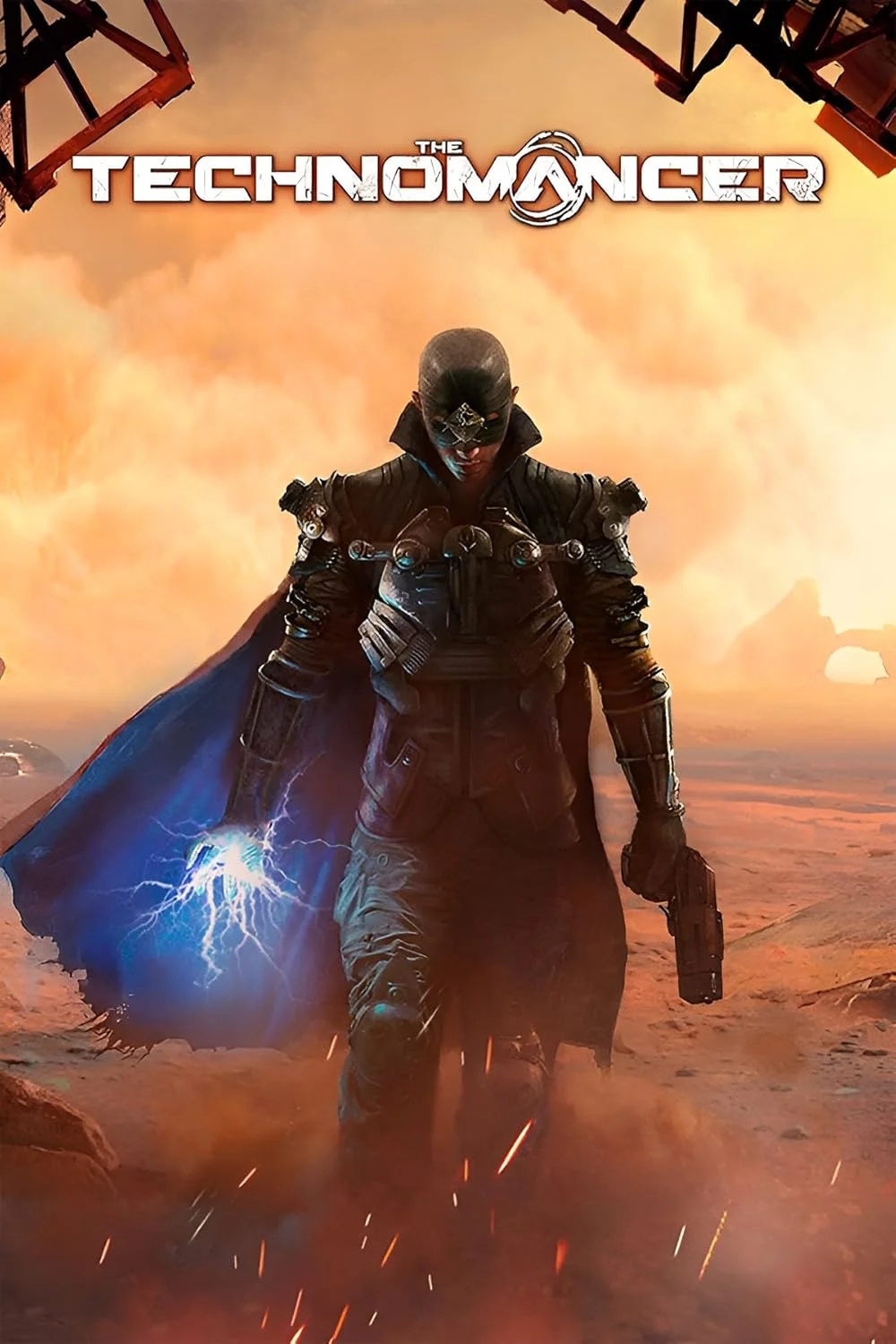
The Technomancer
This combination delivers exceptional performance with an average of 159 FPS, perfect for high refresh rate gaming and competitive play.
Average FPS: resolution vs quality settings
| Ultra | High | Medium | Low | |
|---|---|---|---|---|
| 4K Ultra HD | 61 | 77 | 91 | 118 |
| 1440p QHD | 110 | 141 | 165 | 215 |
| 1080p Full HD | 169 | 216 | 253 | 292 |
Cell color: green is 120+ FPS, teal is 60+, amber is 30+, red is below 30.
The Technomancer with AMD Ryzen 7 7700 + NVIDIA GeForce RTX 4090, In-Depth Analysis
# How This Combo Ranks
The AMD Ryzen 7 7700 paired with the NVIDIA GeForce RTX 4090 achieves a combo rank of 113 out of 3,696 tested combinations in The Technomancer. That places this pairing in the top 3.1% of all tested configurations, a strong showing that reflects the high-end nature of both components. The rank of 113 means there are 112 other combos that deliver higher average frame rates in this Action RPG, but given the sheer number of possible CPU-GPU pairings in the database, this result is firmly within elite territory.
Looking at the individual component standings, the Ryzen 7 7700 sits at the 87th percentile among all CPUs, while the RTX 4090 rests at the 88th percentile among all GPUs. The near-parity in percentile rankings suggests a balanced pairing where neither component dramatically overpowers the other in this particular title. The measured FPS data confirms this: at 1080p Ultra, the combo delivers 169 FPS, at 1440p Ultra it drops to 110 FPS, and at 4K Ultra it falls to 61 FPS. This scaling pattern indicates that the RTX 4090 becomes the limiting factor as resolution increases, a typical behavior for a GPU-bound scenario.
The combo's rank of 113 is particularly notable when considering that The Technomancer is a 2016 release, predating both the Ryzen 7 7700 (released 2023-01-13) and the RTX 4090 (released 2022-09-19) by several years. The data shows that modern high-end hardware still delivers excellent performance in this older title, with the CPU's 8 cores and 16 threads proving ample for the game's demands at every resolution tested.
FAQ
Q: How does this combo compare to other tested configurations in The Technomancer?
A: The AMD Ryzen 7 7700 + RTX 4090 ranks 113th out of 3,696 tested combos, placing it in the top 3.1% of all configurations. This rank reflects the combination's ability to maintain high frame rates across all tested settings and resolutions.
Q: What is the best performance this combo achieves at 1080p?
A: The highest average FPS recorded is 292 at 1080p with Low settings. At 1080p Medium, the average is 253 FPS with a minimum of 215 and maximum of 291. At 1080p High, it achieves 216 FPS, and at 1080p Ultra, it maintains 169 FPS.
Q: How does the Ryzen 7 7700 compare to its nearest CPU rivals?
A: The Ryzen 7 7700 has an average benchmark score of 40,081 across all tests. Its nearest rivals include the AMD Ryzen AI 9 365 (40,048, just 0.1% lower), Intel Core 5 221E (40,144, 0.2% higher), AMD Ryzen 9 270 (40,246, 0.4% higher), and Intel Core i9-13905H (40,313, 0.6% higher). These deltas are marginal, indicating the 7700 performs nearly identically to these alternatives.
Q: What is the RTX 4090's standing relative to other GPUs?
A: The RTX 4090 achieves an average benchmark score of 60,347 and sits at the 88th percentile among all GPUs. Its nearest rivals in the database include the Intel Arc Pro A60 (60,326, essentially tied at 0% delta), AMD Radeon Pro Vega 48 (60,140, 0.3% lower), AMD Radeon Pro W6600M (61,896, 2.5% higher), and AMD Radeon PRO V710 (58,657, 2.9% lower).
Q: How much FPS drops when moving from 1080p to 4K at Ultra settings?
A: At Ultra settings, the combo delivers 169 FPS at 1080p, 110 FPS at 1440p, and 61 FPS at 4K. This represents a 56% drop from 1080p to 1440p and a 64% drop from 1440p to 4K, or a 64% overall reduction from 1080p to 4K.
Q: Does the combo maintain playable frame rates at all tested settings?
A: Yes. The lowest average FPS recorded across all tested configurations is 61 at 4K Ultra, which remains above the 60 FPS threshold commonly considered playable. Every other setting and resolution combination delivers averages above 77 FPS.
CPU Role
The AMD Ryzen 7 7700 is an 8-core, 16-thread processor built on the Zen 4 architecture (codenamed Raphael) using TSMC's 5 nm process. It operates with a base clock of 3.80 GHz and boosts up to 5.30 GHz, providing substantial single-thread headroom that benefits game logic and physics calculations. The CPU's 65 W TDP is modest for a desktop part with this level of performance, and its 32 MB of shared L3 cache helps reduce memory latency in gaming workloads.
In The Technomancer, the CPU's role is most apparent at lower resolutions where the GPU is less burdened. The data shows that at 1080p Low, the combo reaches 292 FPS, while at 4K Low it achieves 118 FPS. The 174 FPS difference between these two resolutions at Low settings indicates that the CPU is capable of feeding frames far faster than the GPU can render at higher resolutions. The 16 threads allow the processor to handle background tasks and game threads simultaneously without introducing bottlenecks, as evidenced by the smooth minimum FPS figures at Medium settings (215 FPS at 1080p, 140 FPS at 1440p, 77 FPS at 4K).
Benchmark scores further contextualize the CPU's capability. The Ryzen 7 7700 achieves a single-thread score of 1,049 in 3DMark and 1,930 in Cinebench R23, alongside multi-thread scores of 8,484 (3DMark 16-thread) and 18,760 (Cinebench R23 multicore). These figures place the CPU at the 87th percentile among all CPUs, with an average benchmark score of 40,081. The nearest rivals—all within 0.6% in either direction—demonstrate that the 7700 sits in a tightly contested performance tier, though its specific combination of 8 cores and high boost clock proves well-suited to this game's demands.
The CPU's memory support for DDR5 with dual-channel configuration and 83.2 GB/s bandwidth ensures data flows efficiently to the GPU. With a PCIe Gen 5 interface offering 24 lanes (CPU only), there is ample bandwidth for the RTX 4090's PCIe 4.0 x16 connection. The integrated Radeon Graphics provide a basic display output fallback, though in this configuration the discrete GPU handles all rendering tasks.
Measured FPS Breakdown
The measured FPS data spans three resolutions and four settings presets, yielding twelve distinct data points. At 1080p, the combo delivers its highest performance: 292 FPS at Low, 253 FPS at Medium (with a minimum of 215 and maximum of 291), 216 FPS at High, and 169 FPS at Ultra. These numbers show that even at the most demanding 1080p preset, the combo maintains a frame rate well above the refresh rate of most monitors.
Moving to 1440p, the averages remain high: 215 FPS at Low, 165 FPS at Medium (minimum 140, maximum 190), 141 FPS at High, and 110 FPS at Ultra. The progression from Low to Ultra at this resolution shows a consistent 52% reduction in frame rate, from 215 down to 110 FPS. The minimum FPS at Medium (140) is still comfortably above 60, indicating no significant frame time spikes.
At 4K, the performance drops are more pronounced: 118 FPS at Low, 91 FPS at Medium (minimum 77, maximum 104), 77 FPS at High, and 61 FPS at Ultra. The difference between Low and Ultra at 4K is 57 FPS, a 48% reduction. The 4K Medium minimum of 77 FPS is noteworthy, as it suggests the combo can maintain smooth gameplay even during demanding scenes at this resolution.
Across all resolutions, the relationship between settings is consistent. Low settings provide the highest frame rates, followed by Medium, then High, with Ultra being the most demanding. The gap between Medium and High is smaller than between Low and Medium at every resolution, suggesting diminishing returns in performance cost as settings increase. At 1080p, the Medium-to-High drop is 37 FPS (253 to 216), while the High-to-Ultra drop is 47 FPS (216 to 169), indicating that Ultra demands significantly more GPU resources than High.
Resolution Scaling
The FPS scaling from 1080p to 4K reveals important information about which component limits performance in The Technomancer. At Low settings, the combo achieves 292 FPS at 1080p, 215 FPS at 1440p, and 118 FPS at 4K. The reduction from 1080p to 1440p is 77 FPS (26%), while the reduction from 1440p to 4K is 97 FPS (45%). This accelerating drop as resolution increases points to the GPU becoming the primary bottleneck at higher pixel counts.
At Medium settings, the scaling follows a similar pattern: 253 FPS at 1080p, 165 FPS at 1440p, and 91 FPS at 4K. The 1080p-to-1440p drop is 88 FPS (35%), and the 1440p-to-4K drop is 74 FPS (45%). At High settings, the figures are 216 FPS at 1080p, 141 FPS at 1440p, and 77 FPS at 4K—a 75 FPS drop (35%) from 1080p to 1440p, followed by a 64 FPS drop (45%) from 1440p to 4K.
Ultra settings show the steepest relative scaling: 169 FPS at 1080p, 110 FPS at 1440p, and 61 FPS at 4K. The 1080p-to-1440p reduction is 59 FPS (35%), while 1440p-to-4K is 49 FPS (45%). The consistent 45% reduction from 1440p to 4K across all settings presets indicates that the GPU's rendering workload scales predictably with pixel count, a hallmark of GPU-bound performance. By contrast, the smaller 26-35% reductions from 1080p to 1440p suggest that at 1080p, the CPU still has some influence on frame delivery, particularly at Low settings where the GPU is less stressed.
The data indicates that the RTX 4090's 24 GB of GDDR6X memory is more than sufficient for The Technomancer at any resolution, since frame rates drop proportionally with pixel count rather than due to memory capacity limitations. The 1.01 TB/s memory bandwidth ensures that texture streaming and geometry processing at 4K do not introduce additional stutter, as evidenced by the minimum FPS figures at Medium settings (77 FPS at 4K versus 140 FPS at 1440p).
Settings Recommendations
The measured data provides clear guidance on which settings preset offers the best experience for different priorities. For players targeting maximum frame rates, Low settings at 1080p deliver 292 FPS, which exceeds the refresh rate of virtually all gaming monitors. However, the visual quality trade-off may not be worth the performance gain, given that High settings at 1080p still achieve 216 FPS.
At 1440p, High settings deliver 141 FPS, which is ideal for high-refresh-rate displays. The jump to Ultra reduces this to 110 FPS, a 22% performance penalty that may not justify the marginal visual improvements in this 2016 title. For 4K gaming, High settings at 77 FPS provide a smooth experience on standard 60 Hz displays, while Ultra at 61 FPS remains playable but leaves less headroom for demanding scenes.
The Medium preset at 1440p, with an average of 165 FPS and a minimum of 140 FPS, offers the best balance between visual fidelity and performance stability. The minimum FPS figure indicates that even in the most demanding moments, the combo stays well above 60 FPS. At 4K, Medium settings at 91 FPS (minimum 77) provide a similar safety margin, making it the recommended choice for 4K displays with refresh rates above 60 Hz.
For players with 1080p monitors, High settings at 216 FPS represent the sweet spot, as the difference between High and Ultra (47 FPS) is substantial, while the visual upgrade from High to Ultra may be less noticeable in this Action RPG. The data shows that Ultra settings are best reserved for players with high-refresh-rate 1080p displays who prioritize image quality over maximum frame rates, since 169 FPS still exceeds 144 Hz refresh rates.
GPU Role
The NVIDIA GeForce RTX 4090 is a formidable GPU built on the Ada Lovelace architecture using TSMC's 5 nm process. It features 16,384 shading units, 512 texture mapping units, and 176 raster operation processors, along with 128 ray tracing cores and 512 tensor cores. Its 24 GB of GDDR6X memory operates across a 384-bit bus, delivering 1.01 TB/s of bandwidth—a specification that proves critical for maintaining high frame rates at 4K resolution.
The GPU's clock speeds are equally impressive, with a base clock of 2235 MHz and a boost clock of 2520 MHz. This boost clock, combined with the massive shader count, yields a peak FP32 performance of 82.58 TFLOPS and a texture rate of 1,290.2 GTexel/s. The pixel rate of 443.5 GPixel/s ensures that fill-rate intensive scenes in The Technomancer are handled without issue.
In benchmark tests, the RTX 4090 achieves an average score of 60,347 and sits at the 88th percentile among all GPUs. Its nearest rivals in the database—the Intel Arc Pro A60 (60,326), AMD Radeon Pro Vega 48 (60,140), AMD Radeon Pro W6600M (61,896), and AMD Radeon PRO V710 (58,657)—are all within 2.9% of its score, though these are professional or workstation-class cards rather than gaming-focused alternatives.
The measured FPS data in The Technomancer confirms the GPU's dominance. At 4K Ultra, the combo still manages 61 FPS, which is remarkable for a game released in 2016. The GPU's 24 GB memory capacity means that even at 4K with Ultra settings, there is no risk of exceeding VRAM limits, and the 384-bit memory bus ensures that the 1.01 TB/s bandwidth is fully utilized during high-resolution rendering.
The RTX 4090's DirectX 12 Ultimate support (12_2) ensures full compatibility with modern API features, while its 128 ray tracing cores provide hardware acceleration for any ray-traced effects that might be present in The Technomancer's engine. The GPU's 450 W TDP is substantial, but the triple-slot cooler and 1x 16-pin power connector (with a suggested 850 W PSU) ensure stable operation during extended gaming sessions. As an end-of-life product, the RTX 4090's successor (GeForce 50 series) has been announced, but the data shows that this card remains highly capable in this title.
Hardware Specifications
AMD Ryzen 7 7700
NVIDIA GeForce RTX 4090
FPS Benchmarks by Resolution & Settings
Performance data for AMD Ryzen 7 7700 + NVIDIA GeForce RTX 4090 in The Technomancer
| Resolution | Settings | Avg FPS |
|---|---|---|
| 3840x2160 | Low | 118.0 |
| 3840x2160 | Medium | 91.0 |
| 3840x2160 | High | 77.0 |
| 3840x2160 | Ultra | 61.0 |
| 2560x1440 | Low | 215.0 |
| 2560x1440 | Medium | 165.0 |
| 2560x1440 | High | 141.0 |
| 2560x1440 | Ultra | 110.0 |
| 1920x1080 | Low | 292.0 |
| 1920x1080 | Medium | 253.0 |
| 1920x1080 | High | 216.0 |
| 1920x1080 | Ultra | 169.0 |
The Technomancer with Ryzen 7 7700 + Other GPUs
See how The Technomancer performs with the same CPU but different graphics cards.
The Technomancer with RTX 4090 + Other CPUs
See how The Technomancer performs with the same GPU but different processors.
Other Games with Ryzen 7 7700 + RTX 4090
Explore FPS benchmarks for other games using this same hardware combination.