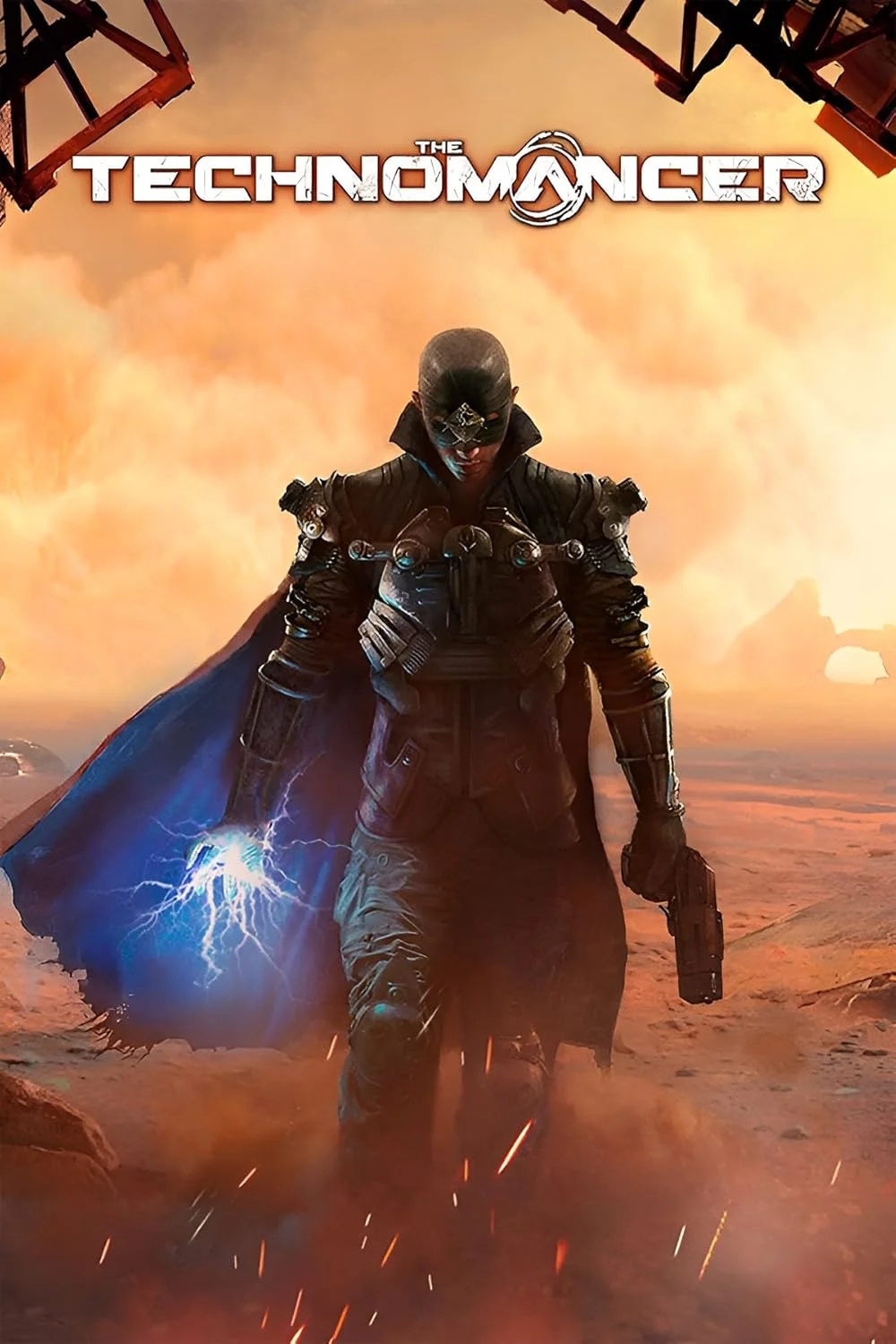
The Technomancer
This combination offers playable performance with an average of 35 FPS, though you may want to lower settings for smoother gameplay.
Average FPS: resolution vs quality settings
| Ultra | High | Medium | Low | |
|---|---|---|---|---|
| 4K Ultra HD | 13 | 17 | 20 | 26 |
| 1440p QHD | 24 | 31 | 36 | 47 |
| 1080p Full HD | 37 | 47 | 55 | 71 |
Cell color: green is 120+ FPS, teal is 60+, amber is 30+, red is below 30.
The Technomancer with AMD Ryzen 7 5700X3D + Intel Arc B370, In-Depth Analysis
The Technomancer, a 2016 Action RPG, is not a title known for pushing modern hardware to its limits, yet the combination of AMD’s Ryzen 7 5700X3D processor and Intel’s Arc B370 integrated graphics produces a distinct performance profile. The measured data for this pairing, drawn from a benchmark database, reveals a system that is heavily constrained by its graphics solution, with frame rates that scale predictably across resolutions and settings. The Ryzen 7 5700X3D, a desktop chip with 8 cores and 16 threads based on the Zen 3 architecture, brings substantial processing power to the table, but the Arc B370, an integrated graphics processor from Intel’s Panther Lake generation, operates in a different performance tier entirely. This analysis breaks down the measured FPS results, contextualizes the combo’s ranking, and examines the roles of both the CPU and GPU in this specific game’s benchmarks.
Resolution Scaling
The measured FPS data for The Technomancer shows a clear and consistent pattern as resolution increases from 1920x1080 to 3840x2160. At 1920x1080 with High settings, the combo achieves an average of 47 FPS. Moving to 2560x1440 at the same High preset, the average drops to 31 FPS, a reduction of approximately 34%. At 3840x2160, the average falls further to 17 FPS, which represents a 45% decline from the 1440p figure and a 64% decline from the 1080p figure. This steep scaling curve is a hallmark of a system where the GPU is the primary bottleneck; the rendering load increases quadratically with pixel count, and the Arc B370’s limited throughput becomes increasingly exposed.
The pattern holds across all settings presets. At Low settings, the averages are 71 FPS at 1080p, 47 FPS at 1440p, and 26 FPS at 4K. The drop from 1080p to 1440p is 33.8%, and from 1440p to 4K is 44.7%. Medium settings show 55 FPS at 1080p, 36 FPS at 1440p, and 20 FPS at 4K, with corresponding drops of 34.5% and 44.4%. Ultra settings, which are the most demanding, yield 37 FPS at 1080p, 24 FPS at 1440p, and 13 FPS at 4K, with reductions of 35.1% and 45.8% respectively. The consistency of these percentage drops—roughly one-third between 1080p and 1440p, and another 45% between 1440p and 4K—indicates that the performance scaling is almost purely a function of pixel count, with no unexpected cliffs or plateaus.
This scaling behavior suggests that the CPU is not a limiting factor at any resolution tested. If the Ryzen 7 5700X3D were the bottleneck, we would expect to see frame rates plateau at lower resolutions, with 1080p and 1440p results converging. Instead, every resolution step produces a proportional change in FPS, which is the classic signature of a GPU-bound scenario. The data indicates that the Arc B370’s compute and memory resources are fully saturated even at 1080p, and the additional pixel workload at higher resolutions translates directly into lower frame rates. For a game like The Technomancer, which is not particularly demanding by modern standards, this combo remains playable at 1080p with Low settings (71 FPS), but becomes progressively less viable as resolution and quality settings increase. The 4K Ultra result of 13 FPS is effectively unusable for interactive gameplay, while even 1440p Medium at 36 FPS is marginal.
How This Combo Ranks
Within the benchmark database, this specific combination of the AMD Ryzen 7 5700X3D and the Intel Arc B370 ranks 2603 out of 2825 tested combos for The Technomancer. This places the pairing in the bottom 8% of all configurations, a position that reflects the GPU’s limited capability rather than any deficiency in the processor. The combo rank of 2603, with 2825 total combos, indicates that the vast majority of other systems tested—including those with older or lower-tier discrete graphics cards—are able to outperform this integrated graphics solution in this game.
To contextualize the GPU’s standing, the Arc B370’s average benchmark score across all tests is 1184, which places it in the 5th percentile of all GPUs. Its nearest rivals in the database are the ATI Mobility Radeon HD 5570 (average score 1186, a delta of -0.2%), the ATI Radeon HD 5770 (average score 1190, a delta of -0.5%), and the AMD Radeon HD 7650M (average score 1192, a delta of -0.7%). These comparisons are striking, as they pit a modern 3nm integrated GPU against discrete graphics cards from over a decade ago. The Arc B370 is essentially on par with these legacy parts, with deltas of less than one percent in either direction. The AMD FirePro M2000 is the only rival with a lower score (1168), giving the Arc B370 a 1.4% advantage.
The combination’s low rank is therefore driven entirely by the GPU component. The CPU, by contrast, is a high-performing part. The Ryzen 7 5700X3D has an average benchmark score of 24709 and sits in the 77th percentile of all CPUs. Its nearest rivals include the AMD Ryzen 5 7600X3D (average score 24728, a delta of -0.1%), the AMD Ryzen 9 5900HX (average score 24822, a delta of -0.5%), the Intel Core i5-12450HX (average score 24576, a delta of 0.5%), and the Intel Core i5-11600 (average score 24563, a delta of 0.6%). These deltas are all within one percent, indicating that the 5700X3D is squarely in the middle of a tightly clustered group of capable processors. The data shows that this CPU is more than adequate for The Technomancer, and its performance headroom is wasted when paired with the Arc B370, as the GPU cannot translate the CPU’s capacity into higher frame rates.
GPU Role
The Intel Arc B370 is an integrated GPU based on the Xe3-LPG architecture, built on Intel’s 3nm process node. It operates with a base clock of 300 MHz and a boost clock of 2400 MHz, and it features 1280 shading units, 40 texture mapping units, and 20 raster output pipelines. The GPU also includes 10 ray tracing cores, though The Technomancer, being a 2016 title, is unlikely to use them. Its pixel rate is 48.00 GPixel/s, and its texture rate is 96.00 GTexel/s, with a FP32 compute throughput of 6.144 TFLOPS.
The most defining characteristic of this GPU, however, is its memory configuration. The Arc B370 uses “System Shared” memory, meaning it relies on the host system’s RAM rather than dedicated VRAM. The memory type, bus width, and bandwidth are all listed as “System Shared” or “System Dependent,” which makes the GPU’s performance heavily reliant on the system’s memory subsystem. In this configuration, the Ryzen 7 5700X3D supports dual-channel DDR4 memory with a bandwidth of 51.2 GB/s. While this is adequate for CPU tasks, it is a severe constraint for an integrated GPU that needs to access textures and frame buffers through the same memory path. The shared memory architecture likely contributes to the GPU’s low benchmark scores, as memory latency and bandwidth become critical bottlenecks in GPU-bound workloads.
The GPU’s performance data is sparse, with only one benchmark result available: a 3DMark Steel Nomad DX12 score of 1184. This single score is the basis for its 5th percentile ranking and its average benchmark score of 1184. The nearest rival comparisons, showing near-identical scores to the ATI Radeon HD 5770 and AMD Radeon HD 7650M, underscore the Arc B370’s position as a low-end graphics solution. For The Technomancer, this means the GPU is the definitive limiting factor. The measured FPS results, ranging from 13 FPS at 4K Ultra to 71 FPS at 1080p Low, are consistent with a GPU that has limited shading power and constrained memory bandwidth. The boost clock of 2400 MHz is relatively high for an integrated part, but the low base clock and the shared memory architecture prevent it from sustaining performance in demanding scenarios.
Measured FPS Breakdown
The measured FPS data for The Technomancer provides a complete picture of this combo’s performance across three resolutions and four quality presets. At 1920x1080, the lowest resolution tested, the system delivers an average of 71 FPS on Low settings, 55 FPS on Medium, 47 FPS on High, and 37 FPS on Ultra. The Medium preset also records a minimum FPS of 47 and a maximum of 63, indicating some frame time variance, but the averages suggest a generally stable experience at this resolution. The 1080p Low result is the only configuration that achieves a frame rate above 60 FPS, making it the sole option for smooth gameplay.
Moving to 2560x1440, the averages drop to 47 FPS on Low, 36 FPS on Medium, 31 FPS on High, and 24 FPS on Ultra. The Medium preset shows a minimum of 30 FPS and a maximum of 41 FPS, which means that even at this mid-range setting, the frame rate can dip below 30 FPS, a threshold often considered the minimum for acceptable playability. The 1440p results are consistently below the 1080p figures by roughly one-third, reinforcing the GPU-bound nature of the system.
At 3840x2160, the averages fall to 26 FPS on Low, 20 FPS on Medium, 17 FPS on High, and 13 FPS on Ultra. The Medium preset at 4K has a minimum of 17 FPS and a maximum of 23 FPS, showing that the frame rate is barely within the range of slideshow territory. None of the 4K configurations approach playable frame rates, with even the Low preset failing to reach 30 FPS. The data shows a clear hierarchy: 1080p is the only viable resolution for this combo, and even then, only Low settings deliver a frame rate that most users would consider smooth. The progression from 1080p Low (71 FPS) to 4K Ultra (13 FPS) represents an 81.7% reduction in average frame rate, a stark illustration of the GPU’s limitations.
FAQ
Q: What is the best resolution and settings combination for this CPU-GPU pairing in The Technomancer?
A: The data shows that 1920x1080 with Low settings produces an average of 71 FPS, the highest measured result. This is the only configuration that exceeds 60 FPS. For a more balanced visual quality, 1080p Medium at 55 FPS is also playable, but High and Ultra at 1080p (47 and 37 FPS) are below the 60 FPS threshold.
Q: How does the Intel Arc B370 compare to its nearest GPU rivals?
A: The Arc B370 has an average benchmark score of 1184, placing it in the 5th percentile of all GPUs. Its nearest rivals are the ATI Mobility Radeon HD 5570 (score 1186, delta -0.2%), the ATI Radeon HD 5770 (score 1190, delta -0.5%), and the AMD Radeon HD 7650M (score 1192, delta -0.7%). All of these are within one percent of the Arc B370’s score.
Q: Is the Ryzen 7 5700X3D a bottleneck in this game?
A: No. The CPU has an average benchmark score of 24709 and ranks in the 77th percentile of all CPUs. Its nearest rivals, such as the AMD Ryzen 5 7600X3D (score 24728, delta -0.1%) and the AMD Ryzen 9 5900HX (score 24822, delta -0.5%), are all within one percent. The FPS scaling across resolutions indicates the GPU is the limiting factor, not the CPU.
Q: What is the combo’s overall ranking for The Technomancer?
A: The combination of the AMD Ryzen 7 5700X3D and the Intel Arc B370 ranks 2603 out of 2825 tested combos for this game. This places it in the bottom 8% of all configurations, a result driven by the GPU’s low performance relative to other graphics solutions.
Q: Can this combo handle 4K gaming in The Technomancer?
A: The measured data shows that at 3840x2160, the average FPS ranges from 26 on Low settings to 13 on Ultra settings. Even the Low preset fails to reach 30 FPS, making 4K gaming impractical with this pairing.
Q: What are the key specifications of the Intel Arc B370 that affect its performance?
A: The Arc B370 has a base clock of 300 MHz and a boost clock of 2400 MHz, with 1280 shading units. It uses System Shared memory, meaning its bandwidth is system-dependent, which is a significant constraint. Its FP32 performance is 6.144 TFLOPS, and it has a pixel rate of 48.00 GPixel/s.
CPU Role
The AMD Ryzen 7 5700X3D is a desktop processor from the 5000 series, released in January 2024 with a launch MSRP of $249. It features 8 cores and 16 threads, based on the Zen 3 architecture with the Vermeer codename, manufactured on TSMC’s 7nm process. The CPU has a base clock of 3.00 GHz and a boost clock of 4.10 GHz, with a TDP of 105 W. It supports DDR4 memory in a dual-channel configuration, providing a memory bandwidth of 51.2 GB/s. The L3 cache is 96 MB shared, which is a defining feature of the X3D series, though the data does not specify whether this includes 3D V-Cache.
In terms of raw processing power, the 5700X3D delivers strong benchmark results. Its Cinebench R23 multicore score is 22366, and its single-core score is 3157. In Geekbench, it achieves a multicore score of 11086 and a single-core score of 1849. The PassMark multithread score is 26318, with a single-thread score of 2970. These numbers show a processor that is well-suited for both multithreaded workloads and everyday tasks. Its 3DMark scores include 6764 for 16 threads, 5357 for 8 threads, and 804 for single-thread, indicating solid scaling across core counts.
For The Technomancer, the CPU’s role is to feed the GPU with draw calls and game logic. The game, released in 2016, is not known for being CPU-intensive, and the 5700X3D’s 8 cores and 16 threads provide ample headroom. The measured FPS data, which shows consistent scaling with resolution, confirms that the CPU is not a limiting factor. Even at 1080p Low, where the system achieves 71 FPS, the CPU is likely operating well below its maximum capacity. The 96 MB L3 cache may also help with game data locality, though the benefit is overshadowed by the GPU’s constraints.
The CPU’s performance relative to its nearest rivals is essentially a tie. The AMD Ryzen 5 7600X3D is 0.1% faster in average score, while the AMD Ryzen 9 5900HX is 0.5% faster, and the Intel Core i5-12450HX and i5-11600 are 0.5% and 0.6% slower, respectively. These tiny deltas mean that swapping the 5700X3D for any of these processors would have no measurable impact on The Technomancer’s frame rates, given the GPU bottleneck. The CPU’s 77th percentile ranking among all processors further emphasizes that this component is not the weak link in this pairing. Any performance issue in this game can be attributed almost entirely to the Intel Arc B370, which sits at the 5th percentile of GPUs. The data presents a clear picture: a high-end CPU paired with a low-end GPU produces frame rates that reflect the GPU’s limitations, and no amount of CPU headroom can compensate for the graphics solution’s lack of throughput.
Hardware Specifications
AMD Ryzen 7 5700X3D
Intel Arc B370
FPS Benchmarks by Resolution & Settings
Performance data for AMD Ryzen 7 5700X3D + Intel Arc B370 in The Technomancer
| Resolution | Settings | Avg FPS |
|---|---|---|
| 3840x2160 | Low | 26.0 |
| 3840x2160 | Medium | 20.0 |
| 3840x2160 | High | 17.0 |
| 3840x2160 | Ultra | 13.0 |
| 2560x1440 | Low | 47.0 |
| 2560x1440 | Medium | 36.0 |
| 2560x1440 | High | 31.0 |
| 2560x1440 | Ultra | 24.0 |
| 1920x1080 | Low | 71.0 |
| 1920x1080 | Medium | 55.0 |
| 1920x1080 | High | 47.0 |
| 1920x1080 | Ultra | 37.0 |
The Technomancer with Ryzen 7 5700X3D + Other GPUs
See how The Technomancer performs with the same CPU but different graphics cards.
The Technomancer with Arc B370 + Other CPUs
See how The Technomancer performs with the same GPU but different processors.
Other Games with Ryzen 7 5700X3D + Arc B370
Explore FPS benchmarks for other games using this same hardware combination.