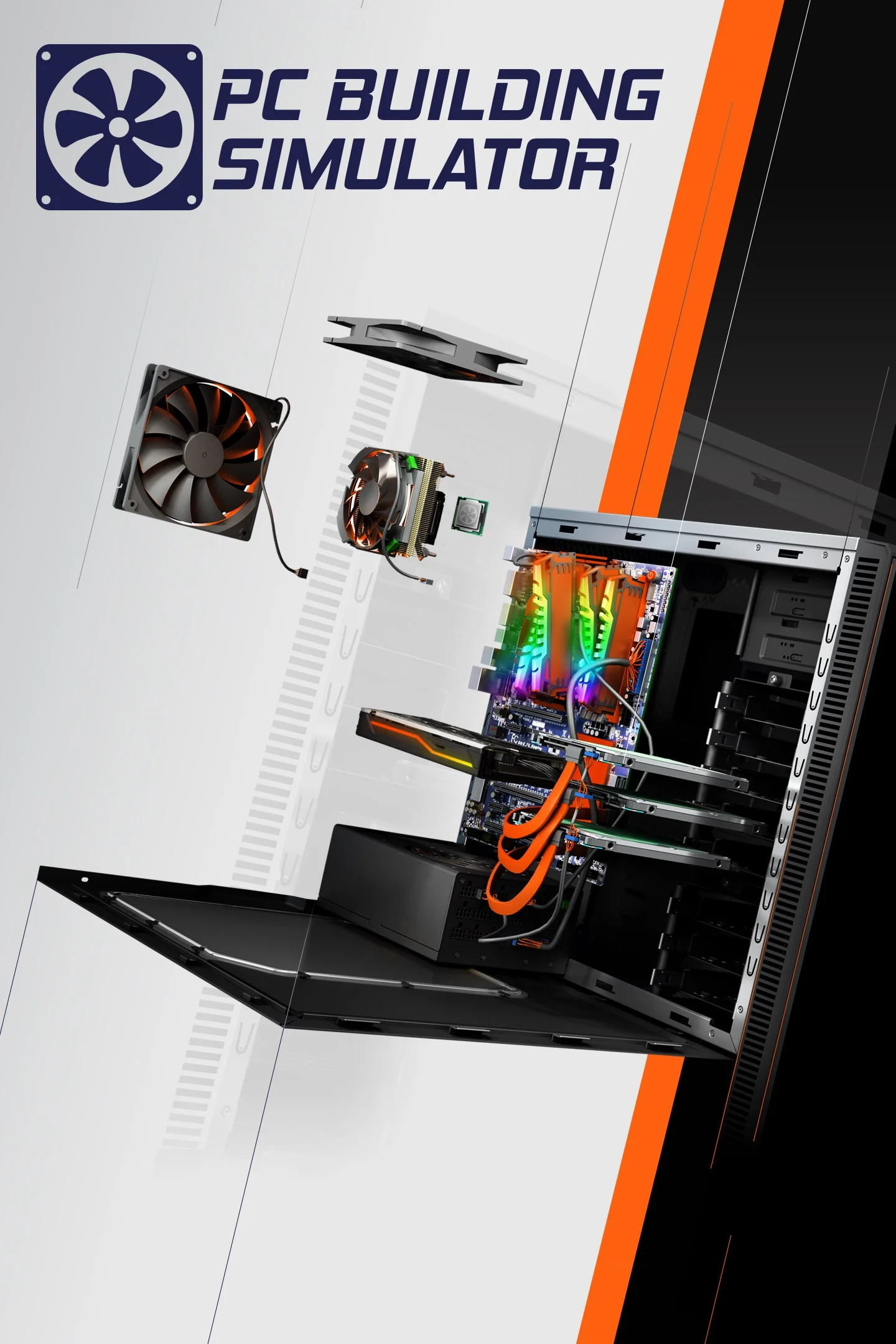
Pc Building Simulator
This combination offers playable performance with an average of 54 FPS, though you may want to lower settings for smoother gameplay.
Average FPS: resolution vs quality settings
| Ultra | High | Medium | Low | |
|---|---|---|---|---|
| 4K Ultra HD | 21 | 20 | 29 | 41 |
| 1440p QHD | 39 | 41 | 55 | 74 |
| 1080p Full HD | 58 | 63 | 85 | 121 |
Cell color: green is 120+ FPS, teal is 60+, amber is 30+, red is below 30.
Pc Building Simulator with AMD Ryzen 7 5700G + AMD Radeon RX 580, In-Depth Analysis
# Pc Building Simulator: AMD Ryzen 7 5700G + AMD Radeon RX 580
This combo ranks 1620th out of 1769 tested configurations in Pc Building Simulator, placing it in the bottom 9% of all combos evaluated. The pairing of AMD's 8-core Ryzen 7 5700G with the Radeon RX 580 produces playable frame rates at 1080p but struggles significantly at higher resolutions, with the benchmark data revealing a system that is clearly GPU-limited in most scenarios. The CPU's strong multi-threaded performance — evidenced by a Cinebench R23 multi-core score of 20755 and an 83rd percentile ranking among all CPUs — contrasts sharply with the GPU's modest 53rd percentile standing, creating an imbalance that becomes increasingly apparent as resolution and settings demands rise.
How This Combo Ranks
The 1620th position out of 1769 combos places this system in the lower tier of tested configurations for Pc Building Simulator. This ranking reflects a combination that delivers adequate 1080p performance but falls behind the majority of systems evaluated for this title. The GPU's average benchmark score of 13559 places it just 0.3% below the NVIDIA GeForce GTX 570 and 0.1% above the GTX 950, indicating that the RX 580 sits in a crowded mid-range performance band. Meanwhile, the CPU's average benchmark score of 25626 places it within 0.6% of the AMD Ryzen 5 7640U and just 0.5% ahead of the Intel Core 5 210H, showing that the processor is competitive with modern mid-range options. The substantial gap between the CPU's 83rd percentile ranking and the GPU's 53rd percentile ranking suggests that the graphics card is the primary constraint on overall system performance in this game, a conclusion supported by the measured FPS data across resolutions.
GPU Role
The AMD Radeon RX 580, built on the Polaris 20 chip with GCN 4.0 architecture, provides 8 GB of GDDR5 memory on a 256-bit bus, delivering 256.0 GB/s of bandwidth. Its base clock of 1257 MHz and boost clock of 1340 MHz, combined with 2304 shading units, yield a pixel rate of 42.88 GPixel/s and a texture rate of 193.0 GTexel/s. The GPU's FP32 throughput of 6.175 TFLOPS places it in a performance class where it can handle 1080p gaming comfortably but begins to show limitations at higher resolutions. Its 53rd percentile ranking among all GPUs, with an average benchmark score of 13559, puts it within 1.1% of the AMD Radeon Pro 455 and essentially tied with the GTX 570 and GTX 950. In Pc Building Simulator, the GPU's 8 GB VRAM capacity proves sufficient even at 4K Ultra settings, where the average FPS of 20.5 suggests the card is compute-bound rather than memory-starved. The 185 W TDP and dual-slot design indicate a power-hungry but conventional graphics solution typical of its 2017 release era.
CPU Role
The AMD Ryzen 7 5700G brings substantial processing power to this pairing, featuring 8 cores and 16 threads based on the Zen 3 architecture (Cezanne codename) built on TSMC's 7 nm process. With a base clock of 3.80 GHz and a boost clock of 4.60 GHz, this CPU delivers strong single-threaded performance — evidenced by its Cinebench R23 single-core score of 2930 — and exceptional multi-threaded capability, with a Cinebench R23 multi-core score of 20755. Its 16 MB of L3 cache and dual-channel DDR4 memory support with 51.2 GB/s bandwidth provide adequate data throughput for gaming workloads. The CPU's 83rd percentile ranking among all processors, with an average benchmark score of 25626, places it just 0.3% below the AMD Ryzen 7 6800U and 0.6% ahead of the Ryzen 5 7640U, indicating strong competitiveness in its class. In Pc Building Simulator, the CPU's capabilities far exceed what the RX 580 can utilize, particularly at higher resolutions where the GPU becomes the bottleneck. The processor's integrated Radeon Vega 8 graphics are present but irrelevant when paired with a discrete GPU.
Measured FPS Breakdown
At 1920x1080, the combo delivers playable frame rates across all settings. Low settings produce an average of 121.1 FPS, Medium averages 84.7 FPS, High averages 62.9 FPS, and Ultra averages 57.6 FPS. These figures show that 1080p gaming is well within the capabilities of this system, with even Ultra settings maintaining above 55 FPS average. Moving to 2560x1440, performance drops noticeably: Low averages 73.8 FPS, Medium averages 55.3 FPS, High averages 40.9 FPS, and Ultra averages 38.8 FPS. The 1440p results indicate that competitive frame rates require Medium settings or lower. At 3840x2160, the system struggles significantly: Low averages 40.9 FPS, Medium averages 29.2 FPS, High averages 20.2 FPS, and Ultra averages 20.5 FPS. The 4K results are largely unplayable for smooth gameplay, with only Low settings approaching acceptable frame rates. The data shows a clear pattern: the RX 580 provides solid 1080p performance, acceptable 1440p performance at reduced settings, and marginal 4K performance even at the lowest settings.
Resolution Scaling
The FPS scaling from 1080p to 4K reveals a system that is overwhelmingly GPU-limited. At Low settings, performance drops from 121.1 FPS at 1080p to 73.8 FPS at 1440p (a 39% reduction) and further to 40.9 FPS at 4K (a 66% reduction from 1080p). At High settings, the decline is steeper: from 62.9 FPS at 1080p to 40.9 FPS at 1440p (35% reduction) and 20.2 FPS at 4K (68% reduction). The consistency of these percentage drops across settings — roughly one-third fewer frames at 1440p and two-thirds fewer at 4K — indicates that the GPU's compute throughput is the limiting factor, as resolution scaling in this manner is characteristic of a graphics-bound workload. The CPU's ample multi-threaded headroom, demonstrated by its 20755 Cinebench R23 multi-core score, ensures that it does not become a constraint even at 1080p Low settings where the GPU is pushed hardest. The RX 580's 256.0 GB/s memory bandwidth and 6.175 TFLOPS FP32 throughput are simply insufficient to maintain high frame rates as pixel count increases. Interestingly, the gap between High and Ultra settings narrows at 4K (20.2 vs 20.5 FPS) compared to 1080p (62.9 vs 57.6 FPS), suggesting that at 4K the system becomes so GPU-bound that additional settings overhead has minimal impact on frame rate. This scaling behavior indicates that users seeking higher resolutions would benefit more from a GPU upgrade than from any CPU improvement, as the Ryzen 7 5700G provides more than sufficient processing power for this title.
Hardware Specifications
AMD Ryzen 7 5700G
AMD Radeon RX 580
FPS Benchmarks by Resolution & Settings
Performance data for AMD Ryzen 7 5700G + AMD Radeon RX 580 in Pc Building Simulator
| Resolution | Settings | Avg FPS |
|---|---|---|
| 3840x2160 | Low | 40.9 |
| 3840x2160 | Medium | 29.2 |
| 3840x2160 | Ultra | 20.5 |
| 3840x2160 | High | 20.2 |
| 2560x1440 | Low | 73.8 |
| 2560x1440 | Medium | 55.3 |
| 2560x1440 | High | 40.9 |
| 2560x1440 | Ultra | 38.8 |
| 1920x1080 | Low | 121.1 |
| 1920x1080 | Medium | 84.7 |
| 1920x1080 | High | 62.9 |
| 1920x1080 | Ultra | 57.6 |
Pc Building Simulator with Ryzen 7 5700G + Other GPUs
See how Pc Building Simulator performs with the same CPU but different graphics cards.
Pc Building Simulator with RX 580 + Other CPUs
See how Pc Building Simulator performs with the same GPU but different processors.
Other Games with Ryzen 7 5700G + RX 580
Explore FPS benchmarks for other games using this same hardware combination.