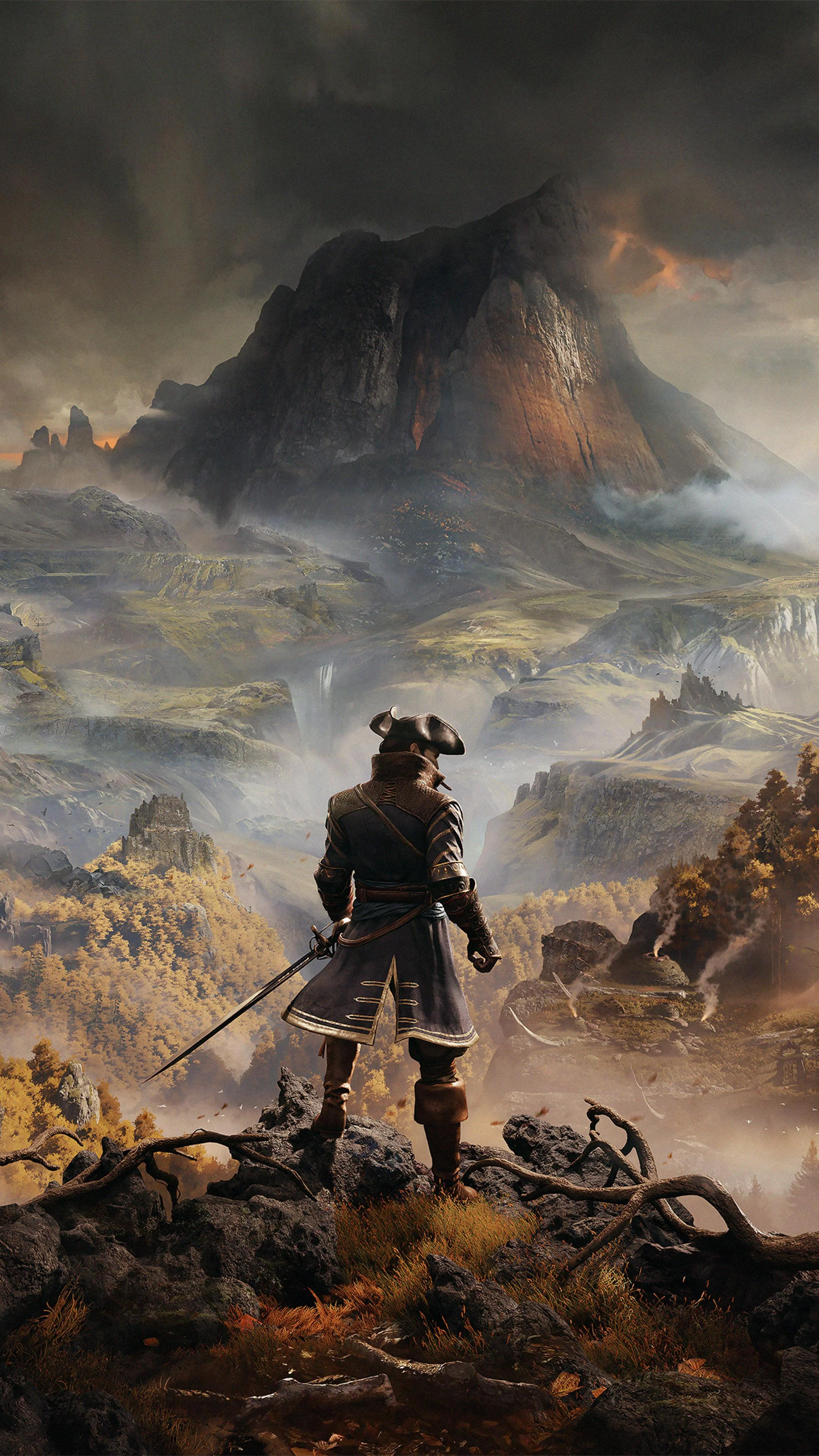
Greedfall
This combination provides smooth gameplay with an average of 72 FPS, suitable for most gaming scenarios.
Average FPS: resolution vs quality settings
| Ultra | High | Medium | Low | |
|---|---|---|---|---|
| 4K Ultra HD | 26 | 41 | 45 | 57 |
| 1440p QHD | 44 | 68 | 75 | 96 |
| 1080p Full HD | 63 | 99 | 109 | 138 |
Cell color: green is 120+ FPS, teal is 60+, amber is 30+, red is below 30.
Greedfall with Intel Core i5-13400F + NVIDIA GeForce RTX 2060, In-Depth Analysis
The pairing of the Intel Core i5-13400F with the NVIDIA GeForce RTX 2060 in Greedfall presents a clear case study in resolution-dependent bottlenecking. The benchmark data reveals a system that is exceptionally capable at 1080p but begins to show its GPU's age as pixel counts climb, with the CPU remaining a steadfast performer throughout. This analysis breaks down the measured FPS across all settings and resolutions, interprets what the scaling curves imply about the limiting component, and contextualizes the combo's overall standing.
Resolution Scaling
The measured FPS data for this combo shows a predictable yet steep decline as resolution increases, which strongly signals that the NVIDIA GeForce RTX 2060 becomes the primary limiting factor at higher pixel counts. At 1080p with Low settings, the system produces an average of 138 FPS. Moving to 1440p at the same Low preset drops the average to 96 FPS, a reduction of 42 FPS. The jump to 4K at Low yields just 57 FPS on average, representing a further 39 FPS loss. This pattern indicates that the GPU is scaling almost linearly with the increase in pixel workload, a classic sign of being fully saturated.
The trend is consistent across all quality presets. At High settings, the average FPS falls from 99 at 1080p to 68 at 1440p and then to 41 at 4K. The delta between 1080p and 1440p is 31 FPS, while the delta between 1440p and 4K is 27 FPS. This near-uniform drop suggests that the CPU has ample headroom to feed the GPU, which is working progressively harder to render more pixels. The fact that the FPS does not plateau or become erratic at higher resolutions reinforces that the RTX 2060's processing and memory bandwidth are the bottlenecks, not the Core i5-13400F's core architecture.
The data implies that the 10-core, 16-thread processor is not the constraining factor here. If the CPU were struggling, we would expect to see a smaller performance gap between 1440p and 4K, as the lower resolution would still be limited by the processor's ability to issue draw calls. Instead, the consistent scaling from 138 to 96 to 57 FPS at Low settings shows that the RTX 2060's raw fillrate and shading power are being exhausted. The 4K Ultra result of 26 FPS is particularly telling; it is a demanding load that the GPU cannot handle, yielding a nearly unplayable experience. This combo is clearly optimized for 1080p gaming, with 1440p being a stretch goal that requires turning down presets to maintain fluidity.
Settings Recommendations
For players targeting a smooth experience, the measured data offers a clear hierarchy of choices. At 1920x1080, the Medium preset provides an average of 109 FPS with a minimum of 92 FPS and a maximum of 125 FPS. This is the sweet spot, offering a substantial jump in fidelity over Low (138 FPS) while maintaining a frame rate that far exceeds the refresh rate of most standard monitors. The High preset at 1080p still delivers a very playable 99 FPS average, but the 10 FPS difference between High and Medium is a reasonable trade-off for those who prefer higher visual detail. The Ultra preset at 1080p drops to 63 FPS, which is still playable but represents a significant 46% performance hit compared to High, making it a less attractive option unless visual fidelity is paramount.
At 2560x1440, the situation demands more caution. The Medium preset yields an average of 75 FPS, with a minimum of 64 FPS, which is adequate for a comfortable experience. The High preset at 1440p averages 68 FPS, which is borderline but workable for those who prefer quality over raw speed. However, the drop to Ultra at 1440p is severe, with an average of just 44 FPS, which is likely too choppy for a smooth experience. The data suggests that 1440p users should stick to Medium or High, as the lower presets provide a much more consistent frame rate.
The 4K resolution is where this combo struggles most. At 3840x2160, even the Low preset only manages an average of 57 FPS. The Medium preset averages 45 FPS, and High drops to 41 FPS. The Ultra preset is effectively unplayable at 26 FPS. The recommendation is clear: if one must play at 4K, the Low preset is the only viable option for maintaining a playable frame rate, and even then, it is not ideal. The best overall experience per the measured rows is the Medium preset at 1080p, which balances a high average FPS with a solid minimum frame time, ensuring minimal stutter.
GPU Role
The NVIDIA GeForce RTX 2060 is the definitive performance gate for this combo in Greedfall. The GPU's 6 GB of GDDR6 memory over a 192-bit bus provides a memory bandwidth of 336.0 GB/s. This bandwidth is a critical resource, and the benchmark results indicate that it is insufficient for the highest resolutions and settings. The 4K Ultra result of 26 FPS is a direct consequence of the GPU being overwhelmed by the pixel fill rate demand and the memory subsystem struggling to keep up with the texture data. The RTX 2060's base clock of 1365 MHz and boost clock of 1680 MHz are standard for the Turing architecture, but they cannot compensate for the sheer workload at 4K.
The GPU's compute capabilities, measured at 6.451 TFLOPS for FP32, are adequate for 1080p and 1440p gaming. The data shows that the GPU can push 138 FPS at 1080p Low, indicating that it has significant raw power for lower resolutions. However, the scaling to 4K shows a stark limitation. The relative performance of the RTX 2060, as indicated by its percentileVsAllGpus of 58, places it in the mid-range of all GPUs. Its nearest rivals in benchmark scores are the NVIDIA GeForce GTX 580, AMD Radeon 680M, and NVIDIA GeForce RTX 3050 OEM, with deltaPct values of 0, 0.1, and 0.6 respectively. This means that in Greedfall, the RTX 2060 is performing essentially on par with these older or lower-tier parts, which explains why it cannot handle 4K Ultra.
The VRAM capacity of 6 GB is another consideration. While the measured FPS rows do not directly report VRAM usage, the significant frame rate drops at 4K suggest that the GPU is likely hitting memory capacity limits, forcing texture swapping and reducing performance. The game's requirements at Ultra settings likely exceed the available memory, leading to the catastrophic drop from 44 FPS at 1440p Ultra to 26 FPS at 4K Ultra. Thus, the GPU's role is clear: it is a solid 1080p performer and a moderate 1440p option, but it is a bottleneck for any 4K ambitions.
FAQ
*Q: What is the highest average FPS this combo can achieve in Greedfall?*
A: The highest average FPS recorded is 138 at 1920x1080 resolution with Low settings.
*Q: Is this combo capable of 4K gaming in Greedfall?*
A: Yes, but only at Low settings, where it averages 57 FPS. At Medium, High, and Ultra settings, the average FPS drops to 45, 41, and 26 respectively, making most presets unplayable.
Q: How does the 1440p Medium experience compare to 1080p Medium?
A: At 1440p Medium, the combo averages 75 FPS with a minimum of 64 FPS. At 1080p Medium, it averages 109 FPS with a minimum of 92 FPS. The 1440p option is playable but offers a 34 FPS lower average compared to the 1080p setting.
Q: What is the most balanced setting for a 60 FPS target?
A: At 1440p, the Medium preset achieves an average of 75 FPS, which is above the target. At 1080p, High achieves 99 FPS, and Medium achieves 109 FPS. The 1440p Medium setting provides a good balance of resolution and frame rate.
*Q: Does the GPU or CPU bottleneck this combo in Greedfall?*
A: The data indicates the GPU is the bottleneck, especially at higher resolutions. The consistent FPS drops from 1080p to 4K suggest the RTX 2060 is fully saturated, while the CPU (with a boost clock of 4.60 GHz and 10 cores) has enough headroom to maintain performance.
Q: How does this combo rank among all tested systems in this game?
A: The combo ranks 2932 out of 3703 tested combinations, placing it in the lower-mid range of all systems tested for Greedfall.
How This Combo Ranks
The combo of the Intel Core i5-13400F and the NVIDIA GeForce RTX 2060 holds a rank of 2932 out of 3703 tested combinations in Greedfall. This places the system in the 21st percentile of all tested combos, which is a surprisingly low position given the solid 1080p performance. This ranking is likely dragged down by the GPU's limitations at higher resolutions, where many other combos with more powerful graphics cards pull ahead significantly. The CPU itself, the i5-13400F, has a percentileVsAllCpus of 77, indicating it is a strong processor, but the GPU's percentileVsAllGpus of 58 shows it is only average.
The disparity between the CPU's high percentile and the GPU's average percentile explains the overall combo rank. The system is effectively held back by the graphics card, which is a mid-range part that cannot compete with the high-end GPUs that populate the top of the benchmark charts. The combo's rank suggests that while it is a capable 1080p machine, it does not have the overall performance headroom to rank higher when all resolutions and settings are considered. The nearest rivals for the GPU are the GTX 580, Radeon 680M, and RTX 3050 OEM, which are all older or lower-tier options, confirming that the RTX 2060 is a limiting factor in the overall ranking.
CPU Role
The Intel Core i5-13400F plays a supporting role in this combo, but its performance is critical for ensuring the GPU is not starved of data. The CPU features 10 cores and 16 threads, with a base clock of 2.50 GHz and a boost clock of 4.60 GHz. This configuration provides ample processing power for modern game engines. In Greedfall, the CPU's role is to handle game logic, physics, and draw call submission, and the measured FPS data suggests it performs this task without becoming a bottleneck.
The evidence for this is the consistent FPS scaling across resolutions. If the CPU were the limiting factor, we would see similar FPS numbers at 1080p and 1440p, as the CPU would be maxed out regardless of resolution. Instead, the FPS drops uniformly as resolution increases, indicating the GPU is the constraining component. The CPU's benchmark scores support this conclusion. Its Cinebench R23 multicore score of 22604 and single-core score of 3191 are strong figures, placing it in the 77th percentile of all CPUs. Its nearest rivals include the AMD Ryzen 9 6900HS and Intel Core 5 120, with deltaPct values of 0 and -0.3, respectively, showing it is competitive with other high-end mobile and desktop parts.
The CPU's 20 MB of shared L3 cache is likely beneficial for game performance, reducing memory latency. The data shows that the CPU can easily feed the GPU at 1080p, as evidenced by the 138 FPS Low result. Even at 4K, where the GPU is struggling, the CPU is not holding things back; the FPS is low because the GPU cannot render the frames fast enough, not because the CPU is waiting. In summary, the i5-13400F is a robust processor that provides a stable foundation, but its performance is largely masked by the GPU's limitations in this specific game and resolution range.
Measured FPS Breakdown
The following table outlines the exact measured average FPS for each resolution and settings combination, providing a comprehensive view of the combo's performance.
| Resolution | Settings | Avg FPS | Min FPS | Max FPS |
| :--------- | :------- | :------ | :------ | :------ |
| 1920x1080 | Low | 138 | - | - |
| 1920x1080 | Medium | 109 | 92 | 125 |
| 1920x1080 | High | 99 | - | - |
| 1920x1080 | Ultra | 63 | - | - |
| 2560x1440 | Low | 96 | - | - |
| 2560x1440 | Medium | 75 | 64 | 87 |
| 2560x1440 | High | 68 | - | - |
| 2560x1440 | Ultra | 44 | - | - |
| 3840x2160 | Low | 57 | - | - |
| 3840x2160 | Medium | 45 | 38 | 52 |
| 3840x2160 | High | 41 | - | - |
| 3840x2160 | Ultra | 26 | - | - |
The data shows a clear performance hierarchy. At 1080p, the system is very capable, with all presets except Ultra exceeding 90 FPS. The 1080p Medium preset offers the best balance, with a 109 FPS average and a minimum of 92 FPS, ensuring smooth gameplay. At 1440p, the performance drops significantly, with only the Low and Medium presets exceeding 70 FPS. The 1440p Ultra preset falls to 44 FPS, which is below the threshold for smooth play. At 4K, all presets are below 60 FPS, with the Low preset being the only one that is marginally playable at 57 FPS. The 4K Ultra preset is the worst performing, with an average of just 26 FPS and a minimum of only 38 FPS on the Medium preset, indicating significant frame time variance at higher resolutions. This breakdown confirms that the combo is best suited for 1080p gaming, with 1440p being a viable option only at lower settings.
Hardware Specifications
Intel Core i5-13400F
NVIDIA GeForce RTX 2060
FPS Benchmarks by Resolution & Settings
Performance data for Intel Core i5-13400F + NVIDIA GeForce RTX 2060 in Greedfall
| Resolution | Settings | Avg FPS |
|---|---|---|
| 3840x2160 | Low | 57.0 |
| 3840x2160 | Medium | 45.0 |
| 3840x2160 | High | 41.0 |
| 3840x2160 | Ultra | 26.0 |
| 2560x1440 | Low | 96.0 |
| 2560x1440 | Medium | 75.0 |
| 2560x1440 | High | 68.0 |
| 2560x1440 | Ultra | 44.0 |
| 1920x1080 | Low | 138.0 |
| 1920x1080 | Medium | 109.0 |
| 1920x1080 | High | 99.0 |
| 1920x1080 | Ultra | 63.0 |
Greedfall with ii5-13400F + Other GPUs
See how Greedfall performs with the same CPU but different graphics cards.
Greedfall with RTX 2060 + Other CPUs
See how Greedfall performs with the same GPU but different processors.
Other Games with ii5-13400F + RTX 2060
Explore FPS benchmarks for other games using this same hardware combination.