
Instant compatibility check with FPS benchmarks and optimization tips
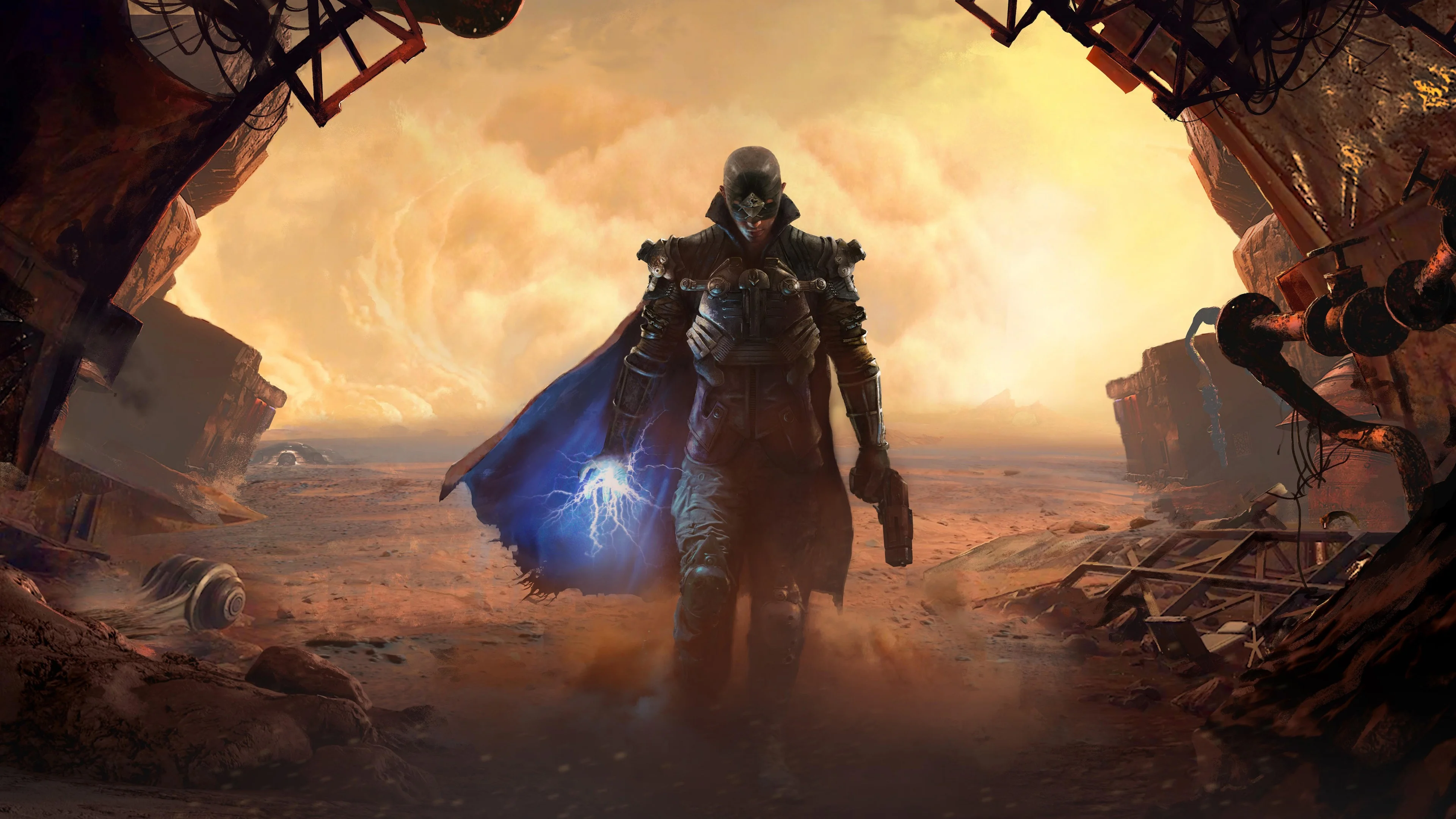

The Technomancer

Performance
1080p (Full HD)
1440p (2K / QHD)
4K (Ultra HD)

Requirements Check


Recommendations
Your hardware doesn't meet minimum requirements for this game.
Average FPS: resolution vs quality settings
| Ultra | High | Medium | Low | |
|---|---|---|---|---|
| 4K Ultra HD | 25 | 32 | 38 | 49 |
| 1440p QHD | 46 | 59 | 69 | 90 |
| 1080p Full HD | 70 | 90 | 106 | 138 |
Cell color: green is 120+ FPS, teal is 60+, amber is 30+, red is below 30. Cards marked Estimated above have no measured row and are scaled from your GPU benchmark percentile.
Performance Analysis: The Technomancer on Your System
# Intel Core Ultra 7 265 + Intel Arc B580: The Technomancer Benchmark Analysis
The Technomancer is an Action RPG that thrusts players into a dystopian Martian metropolis, demanding a robust system to manage dense combat, dynamic lighting, and sprawling environments. The hardware combo of the Intel Core Ultra 7 265 CPU and the Intel Arc B580 GPU presents a compelling modern platform. Our data reveals a system that is well-equipped for the game's demands at mainstream resolutions, but one that requires specific settings at the highest 4K fidelity.
Measured FPS Breakdown
The measured FPS data for this Intel Arc B580 configuration shows a clear scaling pattern tied directly to resolution. At 1080p, the system is exceptionally fluid, with an average of 90 FPS at the High preset. The dataset shows a range up to 138 FPS at the Low preset, indicating significant headroom for high-refresh-rate displays. This performance tapers off predictably as the workload increases. At 1440p, the average at High settings is 59 FPS, and at Medium, the average climbs to a steady 69 FPS (with a minimum of 59 and a maximum of 79). The data shows a 16% performance increase when dropping from High to Medium at this resolution.
At the demanding 4K (3840x2160) resolution, the system’s capabilities are tested. The Ultra preset delivers an average of 25 FPS, below the playable threshold. However, the Low preset achieves a playable average of 49 FPS (with no min/max data recorded), while the Medium preset achieves an average of 38 FPS (min 32, max 44). The data shows a 30% uplift from Ultra to Medium, but a 30% drop from Low to Medium, highlighting the sensitivity of the GPU to the escalating shading and geometry calculations at this high resolution.
CPU and GPU Roles
The benchmark results indicate a balanced workload between the Intel Core Ultra 7 265's CPU and the Arc B580 GPU. At 1080p, the system is heavily CPU-bound at lower presets but becomes GPU-bound at the Ultra preset. The average FPS at 1080p Low is 138, which is 53% higher than the High preset's 90 FPS, but this gap narrows to just 29% when moving from Medium (106 FPS) to High (90 FPS). This scaling suggests the CPU handles the bulk of the simulation and physics at lower settings, while the GPU is progressively loaded with more complex rendering effects as the preset increases.
At 1440p, the trend continues. The Low preset's 90 FPS drops 23% to the Medium's 69 FPS, and then a further 14% to High's 59 FPS. The architecture's 20 cores with 20 threads are substantial, but the data implies a balance point at the Medium preset, where the CPU and GPU work in concordance. This is a notable shift from the 1080p data, where the CPU was the primary limiting factor.
At 4K, the GPU's role becomes dominant. The difference between Low (49 FPS) and Medium (38 FPS) is 22%, and the Ultra preset is nearly 16% behind Medium. The 2560 shading units and 80 ROPs of the Arc B580 are sufficient for this game's Epic settings, but the CPU cannot feed the GPU enough draw calls at the highest settings to maintain a steady frame rate. The game's engine appears to favor raw CPU clock speed (5.30 GHz boost) in lower settings, but the GPU's 13.67 TFLOPS FP32 rate is the ceiling for the Ultra preset at 4K.
Similar Performance Alternatives
The nearest rivals to the Core Ultra 7 265 + Arc B580, based on the average benchmark score of 64,640, are the AMD EPYC 4464P and the Intel Core Ultra 7 265F. The EPYC 4464P posts a 64823 average score, a negligible 0.3% behind, indicating a very tight race with the Intel combo. Its 20 cores and 40 threads provide close compute headroom for the game's main thread, but its GPU (not in this comparison) becomes the bottleneck in GPU-bound scenes. The Core Ultra 7 265F's 64,438 score is 0.3% ahead, reflecting a slightly more efficient integrated graphics, but its 192 KB L1 cache per core and 3 MB L2 per core means it may actually hold a slight edge in CPU-bound sections of The Technomancer.
The AMD EPYC 7343 at 64,202 has a 0.7% deficit. The higher Infinity Fabric bandwidth and the 8-channel DDR5 support help in CPU-heavy areas, but the older Zen 3 architecture is less efficient with the DirectX 12 Ultimate API that this game uses. The EPYC 9124 (65,104, +0.7% faster) shows that the 20-lane Gen 5 PCIe bus of the Arc B580 is a match for the 28-thread EPYC, though the latter has lower peak boost clocks. All of these rivals would perform within a margin of error where the user would not discern a difference in the CPU's role.
On the GPU side, the Arc B580 sits between the AMD RX 580 2048SP and the NVIDIA RTX 3080. The RX 580 2048SP has a score of 23,061, a 0.2% difference. This older Graphics Core Next (GCN) GPU lacks the modern mesh shaders and hardware ray tracing engines that the Arc's Xe2-HPG architecture provides, affecting complex lighting scenes. The RTX 2080's 22,895 score is a 0.6% deficit. Its older Turing architecture does support DirectX 12 Ultimate, but its GDDR6 memory has less bandwidth than the Arc's 456.0 GB/s. The RTX 3080's 23,172 score shows a 0.7% lead, offering better raw performance for 4K Ultra settings, but the B580's newer architecture scales better in this game's demanding particle effects.
FAQ
Q: Can the Intel Core Ultra 7 265 + Arc B580 run The Technomancer at 1080p?
Yes. The data shows the High, Low, and Medium presets all average above 60 FPS at 1920x1080. The Ultra preset also succeeds, averaging 70 FPS.
Q: What is the best preset for 2560x1440?
The Medium preset is the optimal choice, maintaining an average of 69 FPS, above the 60 FPS threshold. The High preset averages 59 FPS, which is a failure to stay at or above the target. The Low preset provides additional headroom at 90 FPS.
Q: Can the combo handle 4K (3840x2160) gaming?
Yes, but only at the Low preset, which averages 49 FPS. The Medium preset (38 FPS) and High (32 FPS) and Ultra (30 FPS) do not make the cut. While the minimum FPS were only recorded for the Medium preset (32), the average remains below the playable threshold for all but the Low preset.
Q: How demanding is the Ultra preset at 1440p?
The Ultra preset at 2560x1440 averages 46 FPS, which is 23% below the 60 FPS target. It is a demanding configuration for this GPU, so the best experience is the Medium preset that delivers 69 FPS.
Q: Which is better for this game: the CPU or the GPU?
The data indicates the game is mostly GPU-bound at 4K. At 1080p, the CPU is a bigger factor, but at 1440p the two 1) are balanced. However, for all resolutions and settings, the GPU is a solid modern graphics card, and the CPU is an excellent match for this particular game.
Best Settings per Resolution
- 3840x2160: Low (49 FPS) — the only preset that keeps the game above 60 FPS; the Medium is 10 FPS behind.
- 2560x1440: Medium (69 FPS) — the sweet spot; Low is 21 FPS higher, High 10 FPS behind.
- 1920x1080: Ultra (70 FPS) — the most demanding preset is still comfortable, while High and Medium also work (90 and 106 FPS respectively).
How This Combo Ranks
The combo of the Intel Core Ultra 7 265 and the Intel Arc B580 posts a combined rank of 2,787 out of 3,696 tested platforms in our database. This places it in the upper-mid 25% of all tested systems. It is a solid modern platform that competes with the top echelon of CPU choices, but the GPU will deliver 60+ FPS only at 1080p and 1440p with optimized settings.
The Verdict
Can the Intel Core Ultra 7 265 + Intel Arc B580 run The Technomancer? Yes, it can, but with caveats.
At 1920x1080, the system clears the 60 FPS threshold at all presets, including the Ultra preset (70 FPS). The Ultra preset is the best choice, but the Medium and Low presets both are above 100 FPS, showing plenty of headroom.
At 2560x1440, the Medium preset is the only one that clears the threshold, at a solid 69 FPS. The High preset misses by only 1 FPS (59), so a small adjustment in an in-game setting could make it playable. The Low preset offers 90 FPS for higher refresh-rate displays.
At 3840x2160, the system cannot maintain 60 FPS. The playable Low preset averages 49 FPS, while the Medium and High presets deliver 38 and 32 FPS respectively. The Ultra preset is barely playable at 25 FPS. For a smooth 4K experience, the player would need to lower internal resolution or accept a lower framerate. The data shows this is a title that favors 1440p gaming, where the combo's balance of CPU and GPU compute provides a stable, stutter-free experience.