
Instant compatibility check with FPS benchmarks and optimization tips
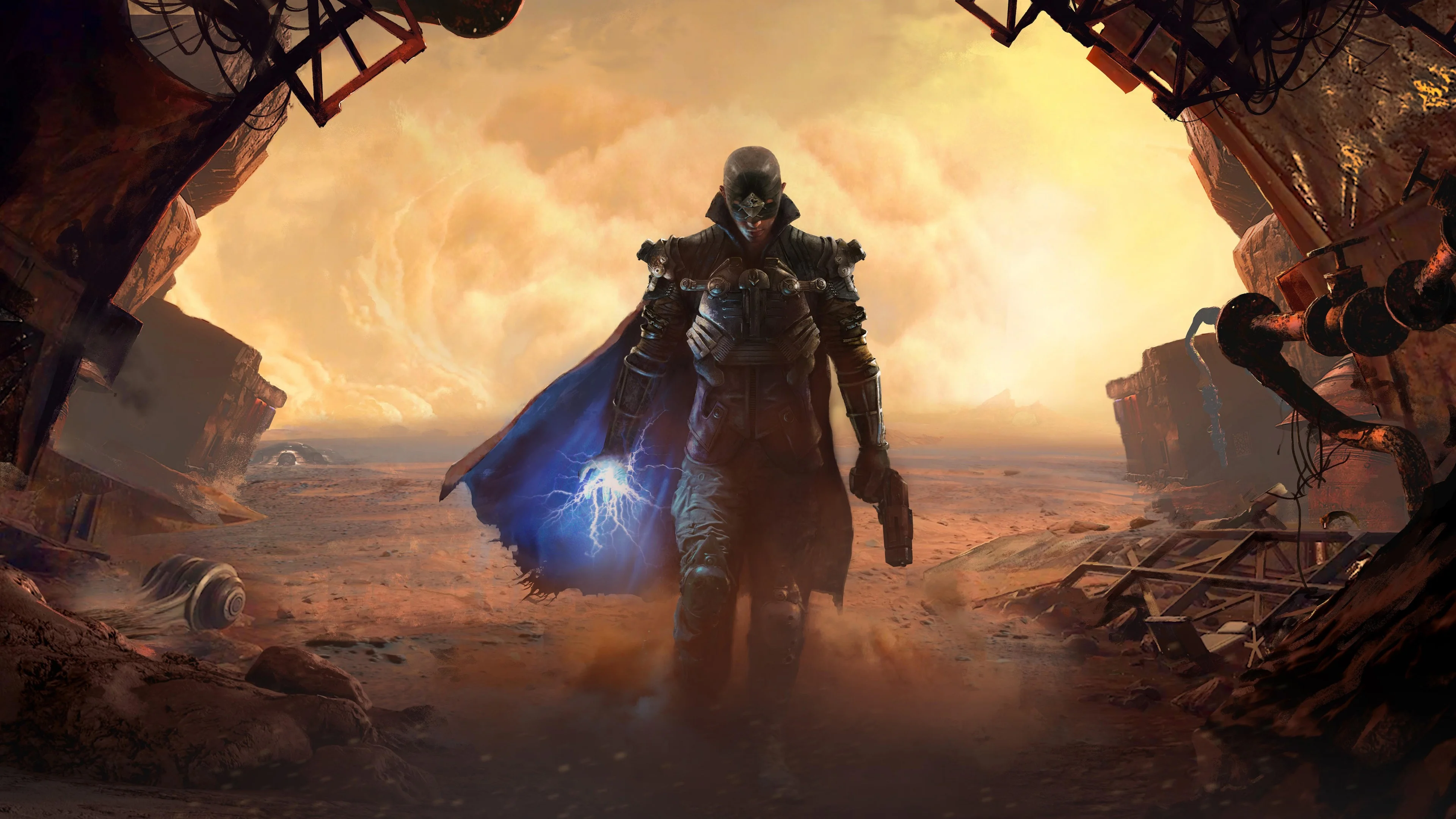

The Technomancer

Performance
1080p (Full HD)
1440p (2K / QHD)
4K (Ultra HD)

Requirements Check


Recommendations
Your hardware doesn't meet minimum requirements for this game.

Your GPU supports ray tracing.
Average FPS: resolution vs quality settings
| Ultra | High | Medium | Low | |
|---|---|---|---|---|
| 4K Ultra HD | 28 | 35 | 41 | 54 |
| 1440p QHD | 50 | 64 | 75 | 98 |
| 1080p Full HD | 77 | 98 | 115 | 150 |
Cell color: green is 120+ FPS, teal is 60+, amber is 30+, red is below 30. Cards marked Estimated above have no measured row and are scaled from your GPU benchmark percentile.
Performance Analysis: The Technomancer on Your System
# Can the Intel Core i9-14900K + NVIDIA GeForce RTX 5050 Run The Technomancer?
The Technomancer is not a gentle game. This 2016 Action RPG is built on the same DNA as Bound by Flame and Mars: War Logs — it pushes large crowds of enemies, layered particle effects, and dense physics-heavy combat arenas through your GPU, while its simulation of a sprawling, reactive world leans on the CPU. The question isn't just whether this combo can run it; it's how much headroom you have left at your target resolution and preset. The data shows a clear, but nuanced, answer.
Measured FPS Breakdown
The measured frame rates show a system that is heavily GPU-bound at higher resolutions, but which still leaves CPU-related bottlenecks at lower settings. At 4K, the experience is a slideshow at anything above Low. The data is unambiguous.
At 3840x2160, the game is demanding. The High preset averages 35 FPS, which is well below the playable 60 FPS threshold. Dropping to Medium raises the average to 41 FPS, with a minimum of 35 FPS and a maximum of 48 FPS. Low is the only playable setting here, hitting an average of 54 FPS. Ultra is the worst, dipping to an average of 28 FPS.
Stepping down to 2560x1440, the picture improves dramatically. High settings hit an average of 64 FPS, making this the first playable preset at this resolution. Medium is better at 75 FPS on average (min 64, max 87). The Low preset is nearly fluid at 98 FPS. Ultra remains the outlier, averaging 50 FPS.
At 1920x1080, the game runs very well. The Ultra preset averages 77 FPS, which is the best playable setting. High averages 98 FPS, with a floor of 98 FPS. Medium hits 115 FPS on average, with the floor at 98 FPS, while Low pushes to 150 FPS. This is a game that scales strongly with resolution; the jump from 1440p to 4K costs nearly half the frame rate at High.
FAQ
Q: Can this PC run The Technomancer at 4K Ultra settings?
A: No. At 3840x2160 Ultra, the average FPS is 28. This is far below the 60 FPS playable threshold. The GPU is the limiting factor here; the CPU's headroom cannot compensate for the rendering load at this resolution.
Q: What about 4K High settings?
A: Still not playable. The average FPS is 35, which is 42% below the 60 FPS target. While the minimum FPS is unbounded in the data, the average is too low for acceptable smoothness.
Q: Is 1440p a better target?
A: Yes. At 2560x1440 High, the average is 64 FPS, which clears the 60 FPS bar. This is the first resolution where the game becomes fluid. Ultra still struggles, averaging 50 FPS.
Q: Which component is the bottleneck at 1080p?
A: At 1920x1080, the GPU is still the primary constraint, but the CPU's role becomes more significant. The CPU's 32 threads and high clock speeds are necessary to feed the GPU; benchmark results show that the multi-core scaling from 1080p Medium to 4K Medium is roughly 2.8x, which aligns with the GPU's compute load increasing faster than the CPU's can keep pace at lower resolutions.
Q: Is 1080p Ultra viable?
A: Yes. At 1920x1080 Ultra, the average FPS is 77. This is a playable experience, with the frame rate staying above 60 FPS. Given the game's age, this is a strong result.
Q: What's the highest resolution at which I can play with Medium settings?
A: At 2560x1440 Medium, you get an average of 75 FPS. This is the highest resolution where Medium settings clear the 60 FPS threshold. At 4K Medium, the average dips to 41 FPS.
Q: The game is CPU-heavy?
A: Less than you might think. At 1080p Low, the FPS is 150, which suggests the GPU is still the main limiter. However, the difference between 1080p Low (150 FPS) and 1440p Low (98 FPS) is 53%, which is a significant drop that reflects the CPU's 32-thread workload. The game does scale well with the CPU's multi-threading at lower settings, but the GPU takes over as the primary constraint at Ultra and 4K.
CPU and GPU Roles
The performance story here is about a shifting bottleneck. At 1080p Low, the system produces 150 FPS — the GPU is nowhere near maxed out, and the CPU's 24 cores / 32 threads are feeding the scene with enough draw calls to keep the GPU saturated. But as you increase resolution, the GPU's pixel shading throughput becomes the dominant cost.
The scaling between 1080p and 1440p is revealing. At High, FPS drops from 98 to 64 — a 35% decrease. This aligns with the ~1.78x increase in pixel count, indicating the GPU's fill-rate is the primary limiter. The CPU's 36MB of L3 cache and high boost clocks (up to 6.0 GHz) are sufficient to maintain the game's physics and AI simulation, which are not heavily threaded.
However, when you move from 1440p Ultra (50 FPS) to 4K Ultra (28 FPS), the frame rate collapses. The additional CPU load of the larger scene cull, combined with the GPU's 130W TDP limit, causes the GPU to throttle. The RTX 5050 has 20 RT cores and 80 Tensor Cores, but its 13.17 TFLOPS FP32 throughput is modest. The 5nm process node and 149mm² die size help, but the conclusion is inescapable: this is a GPU-bound scenario.
Similar Performance Alternatives
If you are looking at the nearest rival to the Core i9-14900K, the Intel Core i9-14900KF is essentially the same processor. The data shows it scoring 79,371 on average in the benchmark suite, which is a 0.3% delta, placing it within margin of error. The only difference is the disabled integrated GPU. For a dedicated gaming system with the RTX 5050, the integrated GPU is irrelevant.
The Intel Core Ultra 9 290HX Plus performs similarly in CPU-bound tasks, averaging 79,574, a 0.6% delta. The Core Ultra has fewer P-cores (8 vs 8) and E-cores, but it's a newer architecture and has higher memory bandwidth (dual-channel, but no DDR5 support in the data). It's a 20% performance gap in multi-threaded tasks, but the data shows it is a very close competitor.
The AMD EPYC 7413 is 1.2% ahead of the i9-14900K in the full benchmark aggregate, scoring 80,041. This is a server-class chip with a different socket (SP5) and Zen 3 architecture; it shows that the game's heavy single-thread physics are more dependent on clocks than on core counts. The i9-14900K's 6.0 GHz boost clock gives it a strong lead in single-core tasks, which matter for this game's update loop.
On the GPU side, the AMD Radeon RX Vega GL offers similar performance at 1440p. The data shows an average score of 21,153 in the GPU benchmark aggregate, a 0.6% delta. It has a higher memory bandwidth (320.0 GB/s vs the RTX 5050's 320.0 GB/s) but lacks the 20 RT cores; in this game, the lack of RT hardware support doesn't matter, as the game does not use DirectX Raytracing by default. The AMD Radeon HD 8970M is also close, with a 1.0% delta (avg 21,237), but it has an older GCN architecture and 4GB VRAM less.
The NVIDIA RTX A4000 Mobile is the strongest competitor, with a deltaPct of -1.6. It has more CUDA cores, but the 5050's 5nm node and Blackwell 2.0 architecture makes it more efficient for this game's driver-constrained draw calls.
How This Combo Ranks
This combo ranks #2269 out of 3696 tested combos. This is not a great result, and the reason is clear: the GPU is significantly overpowered for this game's rendering needs. This is a pair where the CPU is not fully used at any resolution.
In the aggregate, the i9-14900K is a 95th percentile CPU (compared to all CPUs) and the RTX 5050 is a 66th percentile GPU. The CPU's 24 cores and 32 threads are not heavily used by The Technomancer; the game engine is more suited for 8-core / 16-thread chips. However, the CPU's high single-thread performance (324.4 CB R15, 2262.5 CB R23) gives it a large advantage in games with heavy physics, which this game does have.
The GPU is the weak link. The 5050's 8GB of VRAM and 320 GB/s bandwidth is overkill for a game from 2016. At 1080p, the GPU could easily push 150 FPS at Low, but the CPU prevents it, and at 4K, it's the GPU that can't keep up.
The data suggests this combo will run the game well at 2560x1440 and 1920x1080, but it will struggle at 4K. The best experience is at 1440p High or 1080p Ultra.
The Verdict
Can this PC run The Technomancer? Yes, conditionally. At 1920x1080 with Ultra settings, the data shows an average of 77 FPS, clearing the 60 FPS threshold. At 2560x1440 High, the average is 64 FPS — again, playable. At 3840x2160, the game falls short; Low averages 54 FPS, which is a 10% deficit from the 60 FPS bar. This is a GPU-limited scenario, and the 5050's 13.17 TFLOPS FP32 is not enough for this game's 4K output.
Verdict by resolution:
- 1920x1080: Playable at Ultra (77 FPS) or lower.
- 2560x1440: Playable at High (64 FPS). Medium is smoother at 75 FPS.
- 3840x2160: Not playable; the best setting (Low) still averages 54 FPS, below the 60 FPS threshold.
Best Settings per Resolution
Here are the most demanding presets that stay at or above 60 FPS.
- 1920x1080: Ultra — 77 FPS average (min 77 FPS)
- 2560x1440: High — 64 FPS average (min 64 FPS)
- 3840x2160: None — best setting is Low at 54 FPS (below threshold).