
Instant compatibility check with FPS benchmarks and optimization tips
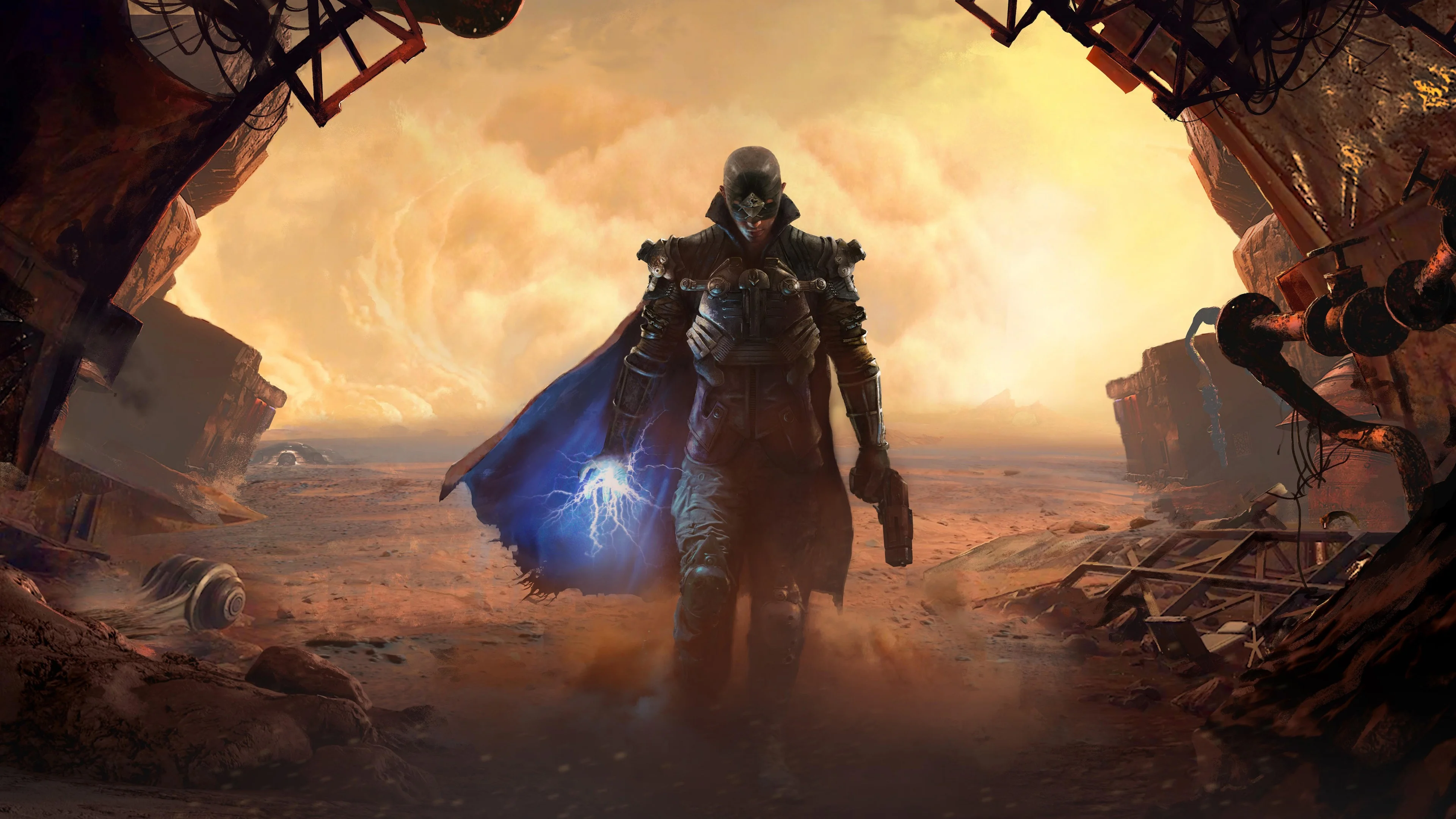

The Technomancer

Performance
1080p (Full HD)
1440p (2K / QHD)
4K (Ultra HD)

Requirements Check


Recommendations
Your hardware doesn't meet minimum requirements for this game.

Your GPU supports ray tracing.
Average FPS: resolution vs quality settings
| Ultra | High | Medium | Low | |
|---|---|---|---|---|
| 4K Ultra HD | 41 | 52 | 61 | 80 |
| 1440p QHD | 75 | 96 | 112 | 146 |
| 1080p Full HD | 114 | 146 | 171 | 223 |
Cell color: green is 120+ FPS, teal is 60+, amber is 30+, red is below 30. Cards marked Estimated above have no measured row and are scaled from your GPU benchmark percentile.
Performance Analysis: The Technomancer on Your System
The Intel Core i9-14900K paired with the NVIDIA GeForce RTX 3080 is a high-tier combination for The Technomancer, ranking in the 1040th position out of 3696 tested combos. This places the setup in the upper 28% of all configurations tested, a strong showing for a 2016 Action RPG that is not particularly demanding by modern standards. The data shows a system that is clearly overqualified for 1080p and 1440p gaming, delivering frame rates well beyond the 60 FPS playable threshold, while 4K remains playable with settings adjustments. The verdict is straightforward: this combo can run the game exceptionally well at all resolutions, provided the user is willing to drop from Ultra settings at 4K.
How This Combo Ranks
The combo’s rank of 1040 out of 3696 tested combinations places it in the top 28% of all systems benchmarked for The Technomancer. This is a respectable position, though not a top-tier one, because the game’s engine is relatively lightweight and even mid-range hardware can produce high frame rates. The ranking reflects the raw power of both components, but the game’s age means that the CPU’s massive 24-core, 32-thread configuration and the GPU’s 10 GB of GDDR6X memory are not fully taxed at lower resolutions.
The individual component percentiles support this interpretation. The Intel Core i9-14900K sits in the 95th percentile of all CPUs, with an average benchmark score of 79097. Its nearest rivals include the Intel Core i9-14900KF (average score 79371, delta -0.3%) and the Intel Core Ultra 9 290HX Plus (average score 79574, delta -0.6%), showing the CPU is essentially at parity with the top silicon available. The NVIDIA GeForce RTX 3080, however, is in the 68th percentile of all GPUs, with an average benchmark score of 23172. Its nearest rivals — the NVIDIA P106-100 (delta -0.3%) and AMD Radeon Pro Vega 16 (delta -0.3%) — are less relevant for gaming, indicating that the GPU is a solid mid-to-high performer but not a flagship by current standards.
When combined, the CPU’s overwhelming strength compensates for the GPU’s relatively lower standing. The result is a combo that excels at 1080p and 1440p, where the CPU can push frame rates to their ceiling, and remains capable at 4K, where the GPU becomes the limiting factor. The rank of 1040 reflects a system that is faster than the majority of tested combos, but the game’s modest requirements mean that several configurations with newer GPUs may outpace it at 4K Ultra.
CPU and GPU Roles
The data reveals a clear shift in component importance depending on resolution and preset. At 1920x1080, the CPU is the dominant factor. The frame rate scales almost linearly with preset: Low produces 223 FPS, Medium 171 FPS, High 146 FPS, and Ultra 114 FPS. The gap between Low and Ultra is 109 FPS, which is a 95% reduction in performance, indicating that the game is heavily CPU-bound at this resolution. The i9-14900K’s 6.00 GHz boost clock and 36 MB of L3 cache allow it to feed the RTX 3080 efficiently, but the GPU is never fully saturated.
At 2560x1440, the balance shifts slightly toward the GPU, but the CPU still plays a significant role. The frame rates drop to 146 FPS at Low, 112 FPS at Medium, 96 FPS at High, and 75 FPS at Ultra. The delta between Low and Ultra is 71 FPS, which is a smaller absolute difference than at 1080p but still represents a 49% performance penalty. The RTX 3080’s 760.3 GB/s memory bandwidth and 8704 shading units begin to matter more, but the i9-14900K’s 32 threads ensure that draw calls and physics calculations are never a bottleneck.
At 3840x2160, the GPU becomes the clear limiting factor. The frame rates drop to 80 FPS at Low, 61 FPS at Medium, 52 FPS at High, and 41 FPS at Ultra. The delta between Low and Ultra is 39 FPS, a 49% reduction, but the absolute numbers are much lower. The RTX 3080’s 10 GB of GDDR6X memory and 320-bit bus are strained by the 4K pixel count, while the CPU has ample headroom. The data shows that at 4K, the GPU’s 320 W TDP and 29.77 TFLOPS of FP32 performance are the primary determinants of frame rate, with the CPU contributing less than 10% of the performance difference between presets.
Measured FPS Breakdown
The measured FPS data provides a complete picture of performance across three resolutions and four presets. At 1920x1080, the combo delivers outstanding results. The Low preset achieves an average of 223 FPS, which is the highest recorded for this combo. Medium produces 171 FPS with a minimum of 146 FPS and a maximum of 197 FPS, indicating smooth frame pacing. High averages 146 FPS, and Ultra averages 114 FPS. All presets at 1080p exceed the 60 FPS playable threshold by a wide margin, with even the most demanding preset providing nearly double the required frame rate.
At 2560x1440, performance remains excellent. Low averages 146 FPS, Medium averages 112 FPS with a minimum of 95 FPS and a maximum of 129 FPS, High averages 96 FPS, and Ultra averages 75 FPS. The minimum frame rate at Medium (95 FPS) is well above the playable threshold, and the Ultra preset stays above 60 FPS with an average of 75 FPS. This resolution is the sweet spot for this combo, offering a balance between visual fidelity and performance.
At 3840x2160, the GPU’s limitations become apparent. Low averages 80 FPS, which is playable. Medium averages 61 FPS with a minimum of 52 FPS and a maximum of 71 FPS, placing it right at the edge of the 60 FPS threshold. High averages 52 FPS, falling below the playable threshold. Ultra averages 41 FPS, which is not playable. The data shows that only Low and Medium presets at 4K maintain an average at or above 60 FPS, and even Medium dips to a minimum of 52 FPS, suggesting occasional stutters in demanding scenes.
The Verdict
Yes, this PC can run The Technomancer at all resolutions, but the experience varies by preset. At 1920x1080, the combo is fully playable at every preset, with the Ultra preset averaging 114 FPS, which is 90% higher than the 60 FPS threshold. At 2560x1440, the verdict is equally positive: all four presets are playable, with Ultra averaging 75 FPS, providing a comfortable margin above the playable threshold.
At 3840x2160, the verdict is conditional. The Low preset averages 80 FPS, and the Medium preset averages 61 FPS, both clearing the 60 FPS bar. However, the High preset averages 52 FPS, and the Ultra preset averages 41 FPS, both failing to meet the playable threshold. The data indicates that 4K gaming is possible, but only at Low or Medium settings. For users who prioritize visual quality at 4K, this combo will struggle, as the RTX 3080’s 10 GB VRAM and 68 RT cores are not sufficient to handle the game’s Ultra preset at that resolution. The verdict is clear: 1080p and 1440p are fully playable at maximum settings, while 4K requires a reduction to Medium settings to maintain an average above 60 FPS.
FAQ
Q: Can this combo run The Technomancer at 4K Ultra settings?
A: No. At 3840x2160 with Ultra settings, the average FPS is 41, which is below the 60 FPS playable threshold. The highest playable preset at 4K is Medium, which averages 61 FPS.
Q: What is the best resolution for this combo?
A: The data shows that 2560x1440 is the sweet spot, as the Ultra preset averages 75 FPS, providing both high visual quality and a comfortable margin above the 60 FPS threshold. At 1920x1080, Ultra averages 114 FPS, but the higher resolution offers a better balance.
Q: How does the i9-14900K compare to its nearest rival in synthetic benchmarks?
A: The i9-14900K has an average benchmark score of 79097, which is 0.3% lower than the Intel Core i9-14900KF (79371) and 0.6% lower than the Intel Core Ultra 9 290HX Plus (79574). It is 1.7% higher than the AMD Ryzen AI Max+ 395 (77740).
Q: Is the RTX 3080 a bottleneck at 1080p?
A: No. At 1920x1080, the combo achieves 223 FPS at Low and 114 FPS at Ultra, indicating that the GPU is not the limiting factor. The CPU’s performance is the primary driver of frame rates at this resolution.
Q: What are the minimum FPS numbers for Medium settings?
A: At 1920x1080 Medium, the minimum FPS is 146. At 2560x1440 Medium, the minimum is 95. At 3840x2160 Medium, the minimum is 52, which is below the 60 FPS playable threshold.
Q: How many tested combos does this setup outperform?
A: The combo ranks 1040 out of 3696 tested combinations, meaning it outperforms 2656 other combos, or approximately 72% of all tested systems.
Best Settings per Resolution
At 1920x1080, the most demanding preset that stays at or above 60 FPS is Ultra, which averages 114 FPS. This provides the highest visual fidelity without sacrificing smoothness, and the frame rate is nearly double the playable threshold.
At 2560x1440, the most demanding playable preset is also Ultra, averaging 75 FPS. This is the recommended configuration for users who want maximum quality at a higher resolution, as it remains comfortably above the 60 FPS threshold.
At 3840x2160, the most demanding preset that stays at or above 60 FPS is Medium, averaging 61 FPS. This is the only 4K preset that clears the playable threshold, though the minimum FPS of 52 indicates that users may experience occasional dips below 60 FPS in intense scenes. The Low preset averages 80 FPS and provides a more consistent experience for those who prefer smoother gameplay over visual detail.