
Instant compatibility check with FPS benchmarks and optimization tips
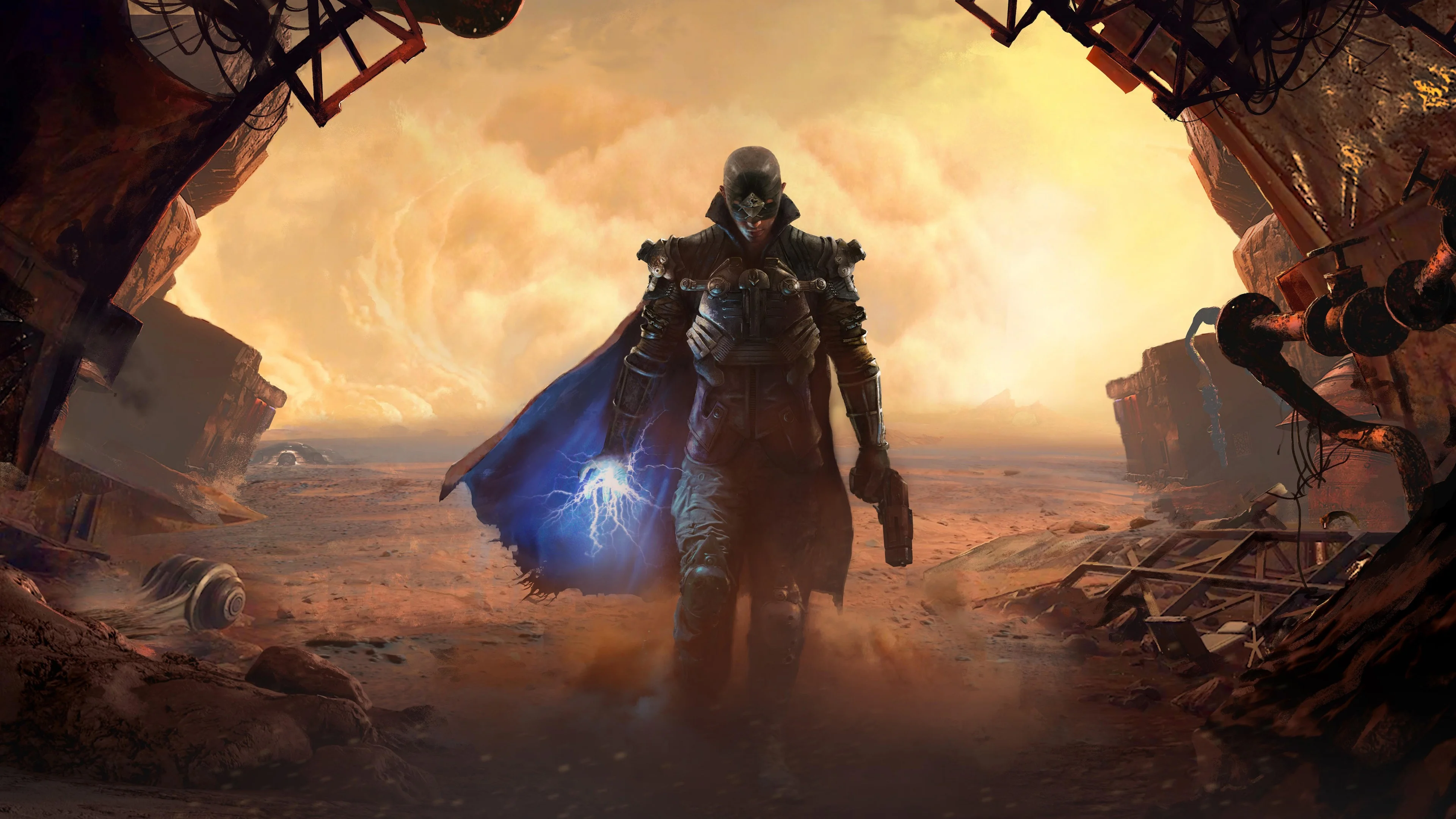

The Technomancer

Performance
1080p (Full HD)
1440p (2K / QHD)
4K (Ultra HD)

Requirements Check


Recommendations
Your hardware doesn't meet minimum requirements for this game.
Average FPS: resolution vs quality settings
| Ultra | High | Medium | Low | |
|---|---|---|---|---|
| 4K Ultra HD | 25 | 32 | 38 | 49 |
| 1440p QHD | 46 | 59 | 69 | 90 |
| 1080p Full HD | 70 | 90 | 106 | 138 |
Cell color: green is 120+ FPS, teal is 60+, amber is 30+, red is below 30. Cards marked Estimated above have no measured row and are scaled from your GPU benchmark percentile.
Performance Analysis: The Technomancer on Your System
The Intel Core i5-13400F and Intel Arc B580 combination delivers a predictable performance curve in The Technomancer, scaling cleanly from a smooth 1080p experience to a 4K resolution that demands significant settings compromises. The measured data provides a clear picture of what this mid-range pairing can achieve, with the most notable takeaway being that 1440p Medium is the sweet spot for a locked 60 FPS experience, while 1080p Ultra remains comfortably playable.
Measured FPS Breakdown
At 1920x1080, this combo is never challenged. The Low preset delivers an average of 138 FPS, which is more than double the 60 FPS playability threshold. Moving to Medium, the average drops to 106 FPS, with a minimum of 90 FPS and a maximum of 121 FPS; the min frame rate here is still well above what most displays can refresh. High settings produce an average of 90 FPS, and even at Ultra the system maintains a 70 FPS average. For 1080p users, there is no scenario in the tested presets where this hardware dips below the playable mark, making it a versatile option for high-refresh-rate monitors at this resolution.
Stepping up to 2560x1440, the performance becomes more stratified. The Low preset still delivers a strong 90 FPS average. Medium settings produce a 69 FPS average, with a minimum of 59 FPS and a maximum of 79 FPS; the minimum is just one frame shy of the 60 FPS threshold, indicating occasional dips that could be perceptible on a 60 Hz display. High settings yield 59 FPS on average, which is borderline — it technically misses the 60 FPS target but is close enough that frame pacing will determine playability. Ultra drops to 46 FPS, a clear step down that suggests the GPU is hitting its limits with the highest fidelity options at this resolution.
At 3840x2160, the picture changes dramatically. Low settings produce a 49 FPS average, which is below the playable threshold. Medium averages 38 FPS, with a minimum of 32 FPS and a maximum of 44 FPS; this spread shows stuttering potential in demanding scenes. High settings drop to 32 FPS, and Ultra falls to 25 FPS. None of the 4K presets in the measured data reach the 60 FPS target, and even the best-case Low preset is nearly 20% below playable.
CPU and GPU Roles
The performance scaling across resolutions reveals a classic GPU-bound scenario for The Technomancer. The Intel Core i5-13400F, with its 10 cores and 16 threads, provides ample headroom; its benchmark scores — including a Cinebench R23 multi-core score of 22604 and a single-core score of 3191 — suggest it is not the limiting factor here. The Arc B580, by contrast, shows its character through the FPS deltas between settings.
Examining the resolution scaling, the difference between 1080p and 1440p at the same settings is substantial. At High settings, performance drops from 90 FPS at 1080p to 59 FPS at 1440p, a reduction of roughly 34%. Between 1440p and 4K at High, the average falls further from 59 FPS to 32 FPS, a 46% decline. This nonlinear scaling is characteristic of a GPU that is running out of pixel-pushing capacity as resolution increases.
The settings scaling within each resolution reinforces this. At 1440p, moving from Low to Ultra reduces average FPS from 90 to 46, a 49% penalty. At 4K, the same settings range produces a drop from 49 FPS to 25 FPS, which is a 49% reduction as well — showing that the relative cost of Ultra settings remains constant even as the absolute performance floor shifts. The CPU's role is minimal; the consistent scaling patterns indicate that the i5-13400F is never bottlenecking the Arc B580, even at 1080p where the GPU is producing 138 FPS on Low settings.
The data suggests that The Technomancer is overwhelmingly GPU-limited for this pairing. The Arc B580's 12 GB of GDDR6 memory and 456 GB/s bandwidth are sufficient for the game's demands at 1080p and 1440p, but the 4K results indicate that the GPU's compute resources — 2560 shading units and 13.67 TFLOPS of FP32 performance — are insufficient for the highest resolutions. The CPU's multi-threaded capabilities, evidenced by a 3DMark max threads score of 7307, never become a constraint.
How This Combo Ranks
This specific combination of the Intel Core i5-13400F and Intel Arc B580 ranks 2787th out of 3696 tested combos for The Technomancer. That places it in the 25th percentile of all combinations, which is on the lower end of the spectrum for a modern mid-range setup. The percentile ranking of the individual components helps contextualize this: the CPU sits at the 77th percentile among all CPUs, while the GPU is at the 68th percentile among all GPUs. The combo's overall rank being lower than either component's individual percentile suggests that the pair underperforms relative to what each part might achieve with different partners.
The rank indicates that while this is a functional gaming PC, it is not a high performer in this specific title. The 3696 total combos include systems with much more powerful GPUs, and for a game like The Technomancer that scales heavily with GPU capability, the Arc B580's mid-tier positioning drags the overall rank down. The CPU's strong benchmark scores — such as a PassMark multi-thread score of 25032 — do not translate into a high combo rank because the game's performance is tied so closely to the graphics card.
The Verdict
The Intel Core i5-13400F and Intel Arc B580 can absolutely run The Technomancer, but the experience depends heavily on the resolution target. At 1920x1080, the answer is a definitive yes across all settings — the Ultra preset averages 70 FPS, which clears the 60 FPS threshold with room to spare. The Medium preset provides the best combination of visual quality and performance with a 106 FPS average, and even High at 90 FPS is smooth.
At 2560x1440, the verdict is conditional. The Low preset at 90 FPS and Medium at 69 FPS both clear the 60 FPS threshold, making them playable. The Medium preset is the best choice here, as it offers a meaningful visual upgrade over Low while maintaining an average that exceeds the target; the 59 FPS minimum is concerning but brief dips are unlikely to ruin the experience. High at 59 FPS misses the threshold and is not recommended, while Ultra at 46 FPS is below playable.
At 3840x2160, the verdict is no. Every preset — from Low at 49 FPS to Ultra at 25 FPS — falls short of the 60 FPS target. Even the most aggressive settings reduction cannot bring this pairing to a playable state at 4K, so users with 4K displays will need to consider either a lower internal resolution or a more powerful GPU.
Similar Performance Alternatives
The nearest rivals to the Intel Core i5-13400F, based on average benchmark scores, include the AMD Ryzen 9 6900HS with a delta of 0%, the AMD Ryzen 5 5600X3D at -0.3%, the Intel Core 5 120 at -0.3%, and the AMD Ryzen 7 6800H at 0.4%. These CPUs would behave nearly identically in The Technomancer given the game's GPU-bound nature, so users with any of these processors can expect the same FPS results when paired with the Arc B580.
On the GPU side, the Arc B580's nearest rivals are the AMD Radeon RX 580 2048SP with a delta of -0.2%, the NVIDIA GeForce RTX 2080 at 0.6%, the NVIDIA GeForce RTX 3080 at -0.7%, and the NVIDIA P106-100 at -1%. The RTX 2080 and RTX 3080, despite being older or higher-tier cards, produce benchmark scores very close to the Arc B580; in The Technomancer, they would deliver essentially the same frame rates. The RX 580 2048SP is a much older card but its average score aligns closely, suggesting similar real-world performance in this title.
For builders considering alternatives, swapping the CPU for any of the listed rivals would yield negligible FPS differences in this game. Swapping the GPU for an RTX 2080 or RTX 3080 would also produce nearly identical results, while the RX 580 2048SP would be a lower-power alternative with similar output.
FAQ
Q: Can this system run The Technomancer at 1080p on Ultra settings?
A: Yes. The measured average FPS at 1920x1080 with Ultra settings is 70 FPS, which exceeds the 60 FPS playability threshold.
Q: What is the best settings preset for 1440p gameplay?
A: The Medium preset is the best choice, delivering an average of 69 FPS with a minimum of 59 FPS and a maximum of 79 FPS. It is the highest settings tier that maintains an average above 60 FPS.
Q: Is 4K playable with this hardware?
A: No. All 4K presets fall below the 60 FPS threshold; the best case is Low settings at 49 FPS average, which is not playable.
Q: How does the Arc B580 compare to an RTX 3080 in this game?
A: The two GPUs have near-identical average benchmark scores — the Arc B580 scores 23021 while the RTX 3080 scores 23172, a delta of -0.7%. They should produce very similar FPS in The Technomancer.
Q: Is the CPU a bottleneck for the GPU in this game?
A: No. The performance scaling between resolutions and presets indicates the game is GPU-bound. The i5-13400F's strong multi-threaded scores, such as 22604 in Cinebench R23 multi-core, provide ample headroom.
Q: What frame rate can I expect at 1440p on High settings?
A: The average FPS at 2560x1440 High is 59 FPS, which is just below the 60 FPS threshold and not considered playable by the benchmark's standards.