
Instant compatibility check with FPS benchmarks and optimization tips
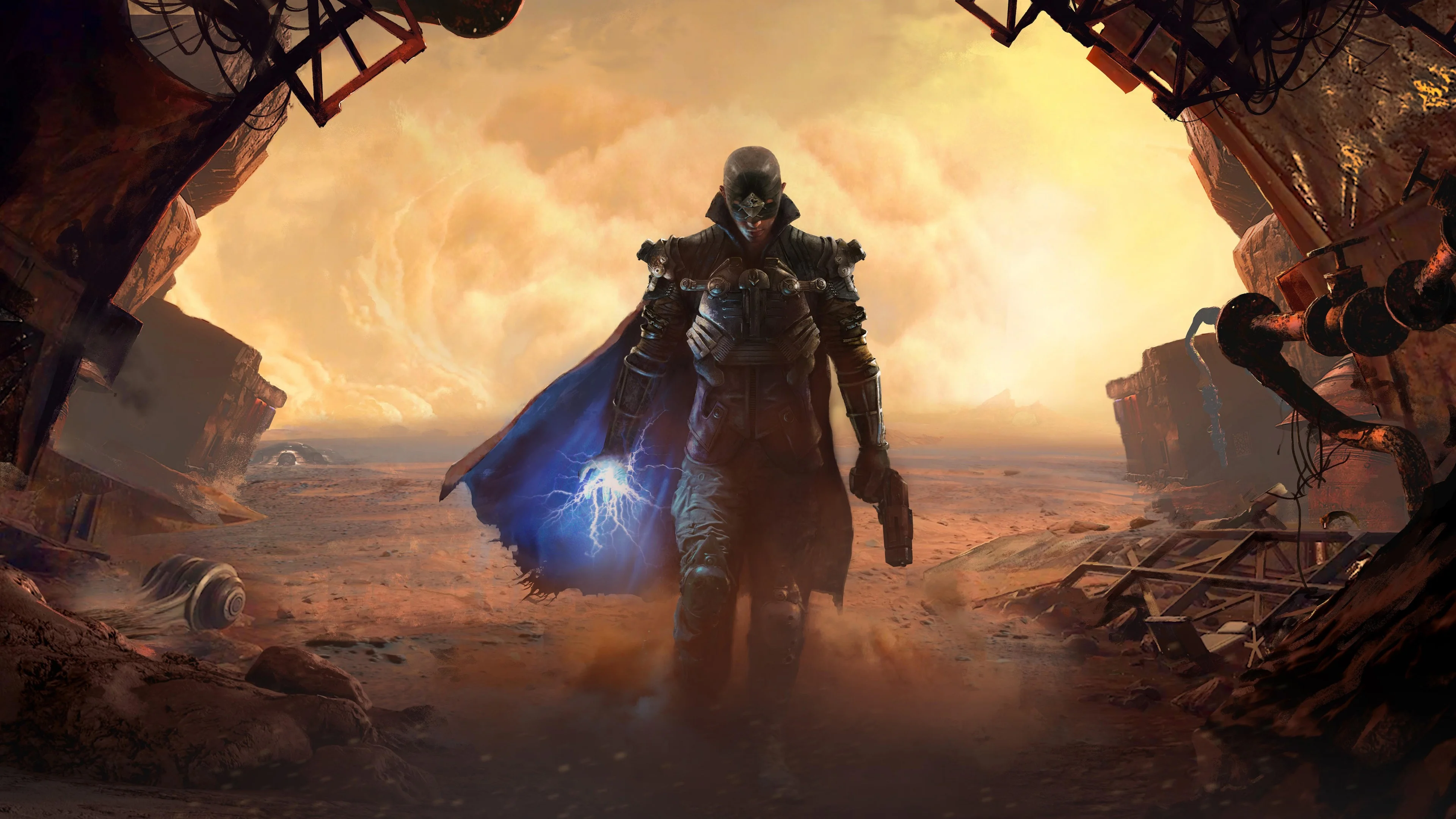

The Technomancer

Performance
1080p (Full HD)
1440p (2K / QHD)
4K (Ultra HD)

Requirements Check


Recommendations
Your hardware doesn't meet minimum requirements for this game.

Your GPU supports ray tracing.
Average FPS: resolution vs quality settings
| Ultra | High | Medium | Low | |
|---|---|---|---|---|
| 4K Ultra HD | 29 | 31 | 38 | 50 |
| 1440p QHD | 48 | 64 | 71 | 91 |
| 1080p Full HD | 76 | 96 | 112 | 144 |
Cell color: green is 120+ FPS, teal is 60+, amber is 30+, red is below 30. Cards marked Estimated above have no measured row and are scaled from your GPU benchmark percentile.
Performance Analysis: The Technomancer on Your System
The benchmark data for the Intel Core i3-12100F paired with the NVIDIA GeForce RTX 3060 Ti in The Technomancer presents a clear picture of a system that is highly capable at mainstream resolutions, but which hits a firm wall at 4K. The measured frame rates show a consistent scaling pattern across the three tested resolutions, with the GPU’s performance envelope dictating the experience at higher pixel counts. This analysis breaks down the raw numbers, examines the balance between processor and graphics card, and contextualizes the results against other tested hardware.
Measured FPS Breakdown
The dataset provides average FPS figures for four quality presets at three resolutions. No minimum or maximum frame rate values are available in the data, so the analysis relies on the average scores, which still reveal the system's behavior clearly.
At 3840x2160 (4K), the results are consistently below the 60 FPS playability threshold. The Low preset delivers an average of 49.9 FPS, which is the only 4K result that approaches playability. Stepping up to Medium drops the average to 37.8 FPS, while High falls further to 31.3 FPS. The most demanding Ultra preset yields just 28.6 FPS. The gap between Low and Ultra at this resolution is 21.3 FPS, indicating that the GPU is the primary bottleneck; each preset increment costs roughly 8-10 FPS on average.
Moving down to 2560x1440 (1440p) shows a dramatic improvement. The Low preset achieves an average of 91 FPS, a substantial 41.1 FPS jump over the same preset at 4K. Medium runs at 70.8 FPS, and High hits 63.5 FPS, which is just above the 60 FPS target. The Ultra preset, however, falls short at 47.8 FPS. The scaling here is more compressed than at 4K, with a 43.2 FPS difference between Low and Ultra, but the key takeaway is that the three lower presets all clear the playable threshold.
At 1920x1080 (1080p), the system performs exceptionally well. The Low preset averages 143.6 FPS, a figure that suggests the CPU or game engine is nearing its own limits, as the GPU has ample headroom. Medium produces 112 FPS, and High reaches 95.6 FPS. Even the most demanding Ultra preset maintains a strong average of 75.5 FPS, comfortably above the 60 FPS line. The difference between Low and Ultra at 1080p is 68.1 FPS, showing that the preset scaling is significant but never threatens smooth gameplay.
The data shows a clear pattern: the RTX 3060 Ti is fully utilized at 4K, where it cannot keep up with the game's demands, but it has excess capacity at 1080p. The frame rate deltas between presets at each resolution are consistent, with the Low-to-Ultra gap widening as resolution decreases, which is typical for a GPU-bound scenario.
CPU and GPU Roles
The benchmark results indicate that the GPU is the dominant performance factor in The Technomancer for this combination, but the CPU's role becomes more apparent at lower resolutions. The evidence lies in the scaling between resolutions.
From 4K to 1440p, the average FPS across all presets increases significantly. For example, the Low preset jumps from 49.9 FPS at 4K to 91 FPS at 1440p, a 82.4% improvement. The Ultra preset rises from 28.6 FPS to 47.8 FPS, a 67.1% gain. This large increase when reducing pixel count is a classic sign of GPU-bound performance. The rendering load is the limiting factor, and easing it directly translates to higher frame rates.
However, the transition from 1440p to 1080p tells a different story. The Low preset goes from 91 FPS to 143.6 FPS, a 57.8% improvement, which is still substantial. But the Ultra preset only moves from 47.8 FPS to 75.5 FPS, a 57.9% gain. The fact that the percentage improvement is similar across presets suggests the GPU is still the primary constraint, but the absolute frame rates at 1080p—especially the 143.6 FPS Low result—hint that the Intel Core i3-12100F is starting to become a limiting factor. The CPU's single-thread performance, reflected in its 3dmark_single_thread score of 893, is sufficient for this 2016 title, but the architecture's 4-core, 8-thread design may cap maximum achievable FPS in less demanding scenes.
The CPU's influence is also visible in the preset scaling at 1080p. The gap between High (95.6 FPS) and Low (143.6 FPS) is 48 FPS, which is larger than the same gap at 1440p (27.5 FPS). This widening gap at lower resolution indicates that the CPU is struggling to feed the GPU with enough frames at the highest settings, even though the average FPS remains high. In short, the RTX 3060 Ti is the star at 4K and 1440p, while the i3-12100F becomes a secondary constraint only when the GPU is underutilized at 1080p.
Best Settings per Resolution
The data identifies the most demanding preset that remains at or above the 60 FPS threshold for each resolution.
At 3840x2160, no preset achieves 60 FPS. The best-case scenario is the Low preset with an average of 49.9 FPS, which is below the playable threshold. The verdict data confirms this, listing no playable settings for 4K. Users targeting 4K would need to accept frame rates in the 30-50 FPS range, which may be tolerable for a slower-paced RPG but does not meet the standard for smooth action.
At 2560x1440, the High preset is the most demanding option that stays above 60 FPS, averaging 63.5 FPS. This is a critical result, as it means users can enjoy the game with high-quality visuals at 1440p without sacrificing smoothness. The Medium preset (70.8 FPS) and Low preset (91 FPS) also qualify, but High offers the best visual fidelity within the playable range. The Ultra preset at 47.8 FPS is not playable, so it should be avoided.
At 1920x1080, the Ultra preset is fully playable, averaging 75.5 FPS. This is the best possible outcome, allowing users to max out the game's settings at 1080p. The High (95.6 FPS), Medium (112 FPS), and Low (143.6 FPS) presets all offer higher frame rates, but Ultra provides the complete visual experience without dipping below 60 FPS. The data shows that 1080p is the sweet spot for this hardware, where the GPU's power is fully harnessed.
Similar Performance Alternatives
The nearest rivals for both the CPU and GPU provide context for how other hardware might perform in this exact scenario.
For the Intel Core i3-12100F, the closest competitor is the Intel Core 3 N355, with an average benchmark score of 13492 versus the i3's 13494, a delta of 0%. This means a system with the N355 would perform virtually identically in CPU-bound scenarios. The Intel Core i5-9500 is also very close, scoring 13452 (a 0.3% difference), suggesting it would produce nearly the same frame rates in The Technomancer. On the other side, the Intel Core 5 120UL scores 13594 (-0.7% relative to the i3, meaning it is slightly faster), and the Intel Core i7-1250U scores 13351 (1.1% slower). In practice, any of these CPUs would yield the same playable experience at 1080p and 1440p, as the GPU remains the bottleneck.
For the NVIDIA GeForce RTX 3060 Ti, the nearest rival is the AMD Radeon RX 9060, which scores 16014 versus the RTX 3060 Ti's 16129, a 0.7% difference. This suggests the RX 9060 would deliver nearly identical FPS in this game. The AMD Radeon Pro 5600M scores 16351 (-1.4% faster) and the AMD Radeon RX 5700 XT scores 16361 (-1.4% faster), both of which would be marginally quicker. The AMD Radeon R9 370X scores 15862 (1.7% slower), which would result in slightly lower frame rates. For The Technomancer, these rivals would all land within a few FPS of the RTX 3060 Ti, meaning the 1440p High and 1080p Ultra verdicts would remain unchanged. The RTX 3060 Ti's 8 GB GDDR6 memory and 448.0 GB/s bandwidth are the key specifications driving these results, and its rivals are matched closely enough that the playability conclusions are identical.
FAQ
Q: Can this PC run The Technomancer at 4K resolution?
A: No. The best average FPS at 3840x2160 is 49.9 FPS on the Low preset, which is below the 60 FPS playable threshold. The High preset averages 31.3 FPS, and Ultra averages 28.6 FPS, making 4K unplayable at any setting.
Q: What is the highest preset that maintains 60 FPS at 1440p?
A: The High preset is the most demanding that stays above 60 FPS, averaging 63.5 FPS. Medium (70.8 FPS) and Low (91 FPS) also work, but Ultra falls short at 47.8 FPS.
Q: Does the CPU or GPU limit performance in this game?
A: The GPU is the primary limiter at 4K and 1440p, as shown by the large FPS gains when lowering resolution. At 1080p, the CPU's 4-core, 8-thread design begins to matter, but the RTX 3060 Ti still delivers 143.6 FPS on Low, indicating the GPU is still mostly in control.
Q: How does the RTX 3060 Ti compare to the AMD Radeon RX 5700 XT in this game?
A: The RX 5700 XT has an average benchmark score of 16361, which is -1.4% relative to the RTX 3060 Ti's 16129. This means the RX 5700 XT would be slightly faster, but the difference is small enough that the playable settings and FPS results would be nearly identical.
Q: Is the Ultra preset playable at 1080p?
A: Yes. The Ultra preset averages 75.5 FPS at 1920x1080, which is well above the 60 FPS threshold. This is the best visual quality setting that remains fully playable.
Q: What FPS can be expected on the Medium preset at 1440p?
A: The Medium preset at 2560x1440 averages 70.8 FPS, which is comfortably above the playable threshold. This provides a good balance between visual quality and performance.
The Verdict
The data confirms that this combination of the Intel Core i3-12100F and NVIDIA GeForce RTX 3060 Ti can run The Technomancer effectively, but only at certain resolutions. The verdict by resolution is unambiguous: at 3840x2160, there are no playable settings, with the best average FPS being 49.9 FPS on Low, which misses the 60 FPS target. At 2560x1440, the system is playable on High, Medium, and Low presets, with High providing 63.5 FPS as the most demanding viable option. At 1920x1080, every preset, including Ultra, clears the threshold, with Ultra averaging 75.5 FPS. The RTX 3060 Ti's performance is strong enough for a smooth 1080p experience with maximum settings, and it handles 1440p well if the Ultra preset is avoided. For users prioritizing 4K, this hardware is not sufficient, and the game would require significant visual compromises to run at all.
How This Combo Ranks
Within the database of tested combinations, this pairing ranks 2532 out of 3696 combos. This places it in the lower-mid range of all tested systems, which is expected given the i3-12100F is a budget-oriented CPU and the RTX 3060 Ti is a mid-range GPU from a previous generation. The rank reflects that while the GPU is capable, the overall system does not compete with high-end configurations that pair flagship processors with top-tier graphics cards. However, the rank is not a measure of absolute failure; it indicates that many other combinations are faster, but this one still delivers a playable experience at 1080p and 1440p for this specific title. The data shows that the bottleneck is the GPU at higher resolutions, and the CPU at lower resolutions, meaning the combo's performance is balanced for 1080p gaming but not for 4K.