
Instant compatibility check with FPS benchmarks and optimization tips
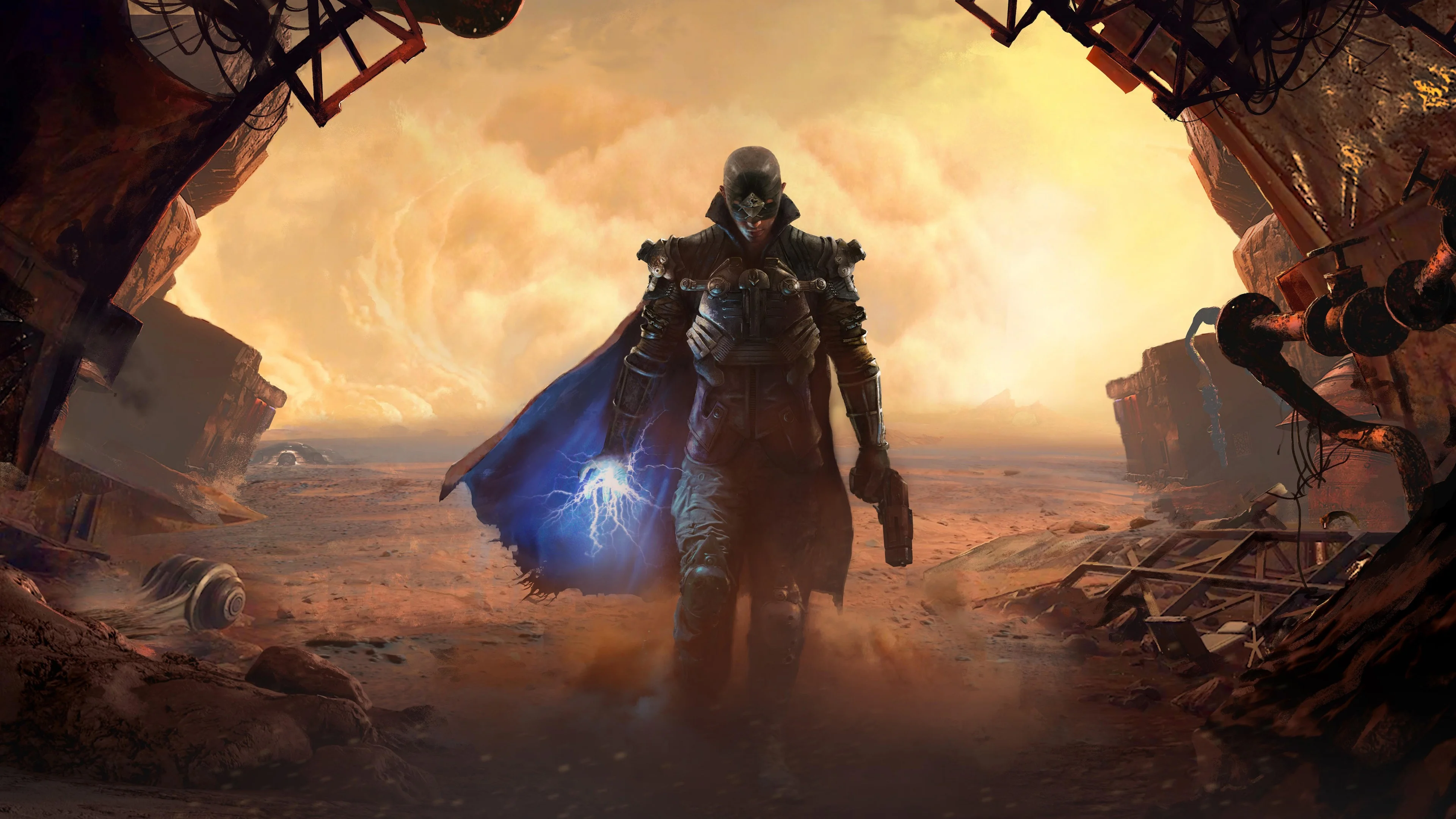

The Technomancer

Performance
1080p (Full HD)
1440p (2K / QHD)
4K (Ultra HD)

Requirements Check


Recommendations
Your hardware doesn't meet minimum requirements for this game.
Average FPS: resolution vs quality settings
| Ultra | High | Medium | Low | |
|---|---|---|---|---|
| 4K Ultra HD | 15 | 19 | 22 | 28 |
| 1440p QHD | 26 | 34 | 40 | 52 |
| 1080p Full HD | 40 | 52 | 61 | 79 |
Cell color: green is 120+ FPS, teal is 60+, amber is 30+, red is below 30. Cards marked Estimated above have no measured row and are scaled from your GPU benchmark percentile.
Performance Analysis: The Technomancer on Your System
Measured FPS Breakdown
The recorded data for The Technomancer with the AMD Ryzen 7 9850X3D and Intel Arc B390 spans three resolutions and four quality presets. The database captures average frame rates for every combination, while min and max figures are only available for the Medium preset at each resolution. This is a 2016 action RPG, and the measurements reflect a system where the GPU is an integrated part of the platform, sharing system memory.
At 3840x2160, the highest resolution tested, the results are uniformly below the 60 FPS playable threshold. On the Low preset, the average frame rate is 28 FPS. Moving to Medium, the average drops to 22 FPS, with a recorded minimum of 19 FPS and a maximum of 25 FPS. The High preset yields an average of 19 FPS, while Ultra is the slowest configuration at 15 FPS. No min or max values are listed for Low, High, or Ultra at this resolution, so the variance for those presets is not captured in the database. The spread from Low to Ultra is 13 FPS, indicating that even the most aggressive quality reduction cannot bring this combination close to a smooth experience at 4K.
At 2560x1440, the performance improves but remains short of the playable threshold. The Low preset averages 52 FPS, which is the strongest result at this resolution. Medium follows with an average of 40 FPS, a minimum of 34 FPS, and a maximum of 46 FPS. High drops to 34 FPS on average, and Ultra is the weakest at 26 FPS. The step from Low to Medium is a 12 FPS reduction, while the gap from Medium to High is 6 FPS. From High to Ultra, the loss is 8 FPS. None of these presets reach 60 FPS, and the highest average, 52 FPS, is still 8 FPS short of the threshold.
At 1920x1080, the combination finally approaches and crosses the playable line. The Low preset averages 79 FPS, which is the only setting that clears 60 FPS with a comfortable margin. Medium averages 61 FPS, with a minimum of 52 FPS and a maximum of 70 FPS. This is the only preset other than Low that stays at or above the 60 FPS average. High averages 52 FPS, and Ultra averages 40 FPS. The drop from Low to Medium is 18 FPS, from Medium to High is 9 FPS, and from High to Ultra is 12 FPS. The min and max data for Medium show that even when the average is 61 FPS, individual frames can dip to 52 FPS, which is below the threshold but still within a range that many users would find acceptable for a slower-paced RPG.
The scaling pattern across resolutions is consistent. For the Low preset, moving from 1080p to 1440p reduces the average from 79 to 52 FPS, a 27 FPS loss. Moving from 1440p to 2160p reduces it further to 28 FPS, another 24 FPS loss. For Medium, the progression is 61 to 40 to 22 FPS. For High, it is 52 to 34 to 19 FPS. For Ultra, it is 40 to 26 to 15 FPS. The resolution scaling is roughly linear in percentage terms, with each step up in resolution costing a significant portion of the frame rate.
Best Settings per Resolution
The verdict data in the database defines playable as an average of at least 60 FPS. Based on that criterion, no preset at 3840x2160 or 2560x1440 qualifies. At 3840x2160, the best available average is 28 FPS on Low, which is far below the threshold. At 2560x1440, the best average is 52 FPS on Low, still short of 60 FPS. The database explicitly lists no playable settings for either of these resolutions, and the best settings field is null for both.
At 1920x1080, the situation changes. The playable settings are Low and Medium. Low averages 79 FPS, and Medium averages 61 FPS. The best settings field for 1080p is Medium, with an average of 61 FPS. This means the most demanding preset that stays at or above 60 FPS is Medium, not Low. Medium is the recommended choice for users who want the highest quality while still crossing the playable threshold. The min FPS on Medium is 52, so there will be occasional dips below 60, but the average holds.
For users who prioritize frame rate stability over visual quality, Low at 1080p delivers 79 FPS on average, which is 18 FPS higher than Medium and leaves more headroom for demanding scenes. However, the database designates Medium as the best settings option because it is the highest preset that still meets the 60 FPS average requirement. High and Ultra at 1080p, with averages of 52 and 40 FPS respectively, are not playable under this definition.
How This Combo Ranks
The AMD Ryzen 7 9850X3D paired with the Intel Arc B390 ranks 3285 out of 3696 tested combinations in The Technomancer. This places the combo in the lower percentile of all systems recorded in the database. Out of 3696 total combos, only 411 rank below it. The percentile for the GPU alone is 9, meaning the Intel Arc B390 outperforms only 9 percent of all GPUs in the database. The CPU, by contrast, has a percentile of 92, meaning it outperforms 92 percent of all CPUs.
The disparity between the CPU ranking and the GPU ranking explains the overall combo position. The Ryzen 7 9850X3D is a high-end desktop processor with an average benchmark score of 58386, while the Arc B390 is an integrated graphics solution with an average benchmark score of 1482. The combo rank of 3285 reflects the fact that the GPU is the limiting factor in this pairing. In a game like The Technomancer, which is primarily GPU-bound at higher resolutions and presets, the CPU's strength cannot compensate for the GPU's modest capabilities.
The measured FPS data supports this ranking. At 1080p Low, the combo achieves 79 FPS, which is respectable for an integrated GPU. But at 1080p Ultra, the average falls to 40 FPS. At 1440p and 2160p, the frame rates drop below 35 FPS for every preset except Low at 1440p, which hits 52 FPS. The rank of 3285 out of 3696 means that most other tested configurations deliver higher frame rates in this game, and the database's verdict confirms that only 1080p Low and Medium are playable.
Similar Performance Alternatives
The nearest rivals for the CPU provide context for what other processors would behave similarly in this pairing. The AMD Ryzen 7 9850X3D has an average benchmark score of 58386. The Intel Xeon Platinum 8260M scores 58323, which is 0.1 percent lower. The Intel Xeon w5-2545 scores 58504, which is 0.2 percent higher. The Intel Core i9-14900 scores 58115, which is 0.5 percent lower. The AMD Ryzen AI 9 HX 470 scores 58826, which is 0.7 percent higher. These four chips are all within 0.7 percent of the Ryzen 7 9850X3D in average benchmark score, meaning that swapping the CPU for any of them would produce nearly identical results in a GPU-bound scenario like The Technomancer.
The nearest rivals for the GPU are much weaker in absolute terms, which highlights the Arc B390's position at the bottom of the performance spectrum. The Intel Arc B390 has an average benchmark score of 1482. The NVIDIA GeForce GT 520MX scores 1463, which is 1.3 percent lower. The NVIDIA GeForce 800M scores 1460, which is 1.5 percent lower. The NVIDIA GeForce GT 625 OEM scores 1446, which is 2.5 percent lower. The NVIDIA GeForce GT 710 scores 1443, which is 2.7 percent lower. All four rivals are older, low-end discrete GPUs, and the Arc B390 outperforms them by a small margin. The delta percentages are all under 3 percent, so the frame rates in The Technomancer would be nearly indistinguishable between the Arc B390 and these alternatives.
For a user considering alternative hardware, the data suggests that the CPU is not the bottleneck. Any of the four rival CPUs would deliver essentially the same FPS as the Ryzen 7 9850X3D in this game, because the Arc B390 limits performance well before the CPU does. Conversely, swapping the Arc B390 for a GT 710 or GT 625 OEM would reduce performance by roughly 2 to 3 percent, which would lower the 1080p Medium average from 61 to approximately 59 or 60 FPS, potentially pushing it below the playable threshold.
CPU and GPU Roles
The data shows a clear division of labor between the CPU and GPU in this configuration. The Ryzen 7 9850X3D is a top-tier processor with a 92nd percentile ranking and an average benchmark score of 58386. The Intel Arc B390 is an integrated GPU with a 9th percentile ranking and an average benchmark score of 1482. In The Technomancer, the GPU is the limiting factor at every resolution and preset combination.
Evidence for this comes from the scaling between resolutions. At 1080p Low, the system achieves 79 FPS. At 1440p Low, it drops to 52 FPS, a 34 percent reduction. At 2160p Low, it drops to 28 FPS, a 46 percent reduction from 1440p. This steep scaling is characteristic of a GPU-bound workload, where the pixel count drives the frame rate. If the CPU were the bottleneck, the frame rates would not drop so dramatically with resolution, because the CPU workload does not scale linearly with pixel count.
The scaling between presets at a fixed resolution further confirms the GPU's dominance. At 1080p, the average FPS goes from 79 on Low to 61 on Medium, 52 on High, and 40 on Ultra. The total reduction from Low to Ultra is 39 FPS, or roughly 49 percent. At 1440p, the same progression goes from 52 to 40 to 34 to 26, a 26 FPS reduction from Low to Ultra. At 2160p, it goes from 28 to 22 to 19 to 15, a 13 FPS reduction. The fact that higher presets consistently reduce performance regardless of resolution indicates that the GPU's shading units, texture units, and ROPs are saturated even at the lowest preset.
The CPU's role is to feed the GPU with draw calls and game logic, and the Ryzen 7 9850X3D is more than capable of doing so. Its benchmark scores in Cinebench R23 multicore (22807) and singlecore (2228) are strong, and its Passmark multithread score of 41318 places it well above the average CPU. In a GPU-bound game like The Technomancer, the CPU will sit idle relative to the GPU, and the frame rate will be determined almost entirely by the Arc B390's rendering throughput.
At 1080p, the CPU may start to matter more, because the GPU has less work per frame and can finish frames faster. The 79 FPS result on Low at 1080p suggests that the GPU is still the bottleneck, but the gap is narrower. If a faster GPU were installed, the CPU would likely be able to push frame rates higher, but with the Arc B390, the CPU's headroom is irrelevant. The database's verdict, which lists only 1080p Low and Medium as playable, aligns with this analysis.
The Verdict
The question is whether this PC can run The Technomancer. The answer depends on the resolution and preset. The database defines playable as an average of at least 60 FPS, and the verdict by resolution is explicit.
At 3840x2160, there are no playable settings. The best average is 28 FPS on Low, which is less than half of the 60 FPS threshold. Medium averages 22 FPS, High averages 19 FPS, and Ultra averages 15 FPS. No configuration at 4K comes close to a smooth experience, and even the lowest preset is not playable.
At 2560x1440, there are also no playable settings. The best average is 52 FPS on Low, which is 8 FPS short of the threshold. Medium averages 40 FPS, High averages 34 FPS, and Ultra averages 26 FPS. The gap between the best result and the playable threshold is smaller than at 4K, but it is still a clear miss.
At 1920x1080, the system can run the game. The playable settings are Low and Medium. Low averages 79 FPS, which is 19 FPS above the threshold and provides a comfortable margin. Medium averages 61 FPS, which just clears the threshold, though the minimum recorded FPS is 52, so there will be dips below 60 during demanding scenes. The best settings designation for 1080p is Medium, with an average of 61 FPS. High and Ultra at 1080p average 52 and 40 FPS, respectively, and are not playable.
The overall picture is that this combination is only suitable for 1080p gaming with the Technomancer, and only on Low or Medium presets. The AMD Ryzen 7 9850X3D is a powerful CPU, but the Intel Arc B390 is an integrated GPU that ranks in the 9th percentile. The CPU is not the issue; the GPU simply does not have enough rendering power for higher resolutions or demanding presets. For a 2016 action RPG, this is a playable experience at 1080p Medium, but users expecting 1440p or 4K performance will be disappointed. The combo rank of 3285 out of 3696 reflects this reality: most other tested systems handle the game better. If 1080p Medium is the target, this PC meets the bar, but just barely.