
Instant compatibility check with FPS benchmarks and optimization tips
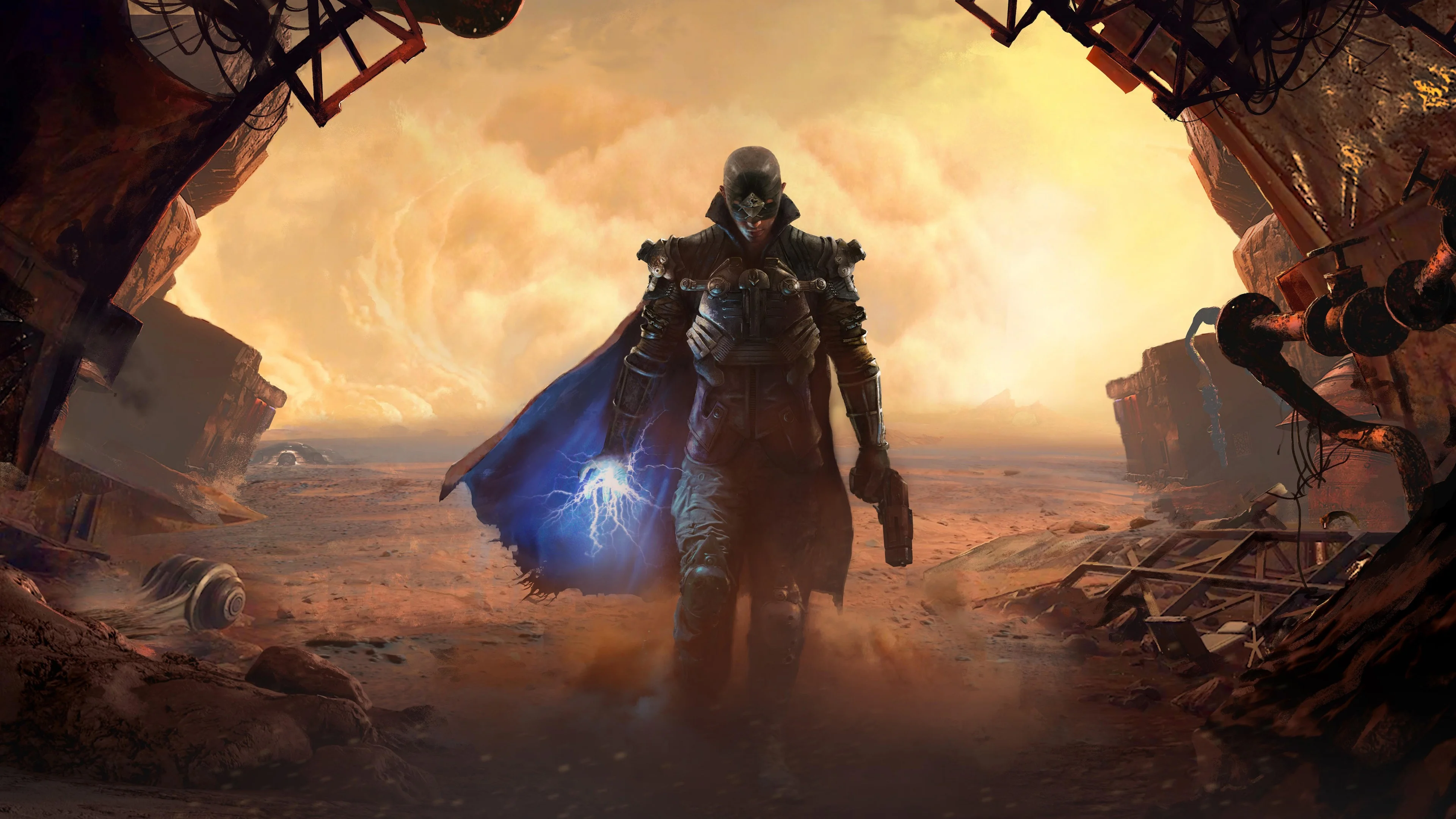

The Technomancer

Performance
1080p (Full HD)
1440p (2K / QHD)
4K (Ultra HD)

Requirements Check


Recommendations
Your hardware doesn't meet minimum requirements for this game.
Average FPS: resolution vs quality settings
| Ultra | High | Medium | Low | |
|---|---|---|---|---|
| 4K Ultra HD | 15 | 19 | 22 | 28 |
| 1440p QHD | 26 | 34 | 40 | 52 |
| 1080p Full HD | 40 | 52 | 61 | 79 |
Cell color: green is 120+ FPS, teal is 60+, amber is 30+, red is below 30. Cards marked Estimated above have no measured row and are scaled from your GPU benchmark percentile.
Performance Analysis: The Technomancer on Your System
Measured FPS Breakdown
The recorded data for the AMD Ryzen 5 7500X3D paired with the Intel Arc B390 in The Technomancer shows a clear pattern: playability collapses as resolution increases. At 1920x1080, the combination delivers usable frame rates on Low and Medium presets, but at 2560x1440 and 3840x2160, every preset falls below the 60 FPS threshold.
At 1920x1080, the Low preset averages 79 FPS, which is the highest recorded average across any resolution or setting. The Medium preset averages 61 FPS, with a minimum of 52 FPS and a maximum of 70 FPS. High drops to 52 FPS average, and Ultra bottoms out at 40 FPS. The spread from Low to Ultra is 39 FPS, indicating that the graphics settings have a substantial impact on performance at this resolution.
At 2560x1440, the Low preset averages 52 FPS, a 27 FPS drop from the 1080p Low result. Medium averages 40 FPS, with a minimum of 34 FPS and a maximum of 46 FPS. High averages 34 FPS, and Ultra averages 26 FPS. No preset at this resolution reaches the 60 FPS target; the closest is Low at 52 FPS, which is 8 FPS short.
At 3840x2160, the results are uniformly poor. Low averages 28 FPS, Medium averages 22 FPS with a minimum of 19 FPS and maximum of 25 FPS, High averages 19 FPS, and Ultra averages 15 FPS. The gap between Low and Ultra at 4K is only 13 FPS, suggesting that the GPU is heavily constrained at this resolution regardless of the preset chosen.
The min/max data is only recorded for the Medium preset at each resolution. At 1080p Medium, the frame rate fluctuates between 52 and 70 FPS, a 18 FPS range. At 1440p Medium, the range is 34 to 46 FPS, a 12 FPS spread. At 4K Medium, the range narrows to 19 to 25 FPS, a 6 FPS spread. This tighter variance at higher resolutions indicates that the system is operating near its performance ceiling.
FAQ
Q: Can this PC run The Technomancer at 1920x1080 with Ultra settings?
A: No. The Ultra preset at 1920x1080 averages 40 FPS, which is 20 FPS below the 60 FPS playable threshold. The best playable setting at this resolution is Medium, which averages 61 FPS.
Q: What is the highest average FPS recorded for this combination?
A: The highest average FPS is 79, achieved at 1920x1080 with the Low preset. This is the only recorded result that exceeds 75 FPS across all resolutions and settings.
Q: Is the 2560x1440 resolution playable with any settings?
A: No. All four presets at 2560x1440 fall below 60 FPS. The closest is Low at 52 FPS, followed by Medium at 40 FPS, High at 34 FPS, and Ultra at 26 FPS.
Q: How does the 4K Medium preset compare to the 1080p Medium preset?
A: The 4K Medium preset averages 22 FPS with a min/max of 19 to 25 FPS. The 1080p Medium preset averages 61 FPS with a min/max of 52 to 70 FPS. This represents a 39 FPS average drop when moving from 1080p to 4K at the same preset.
Q: What is the performance gap between Low and Ultra at 2560x1440?
A: At 2560x1440, Low averages 52 FPS while Ultra averages 26 FPS. The difference is 26 FPS, meaning Ultra delivers exactly half the frame rate of Low at this resolution.
Q: Which resolution offers the most stable frame rate according to min/max data?
A: The Medium preset at 3840x2160 shows the smallest fluctuation, with a range of 6 FPS (19 to 25). This stability comes at the cost of a very low average of 22 FPS, which is far below the playable threshold.
CPU and GPU Roles
The data from this combination reveals that the Intel Arc B390 is the primary bottleneck in The Technomancer. The CPU, AMD Ryzen 5 7500X3D, is a 6-core, 12-thread processor with a 96 MB shared L3 cache and a boost clock of 4.50 GHz. Its benchmark scores are strong: a Passmark single-thread score of 3494 and a multithread score of 25047. The GPU, however, is an integrated part with only 1536 shading units, 24 ROPs, and a 3DMark Steel Nomad DX12 score of 1482. This GPU score places it in the 9th percentile of all GPUs, while the CPU sits in the 89th percentile of all CPUs.
The scaling between resolutions confirms this imbalance. Moving from 1920x1080 to 2560x1440 at the Low preset drops the average FPS from 79 to 52, a 34% reduction. Moving from 2560x1440 to 3840x2160 at Low drops it from 52 to 28, another 46% reduction. These steep declines with increasing pixel count are typical of GPU-bound scenarios, where the rendering workload outpaces the integrated graphics capability.
The settings scaling tells the same story. At 1920x1080, going from Low to Ultra reduces the average from 79 to 40 FPS, a 49% penalty. At 2560x1440, the same preset change reduces the average from 52 to 26 FPS, again exactly half. At 3840x2160, Low to Ultra drops from 28 to 15 FPS, a 46% penalty. The consistency of this halving effect across resolutions suggests that the GPU is operating at its compute limit, and the CPU has ample headroom to feed it.
The CPU's role is more visible at lower resolutions and settings. At 1920x1080 Low, the system achieves 79 FPS, which is the only result above 70 FPS. This suggests that at this point, the CPU can still push the GPU to its maximum output. However, at 2560x1440 and above, the GPU becomes the sole limiting factor, as evidenced by the uniform performance drops regardless of the preset.
In practical terms, the Ryzen 5 7500X3D is not the constraint here. Its nearest rivals in the database include the Intel Core Ultra X9 388H with a delta of 0.2%, the Intel Core i9-13950HX with a delta of 0.5%, and the AMD Ryzen AI Max 385 with a delta of 0.6%. These are all comparable in CPU performance, yet the in-game results are dominated by the GPU's low 3DMark score. The Arc B390's nearest rivals are the NVIDIA GeForce GT 520MX (1.3% higher), GeForce 800M (1.5% higher), and GeForce GT 625 OEM (2.5% higher), which are all clearly low-end parts. This pairing is inherently unbalanced for a game like The Technomancer, but the CPU is doing its part; the GPU is not.
The Verdict
The question of whether this PC can run The Technomancer depends entirely on the target resolution and settings. The verdict by resolution is unambiguous: at 3840x2160, no settings are playable. At 2560x1440, no settings are playable. At 1920x1080, the Low and Medium presets are playable, with Medium being the best playable setting at 61 FPS average.
The 60 FPS threshold is the defining line. At 1080p, the Low preset clears it comfortably with 79 FPS, and the Medium preset just clears it with 61 FPS. The High preset at 52 FPS and Ultra at 40 FPS are both below the threshold. At 1440p, even the Low preset at 52 FPS misses the target by 8 FPS. At 4K, the best result is Low at 28 FPS, which is less than half of the required frame rate.
For a player targeting 1080p, this system is viable if settings are kept at Medium or below. For 1440p or 4K, the system is not viable for this game, as no preset achieves playable performance. The data indicates that the integrated Arc B390 simply lacks the raw throughput to handle The Technomancer at higher resolutions, regardless of the capable CPU paired with it.
Best Settings per Resolution
At 1920x1080, the most demanding preset that stays at or above 60 FPS is Medium. The recorded average at Medium is 61 FPS, with a minimum of 52 FPS and a maximum of 70 FPS. This is the only resolution where a playable preset exists, and Medium is the recommended choice for maximizing visual quality while maintaining the 60 FPS target.
At 2560x1440, there is no playable preset. The best available option is Low, which averages 52 FPS, but this falls short of the 60 FPS threshold. Players at this resolution would need to accept a sub-60 FPS experience or lower the resolution to 1080p.
At 3840x2160, there is no playable preset. The best available option is Low, which averages 28 FPS. This is severely below the playable threshold and would result in a poor experience. The Medium preset at 4K averages 22 FPS, and the High preset averages 19 FPS, with Ultra at 15 FPS.
The pattern is clear: the only way to achieve playable performance is to run at 1920x1080 with Medium settings. Any attempt to increase the resolution to 1440p or 4K results in frame rates that are too low for smooth gameplay, and any attempt to increase the preset above Medium at 1080p also fails the 60 FPS test.
How This Combo Ranks
In the database of tested combinations for The Technomancer, this pairing of AMD Ryzen 5 7500X3D and Intel Arc B390 ranks 3285 out of 3696 combinations. This places it in the bottom 11% of all tested systems, which is consistent with the measured performance data.
The rank reflects the severe GPU limitation. The Arc B390's 3DMark Steel Nomad DX12 score of 1482 places it in the 9th percentile of all GPUs, and its nearest rivals are all older, low-end NVIDIA parts. The GT 520MX, GeForce 800M, and GT 625 OEM are all within 2.5% of its score, which confirms that the GPU is near the bottom of the performance ladder.
The CPU, by contrast, is in the 89th percentile of all CPUs, with an average benchmark score of 44573. Its nearest rivals are all modern processors: the Intel Core Ultra X9 388H, Core i9-13950HX, and AMD Ryzen AI Max 385, all within 0.6% of its score. The Core i5-14600 is 0.7% higher. This means the CPU is competitive with top-tier mobile and desktop parts, but it cannot compensate for the GPU's limitations.
The rank of 3285 out of 3696 is a direct consequence of this imbalance. Many other combinations in the database likely feature stronger discrete GPUs, even if their CPUs are weaker. For The Technomancer, which is a 2016 Action RPG, the GPU requirements are the dominant factor, and the integrated Arc B390 is not equipped to meet them at higher resolutions. The data shows that this combo is only marginally better than the very worst tested systems, and its single playable configuration (1080p Medium) is a narrow window of usability.