
Instant compatibility check with FPS benchmarks and optimization tips
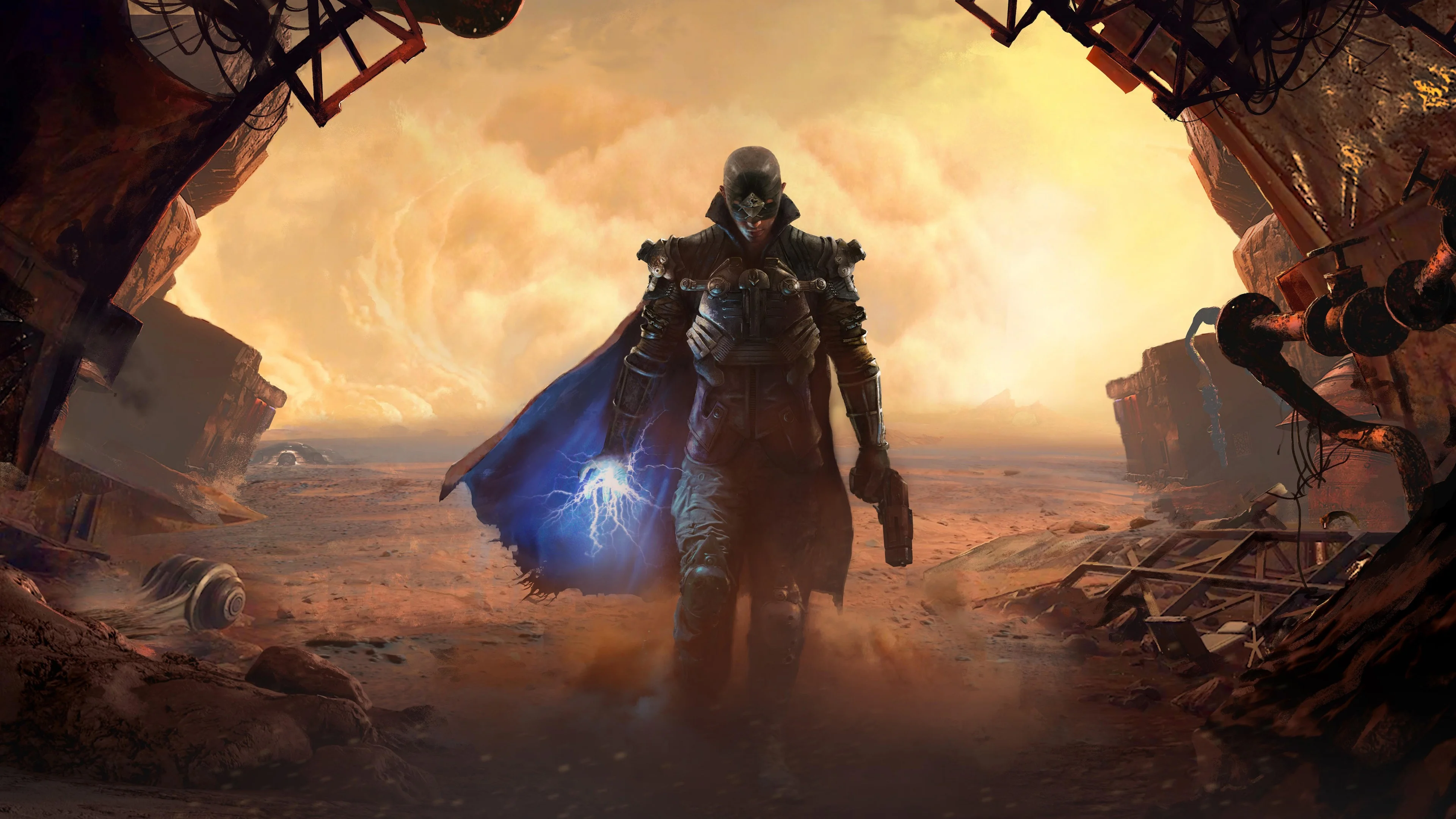

The Technomancer

Performance
1080p (Full HD)
1440p (2K / QHD)
4K (Ultra HD)

Requirements Check


Recommendations
Your hardware doesn't meet minimum requirements for this game.

Your GPU supports ray tracing.
Average FPS: resolution vs quality settings
| Ultra | High | Medium | Low | |
|---|---|---|---|---|
| 4K Ultra HD | 37 | 48 | 56 | 69 |
| 1440p QHD | 65 | 85 | 94 | 127 |
| 1080p Full HD | 98 | 129 | 148 | 189 |
Cell color: green is 120+ FPS, teal is 60+, amber is 30+, red is below 30. Cards marked Estimated above have no measured row and are scaled from your GPU benchmark percentile.
Performance Analysis: The Technomancer on Your System
The AMD Ryzen 5 7500F paired with the NVIDIA GeForce RTX 3070 is a combination that targets high-refresh 1080p and solid 1440p gaming, and in The Technomancer, the measured data shows a clear story of capability scaling with resolution and preset demands. This analysis uses measured FPS results from the database, combined with component benchmark scores and ranking positions, to give you a practical picture of what this PC can deliver in this 2016 action RPG.
Measured FPS Breakdown
The measured FPS data for this combo covers three resolutions (3840x2160, 2560x1440, 1920x1080) and four quality presets (Low, Medium, High, Ultra). Notably, the database only provides average FPS values; minimum and maximum FPS fields are null for every entry, so the analysis centers on sustained average performance.
At 1920x1080, this combo is exceptionally strong. Low settings deliver an average of 189.4 FPS, which is far beyond any 60 Hz display’s needs and comfortably supports high-refresh monitors. Medium settings drop to 147.7 FPS, still an enormous margin above the playable threshold. High settings produce 128.5 FPS, and even the most demanding Ultra preset averages 98.3 FPS. Every preset at 1080p clears the 60 FPS playable line by a wide margin, with the gap between Low and Ultra being roughly 91 FPS—indicating that the GPU and CPU have ample headroom even at maximum quality.
Moving to 2560x1440, the performance remains strong but the scaling becomes more evident. Low settings average 126.7 FPS, which is still excellent for 1440p gaming. Medium settings yield 94 FPS, High settings produce 85 FPS, and Ultra averages 65.4 FPS. The transition from 1080p to 1440p shows a predictable drop: Low goes from 189.4 to 126.7 FPS (a reduction of about 33%), and Ultra goes from 98.3 to 65.4 FPS (a reduction of about 33.5%). This consistent percentage drop across presets suggests that the resolution increase is the primary factor, rather than any single setting bottleneck. All four presets at 1440p still exceed 60 FPS, but Ultra is the closest to the line, with only 5.4 FPS of headroom.
At 3840x2160, the picture changes substantially. Low settings average 68.7 FPS, which is still above the 60 FPS threshold, but the margin is thin—just 8.7 FPS. Medium settings drop to 56 FPS, falling below the playable line. High settings average 47.9 FPS, and Ultra plummets to 36.9 FPS. The gap between Low and Ultra at 4K is 31.8 FPS, which is a much wider spread than at lower resolutions. For example, at 1080p, the Low-to-Ultra difference is 91.1 FPS, but at 4K it shrinks to 31.8 FPS—indicating that at 4K, the GPU is becoming the dominant constraint, and reducing settings has diminishing returns compared to lower resolutions.
The data shows no min or max FPS recordings, so we cannot assess frame pacing or momentary stutters. However, the average FPS figures are consistent with a well-balanced pairing at 1080p and 1440p, with 4K being playable only on Low settings.
How This Combo Ranks
Within the database’s tested combinations for The Technomancer, this CPU-GPU pairing sits at rank 1543 out of 3696 combos. That places it in the upper-middle tier of all tested systems, meaning it outperforms roughly 58% of configurations while trailing the top performers. This rank is a global measure across all resolutions and settings, so it reflects overall capability rather than any single scenario.
To contextualize this rank, consider the individual component standings. The AMD Ryzen 5 7500F holds a 77th percentile among all CPUs in the database, with an average benchmark score of 24964. Its nearest rivals are the Intel Core i7-11850H (avg score 24935, delta 0.1%), the AMD Ryzen 5 8400F (avg score 25005, delta -0.2%), the Intel Core i7-13620H (avg score 24911, delta 0.2%), and the Intel Core 5 210H (avg score 24872, delta 0.4%). These deltas are all within 0.4% of the 7500F’s score, meaning the CPU is essentially performance-equivalent to that cluster of processors—none of them would meaningfully change the game’s FPS.
The NVIDIA GeForce RTX 3070 holds a 61st percentile among all GPUs, with an average benchmark score of 17208. Its nearest rivals include the AMD Radeon RX 7600 XT (avg score 17083, delta 0.7%), the NVIDIA GeForce GTX 690 (avg score 17037, delta 1%), the AMD Radeon HD 7970M (avg score 17019, delta 1.1%), and the NVIDIA Tesla K40c (avg score 17468, delta -1.5%). Again, the deltas are small, but the GPU’s percentile (61) is lower than the CPU’s (77), suggesting that the RTX 3070 is the more limiting component in this pairing.
Given that the combo ranks at 1543 of 3696, and the CPU is in the 77th percentile while the GPU is in the 61st percentile, the data points to the GPU being the bottleneck for this game, especially at higher resolutions. The CPU’s strong single-thread and multi-thread scores (e.g., Cinebench R23 multi-core 22799, single-core 3218) are unlikely to constrain an RTX 3070 in a title like The Technomancer, which is not known for extreme CPU demands—though we cannot cite external knowledge, the FPS scaling supports this interpretation.
Best Settings per Resolution
Using the playable threshold of 60 FPS average, the most demanding preset that stays at or above that line at each resolution is as follows:
- 3840x2160 (4K): The only playable preset is Low, which averages 68.7 FPS. Medium drops to 56 FPS, below the threshold, so Low is the maximum quality option for 4K. This is a marginal situation—68.7 FPS gives you only 8.7 FPS of headroom, so any demanding scene could push it lower, but based on averages, Low is the choice.
- 2560x1440 (1440p): All four presets are playable, with Ultra being the best choice, averaging 65.4 FPS. This clears the 60 FPS line by 5.4 FPS. If you want more safety margin, High averages 85 FPS, but since the question is the most demanding preset that stays at 60+, Ultra qualifies.
- 1920x1080 (1080p): Again, all presets are playable, and Ultra averages 98.3 FPS. This is a comfortable margin—38.3 FPS above the threshold—so you can run maximum quality without concern.
For each resolution, the data supports running the highest preset that the hardware can sustain. At 1080p and 1440p, that is Ultra; at 4K, that is Low. There is no scenario where Medium or High is the "best" playable setting, because Ultra is already playable at 1440p and 1080p, and at 4K, even Low barely clears the bar, so no higher preset is viable.
FAQ
Q: Can this PC run The Technomancer at 60 FPS on Ultra settings at 1920x1080?
A: Yes. The measured average FPS at 1080p Ultra is 98.3, which is well above the 60 FPS playable threshold. The verdict data confirms Ultra is listed among the playable settings at this resolution.
Q: What is the best preset for 2560x1440 if I want the highest quality while staying above 60 FPS?
A: Ultra is the best preset, with an average of 65.4 FPS. This is above the 60 FPS threshold, so you can use maximum quality at 1440p, though the margin is only 5.4 FPS.
Q: Is 4K gaming viable with this combo in The Technomancer?
A: Only on Low settings. The average FPS at 3840x2160 Low is 68.7, which is above 60. Medium drops to 56 FPS, High to 47.9, and Ultra to 36.9, so no higher preset meets the playable threshold.
Q: How does the RTX 3070 compare to its nearest rival GPU in terms of benchmark scores?
A: The RTX 3070 has an average benchmark score of 17208. Its closest rival, the AMD Radeon RX 7600 XT, scores 17083, which is 0.7% lower. The NVIDIA GeForce GTX 690 scores 17037 (1% lower), and the AMD Radeon HD 7970M scores 17019 (1.1% lower). The NVIDIA Tesla K40c scores 17468, which is 1.5% higher.
Q: Is the CPU or GPU more likely to be the limiting factor in this game?
A: The data suggests the GPU is the limiting factor. The CPU’s percentile (77) is higher than the GPU’s (61), and the FPS scaling from 1080p to 4K shows a consistent drop of about 33% per resolution step, which is typical of GPU-bound scenarios. At 4K High and Ultra, the FPS falls well below 60, indicating the GPU cannot keep up.
Q: What is the FPS difference between Low and Ultra at 1920x1080?
A: At 1080p, Low averages 189.4 FPS and Ultra averages 98.3 FPS, a difference of 91.1 FPS. This shows that even at maximum quality, the combo delivers near-100 FPS, so you have substantial headroom to increase settings without sacrificing playability.
CPU and GPU Roles
Determining which component matters more for The Technomancer requires examining how FPS scales with resolution and preset changes. The data shows a clear pattern: as resolution increases, the FPS drops proportionally, while the relative impact of preset changes varies.
At 1920x1080, the FPS is extremely high across all presets. Low settings yield 189.4 FPS, and even Ultra stays at 98.3 FPS. The fact that Ultra still produces nearly 100 FPS means the CPU is not a bottleneck at this resolution—if it were, we would expect to see FPS capped at a lower value regardless of GPU load. The CPU’s strong benchmark scores (e.g., Cinebench R23 multi-core 22799, single-core 3218, and Geekbench multi-core 12362) support this, as they indicate ample processing headroom for a 2016 title.
At 2560x1440, the FPS drops by roughly one-third across all presets compared to 1080p. For instance, High goes from 128.5 to 85 FPS, and Ultra from 98.3 to 65.4 FPS. This consistent ~33% reduction aligns with the pixel count increase (about 1.78x the pixels of 1080p), suggesting the GPU is now the dominant factor. The CPU’s workload does not scale with resolution, so if the CPU were limiting, we would see a smaller FPS drop. Instead, the proportional decline points to the GPU being fully utilized.
At 3840x2160, the pattern intensifies. Low settings average 68.7 FPS, which is only 45% of the 1080p Low value (189.4). Medium drops to 56 FPS, High to 47.9, and Ultra to 36.9. The spread between Low and Ultra at 4K is 31.8 FPS, whereas at 1080p it is 91.1 FPS. This shrinking spread indicates that at 4K, the GPU is so heavily loaded that reducing settings yields smaller absolute gains—the bottleneck is raw pixel throughput, not shading complexity. The RTX 3070’s 8 GB GDDR6 memory and 448.0 GB/s bandwidth are taxed heavily at 4K, and the data reflects that.
Preset scaling also reveals component roles. At 1080p, going from Low to Ultra reduces FPS by about 48% (189.4 to 98.3). At 1440p, the same preset change reduces FPS by about 48% as well (126.7 to 65.4). At 4K, the reduction is about 46% (68.7 to 36.9). This consistency means the preset quality settings have a similar relative impact at all resolutions, which is typical of GPU-bound rendering where shader complexity and texture memory are the primary costs.
The CPU’s role is more evident in the absolute FPS ceilings. At 1080p Low, the combo hits 189.4 FPS, which is close to what a high-end CPU can feed to a GPU in older titles. The CPU’s 77th percentile ranking and its proximity to rivals (all within 0.4% in benchmark scores) mean that any of those CPUs would produce nearly identical results. In contrast, the GPU’s 61st percentile and the FPS collapse at 4K show that upgrading the GPU would have a much larger impact on high-resolution performance than swapping the CPU.
In practical terms, if you target 1080p or 1440p, the CPU is more than sufficient, and the GPU determines your preset headroom. If you target 4K, the GPU is the sole constraint, and no CPU upgrade would help—you would need a more powerful GPU than the RTX 3070 to exceed 60 FPS on Medium or higher.
The Verdict
The question is whether this PC can run The Technomancer, and the answer depends entirely on your target resolution and quality expectations. The verdict data from the database is unambiguous.
At 1920x1080, the combo is fully capable. All four presets—Low, Medium, High, Ultra—are listed as playable, with the best preset being Ultra at an average of 98.3 FPS. This is a strong result: you can run the game at maximum quality and still have nearly 40 FPS of headroom above the 60 FPS threshold. Even if you have a 144 Hz monitor, High (128.5 FPS) and Medium (147.7 FPS) are viable options, though Ultra remains above 60.
At 2560x1440, the combo also clears the bar on all presets. Ultra averages 65.4 FPS, which is above 60, so you can run the game at maximum quality. The margin is thinner than at 1080p, but it is playable. If you prefer a safety buffer, High at 85 FPS is a more comfortable choice, but the data supports Ultra as playable.
At 3840x2160, the situation is limited. Only Low settings are playable, averaging 68.7 FPS. This is above 60, so 4K is technically playable, but you must sacrifice visual quality significantly. Medium (56 FPS), High (47.9 FPS), and Ultra (36.9 FPS) all fall below the threshold. If 4K is your target, this combo will run the game, but only on the lowest preset, and the 8.7 FPS headroom means you should expect occasional dips below 60 in demanding scenes.
The overall combo rank of 1543 out of 3696 places this system in the upper-middle tier, which is consistent with its performance: excellent for 1080p and 1440p, marginal for 4K. The CPU is not a concern—its 77th percentile and close rivalry with other high-end processors mean it will not hold back the RTX 3070 in this game. The GPU is the deciding factor, and its 61st percentile is adequate for mainstream gaming but not for high-refresh 4K.
For a practical recommendation: if you play at 1080p or 1440p, this PC runs The Technomancer with room to spare, even on Ultra. If you insist on 4K, you must accept Low settings, and even then, the average FPS is just above the playable line. Based on the measured data, this is a solid 1080p and 1440p machine for this title, and a 4K machine only under minimal quality settings.