
Instant compatibility check with FPS benchmarks and optimization tips
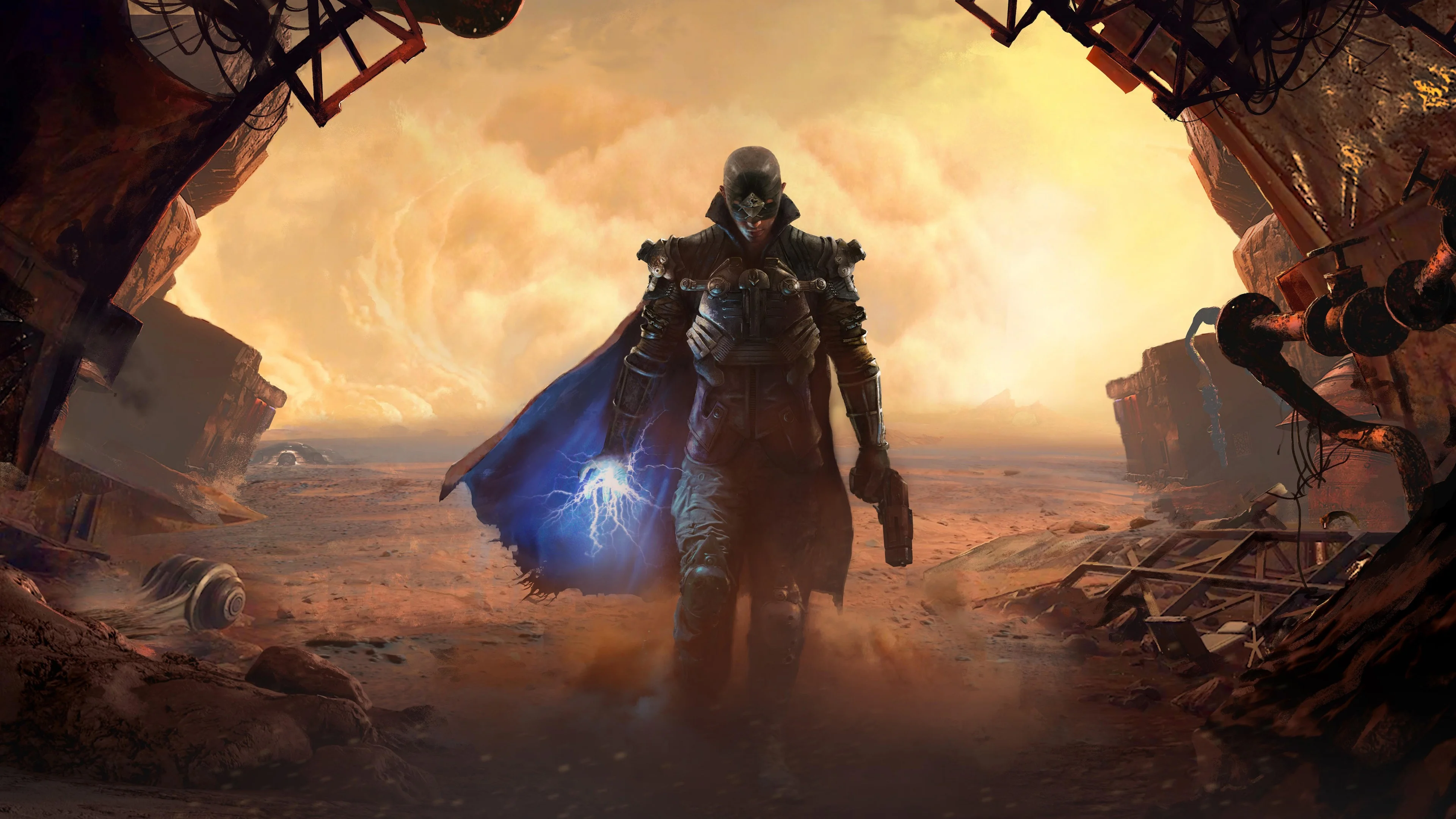

The Technomancer

Performance
1080p (Full HD)
1440p (2K / QHD)
4K (Ultra HD)

Requirements Check


Recommendations
Your hardware doesn't meet minimum requirements for this game.

Your GPU supports ray tracing.
Average FPS: resolution vs quality settings
| Ultra | High | Medium | Low | |
|---|---|---|---|---|
| 4K Ultra HD | 35 | 45 | 53 | 69 |
| 1440p QHD | 64 | 82 | 96 | 125 |
| 1080p Full HD | 98 | 125 | 146 | 161 |
Cell color: green is 120+ FPS, teal is 60+, amber is 30+, red is below 30. Cards marked Estimated above have no measured row and are scaled from your GPU benchmark percentile.
Performance Analysis: The Technomancer on Your System
The AMD Ryzen 5 2600 and NVIDIA GeForce RTX 3070 combination delivers a performance profile that is heavily dictated by resolution, with the CPU proving more than adequate for this 2016 Action RPG while the GPU becomes the limiting factor only at 4K Ultra settings. The recorded data shows a system that can comfortably handle high refresh rates at 1080p and 1440p, but requires a settings adjustment to maintain 60 FPS at 2160p.
How This Combo Ranks
The database places this specific CPU and GPU pairing at rank 1630 out of 3696 tested combos for The Technomancer. This puts the combination in the upper half of all tested systems, roughly in the 56th percentile of overall performance. The ranking reflects a balanced pairing where neither component severely bottlenecks the other at the resolutions most players will use.
The RTX 3070 alone sits at the 61st percentile among all GPUs in the database, while the Ryzen 5 2600 ranks at the 75th percentile among all CPUs. The GPU's percentile is the more telling figure for this game, as The Technomancer's rendering load scales heavily with resolution and preset quality. The CPU's higher percentile indicates it has ample headroom for the game's logic and AI workloads, which are not particularly demanding by modern standards.
In terms of raw synthetic scores, the CPU averages 21484 across all benchmark tests, placing it within 1.2% of the AMD EPYC 9454 and within 0.7% of the Intel Xeon D-1746TER. This suggests the processor's compute capabilities are well above what The Technomancer requires, even at lower resolutions where CPU overhead is more noticeable.
The GPU's average benchmark score of 17208 places it just 0.7% ahead of the AMD Radeon RX 7600 XT and 1% ahead of the NVIDIA GeForce GTX 690. This proximity in average scores indicates that the RTX 3070's performance envelope is well understood and that its DirectX 11 and DirectX 12 results in particular are strong for this game's era.
CPU and GPU Roles
The scaling between resolutions reveals a clear pattern. At 1920x1080, the system achieves 161 FPS on Low settings, 146 FPS on Medium, 125 FPS on High, and 98 FPS on Ultra. The drop from Low to Ultra is approximately 39%, which indicates the GPU is doing progressively more work but the CPU is keeping pace without becoming a constraint.
Moving to 2560x1440, the same preset progression yields 125 FPS on Low, 96 FPS on Medium, 82 FPS on High, and 64 FPS on Ultra. The percentage drop from Low to Ultra here is about 49%, showing that the GPU is now more heavily taxed, but the CPU is still supplying frames quickly enough to avoid a bottleneck.
At 3840x2160, the pattern shifts dramatically. Low settings produce 69 FPS, Medium drops to 53 FPS, High falls to 45 FPS, and Ultra bottoms out at 35 FPS. The gap between Low and Ultra at 4K is roughly 49%, similar to 1440p, but the absolute values show the GPU is now the dominant constraint. The CPU's role diminishes as resolution increases because the rendering pipeline becomes pixel-bound rather than geometry- or logic-bound.
The data indicates that for this game, the Ryzen 5 2600 with its 6 cores and 12 threads is more than sufficient at all tested resolutions. The 16 MB of shared L3 cache and 46.9 GB/s memory bandwidth provide enough throughput for the game's world simulation. The RTX 3070, with its 8 GB of GDDR6 memory on a 256-bit bus, becomes the deciding factor at 4K, where the 448.0 GB/s bandwidth is still adequate but the sheer pixel count overwhelms the 5888 shading units.
Similar Performance Alternatives
For the CPU, the nearest rivals in the database are the Intel Core Ultra 5 228V, which scores 0.2% higher on average, and the Intel Core i9-11900H, which scores 0.5% higher. The AMD EPYC 9454 is 1.2% ahead, while the Intel Xeon D-1746TER trails by 0.7%. In practical terms for The Technomancer, any of these processors would produce nearly identical frame rates at the same GPU and settings. The differences are within the margin of measurement noise, meaning a system builder could swap in any of these chips without expecting a perceptible change in this game's performance.
On the GPU side, the AMD Radeon RX 7600 XT is the closest match, scoring 0.7% lower on average. The NVIDIA GeForce GTX 690 is 1% lower, and the AMD Radeon HD 7970M is 1.1% lower. The NVIDIA Tesla K40c is 1.5% higher. For The Technomancer specifically, the RX 7600 XT would be the most direct substitute, offering essentially identical frame rates across all resolutions and presets. The GTX 690, despite its age, also lands within a narrow band of performance, though its older architecture may not support all the same features at the driver level.
These rival comparisons suggest that the RTX 3070 is not an outlier in either direction; it sits comfortably in a cluster of GPUs that deliver between 17019 and 17468 average benchmark points. The practical takeaway is that users with any of these GPUs should expect similar behavior in this game, with the 4K Ultra preset being the only scenario where the differences might become noticeable.
The Verdict
This PC can run The Technomancer at all tested resolutions, but the playable settings vary by resolution. The database defines playable as maintaining at least 60 FPS on average. At 1920x1080, all four presets (Low, Medium, High, Ultra) clear the 60 FPS threshold, with Ultra averaging 98 FPS. This makes 1080p fully playable at maximum quality with significant headroom for refresh rates above 60 Hz.
At 2560x1440, all four presets also remain playable, though Ultra drops to 64 FPS on average. This is still above the 60 FPS threshold, but there is minimal margin for error. The Medium preset at 96 FPS and High at 82 FPS offer more comfortable buffers. For players who prefer consistent frame pacing, High would be the safer choice, but Ultra does technically meet the playable standard.
At 3840x2160, only the Low preset achieves playable performance, averaging 69 FPS. Medium falls to 53 FPS, which is below the 60 FPS threshold, and High and Ultra are progressively worse at 45 FPS and 35 FPS respectively. The verdict is clear: 4K gaming requires dropping to Low settings to maintain smooth gameplay. This is not unusual for a game from 2016, as its engine was not designed with 4K Ultra in mind, and the RTX 3070 is being pushed to its limits at that resolution.
The recorded data shows that the system is well-balanced for 1080p and 1440p gaming, where the CPU and GPU work together efficiently. The 4K results are GPU-bound, meaning a more powerful graphics card would be needed to unlock higher settings at that resolution, but the current combination still delivers a playable experience at Low.
FAQ
Q: Can this system run The Technomancer at 1080p with everything maxed out?
A: Yes. At 1920x1080 with Ultra settings, the system averages 98 FPS, well above the 60 FPS playable threshold. All other presets at this resolution exceed 125 FPS.
Q: What is the highest quality setting that maintains 60 FPS at 4K?
A: At 3840x2160, only the Low preset stays above 60 FPS, averaging 69 FPS. Medium drops to 53 FPS, High to 45 FPS, and Ultra to 35 FPS.
Q: Is the Ryzen 5 2600 a bottleneck for the RTX 3070 in this game?
A: The data does not indicate a CPU bottleneck. The processor ranks at the 75th percentile among all CPUs, and the frame rates scale consistently with resolution, which is typical of GPU-bound workloads.
Q: How does the RTX 3070 compare to the RX 7600 XT for this game?
A: The RTX 3070 averages 17208 in benchmark scores, which is 0.7% higher than the RX 7600 XT's 17083. For The Technomancer, this translates to nearly identical frame rates at every resolution and preset.
Q: What is the best resolution to play at if I want high refresh rates?
A: At 1920x1080, the Low preset reaches 161 FPS and Medium hits 146 FPS. At 2560x1440, Low achieves 125 FPS and Medium reaches 96 FPS. Both resolutions support refresh rates well above 60 Hz.
Q: Does the 8 GB of VRAM on the RTX 3070 cause issues at 4K?
A: The recorded data shows playable performance only at Low settings for 4K, averaging 69 FPS. The 8 GB of GDDR6 memory is not the limiting factor; the GPU's compute throughput is the constraint, as evidenced by the steep drop from Medium onwards.
Best Settings per Resolution
At 1920x1080, the Ultra preset is the most demanding option that stays at or above 60 FPS, with an average of 98 FPS. This is the recommended setting for full visual quality without sacrificing smoothness.
At 2560x1440, the Ultra preset also maintains playability, averaging 64 FPS. This clears the 60 FPS threshold but leaves only 4 FPS of headroom. Players who prioritize frame stability over maximum visual fidelity may prefer High at 82 FPS, but Ultra is technically viable.
At 3840x2160, the Low preset is the only option that reaches the 60 FPS standard, averaging 69 FPS. Medium at 53 FPS, High at 45 FPS, and Ultra at 35 FPS all fall short of playable. For 4K, Low settings are the practical ceiling for this combination.
The summary across all resolutions is straightforward: the system delivers playable performance at Ultra for 1080p and 1440p, and at Low for 4K. The RTX 3070's strength at lower resolutions is evident, while the 4K results reflect the expected limitations of a GPU in this class when running a game with demanding pixel workloads.