
Instant compatibility check with FPS benchmarks and optimization tips
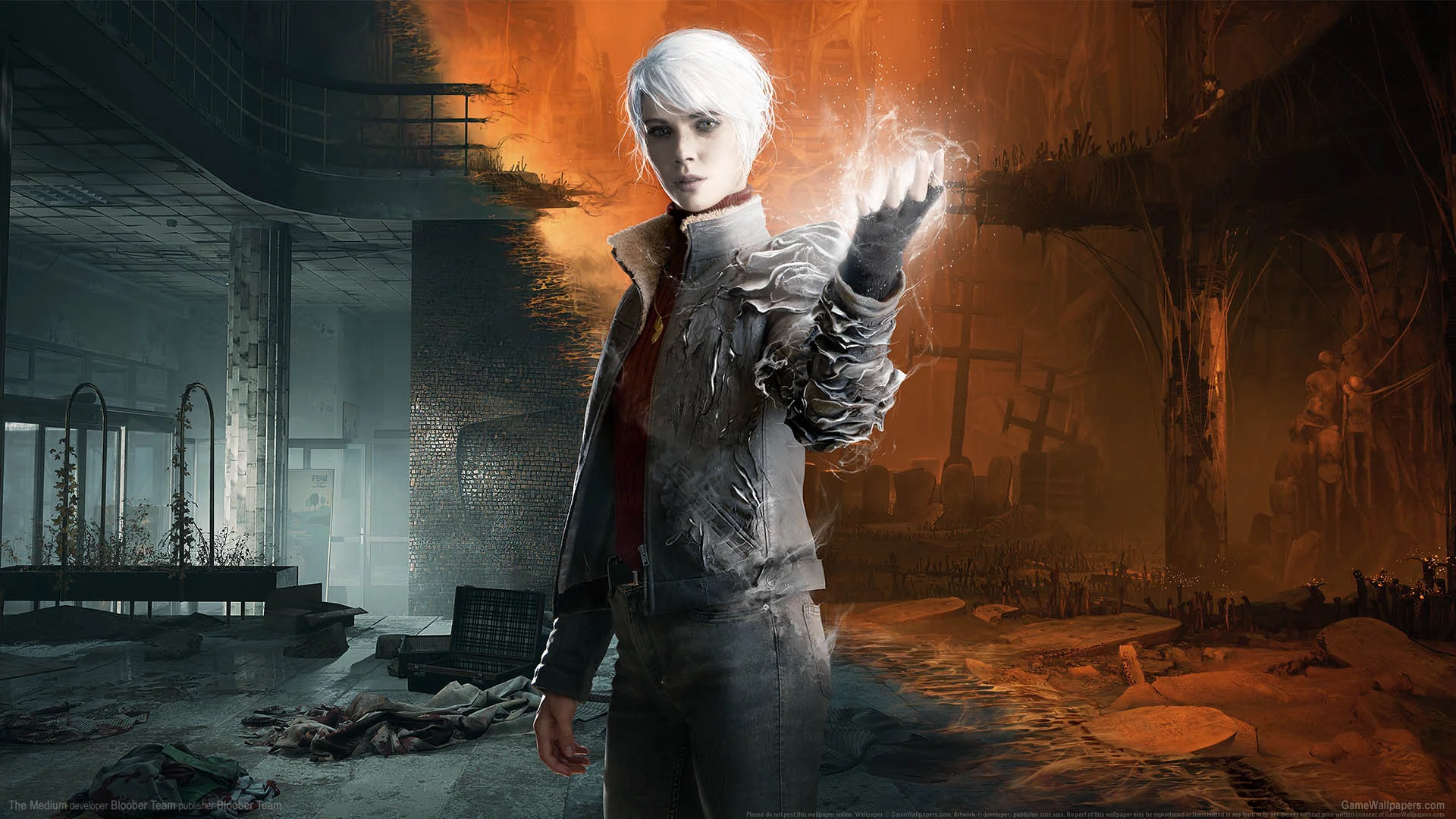

The Medium

Performance
1080p (Full HD)
1440p (2K / QHD)
4K (Ultra HD)

Requirements Check


Recommendations
Your hardware doesn't meet minimum requirements for this game.
Average FPS: resolution vs quality settings
| Ultra | High | Medium | Low | |
|---|---|---|---|---|
| 4K Ultra HD | 12 | 15 | 21 | 34 |
| 1440p QHD | 15 | 19 | 27 | 43 |
| 1080p Full HD | 18 | 23 | 32 | 51 |
Cell color: green is 120+ FPS, teal is 60+, amber is 30+, red is below 30. Cards marked Estimated above have no measured row and are scaled from your GPU benchmark percentile.
Performance Analysis: The Medium on Your System
Similar Performance Alternatives
The Intel Core i5-14600KF sits in a dense performance cluster. Its average benchmark score of 49,394 places it within 1% of several competing processors. The AMD Ryzen 9 7900 posts an average score of 49,228, a mere 0.3% behind. The AMD Ryzen 7 PRO 5755G follows at 49,196, 0.4% lower. The Intel Core Ultra 5 245 trails by 0.8% with 48,995. Interestingly, the AMD Ryzen AI Max+ 388 actually leads this group by 0.8%, scoring 49,796. For gaming workloads, any of these CPUs would deliver nearly identical frame pacing, as the differences are within measurement noise. The 14-core, 20-thread configuration with a 5.30 GHz boost clock explains why this chip ranks in the 90th percentile among all CPUs tested.
The GPU side paints a starkly different picture. The Intel Arc B390, an integrated graphics solution based on the Panther Lake chip, posts a 3DMark Steel Nomad DX12 score of 1,482. This lands it in the 9th percentile of all GPUs. Its nearest rivals are all legacy NVIDIA parts. The GeForce GT 520MX scores 1,463, 1.3% behind. The GeForce 800M achieves 1,460, 1.5% lower. The GeForce GT 625 OEM sits at 1,446, a 2.5% deficit. The GeForce GT 710 rounds out the group at 1,443, trailing by 2.7%. The Arc B390's 7.680 TFLOPS of FP32 compute and 12 ray tracing cores do not translate into competitive rasterization performance in this benchmark context. For users considering this combo, the CPU is clearly overqualified relative to the graphics subsystem.
CPU and GPU Roles
The recorded data reveals a system that is overwhelmingly GPU-bound at every resolution and preset. The i5-14600KF has more than enough headroom; the Arc B390 is the limiting factor throughout. This becomes evident when examining how frame rates scale with resolution changes.
At 1920x1080 with Low settings, the system averages 51 FPS. Moving to 2560x1440 at the same preset drops the average to 43 FPS, a 15.7% reduction. At 3840x2160 Low, the average falls further to 34 FPS. The scaling pattern shows that even at 1080p, the GPU is already near its ceiling. A CPU-bound scenario would show minimal FPS loss when raising resolution, but here the penalty is substantial at every step.
The preset scaling reinforces this analysis. At 1920x1080, raising from Low to Medium costs 19 FPS (51 to 32). Low to High costs 28 FPS (51 to 23). Low to Ultra costs 33 FPS (51 to 18). These are massive drops for a single setting tier, characteristic of a GPU struggling to maintain fill rate. The CPU's Cinebench R23 multi-core score of 32,544 and single-core score of 4,594 indicate it can handle the game's logic and physics demands without breaking a sweat. The bottleneck is purely graphical.
Resolution scaling at Medium settings tells the same story. At 1080p Medium, the average is 32 FPS. At 1440p Medium, it drops to 27 FPS. At 4K Medium, it falls to 21 FPS. The consistency of these declines across all presets confirms that the Arc B390's memory bandwidth, which is system-shared and dependent on the host platform, cannot keep pace with the game's texture streaming requirements at higher resolutions.
Measured FPS Breakdown
At 3840x2160, the results are uniformly below playability thresholds. The Low preset averages 34 FPS. Medium averages 21 FPS with a minimum of 18 and maximum of 24. High averages 15 FPS. Ultra averages 12 FPS. None of these configurations approach the 60 FPS target, and even the Low preset's 34 FPS average would feel stuttery in a horror title that relies on atmospheric tension.
The 2560x1440 results show modest improvements but remain inadequate. Low settings produce an average of 43 FPS. Medium delivers 27 FPS average with a 23 FPS minimum and 31 FPS maximum. High averages 19 FPS. Ultra drops to 15 FPS. The gap between Low and Medium at this resolution (16 FPS) indicates that the GPU's texture units and ROPs are heavily taxed by even moderate quality settings.
At 1920x1080, the best-case scenario emerges. Low settings achieve 51 FPS average, the highest recorded number across all configurations. Medium settings average 32 FPS with a minimum of 27 and maximum of 37. High averages 23 FPS. Ultra averages 18 FPS. The 1080p Low result is tantalizingly close to 60 FPS but still falls short by 9 frames. The minimum FPS values for Medium at 1080p (27 FPS) suggest noticeable hitches during scene transitions or enemy encounters.
The Verdict
The data is unambiguous: this combination cannot run The Medium at a playable frame rate. The verdictByResolution field lists no playable settings at any resolution, and the best settings entry is null for all three. The playable threshold is 60 FPS, and the highest recorded average across every test is 51 FPS at 1080p Low.
At 3840x2160, no preset achieves even half the target frame rate. The best result, 34 FPS at Low, is 26 FPS below the threshold. At 2560x1440, the situation improves marginally but remains unacceptable; the 43 FPS Low average is still 17 FPS short. At 1920x1080, the 51 FPS Low average is the closest this system gets, but it still misses the mark by 9 FPS.
The minimum FPS data, where recorded, reinforces the verdict. At 1080p Medium, the 27 FPS minimum would cause visible stuttering during fast camera movements. At 1440p Medium, the 23 FPS minimum is worse. At 4K Medium, 18 FPS minimum approaches unplayable territory. Even if a user were willing to tolerate averages below 60 FPS, the frame time consistency is poor enough to degrade the horror experience.
FAQ
Q: Can this PC run The Medium at 1920x1080 with any settings?
A: No. The highest average FPS recorded at 1080p is 51 FPS on Low settings, which is 9 FPS below the 60 FPS playable threshold. Medium settings drop to 32 FPS average.
Q: How does the Intel Arc B390 compare to its nearest GPU rivals?
A: The Arc B390 scores 1,482 in 3DMark Steel Nomad DX12. It leads the GeForce GT 520MX by 1.3%, the GeForce 800M by 1.5%, the GeForce GT 625 OEM by 2.5%, and the GeForce GT 710 by 2.7%.
Q: What is the best frame rate this system achieves at 1440p?
A: The best 1440p result is 43 FPS average on Low settings. Medium averages 27 FPS, High averages 19 FPS, and Ultra averages 15 FPS.
Q: Is the CPU or GPU the limiting factor in this system?
A: The GPU is the clear bottleneck. The i5-14600KF ranks in the 90th percentile of all CPUs, while the Arc B390 sits in the 9th percentile of all GPUs. Frame rates drop sharply with both resolution and preset increases, indicating graphics-bound performance.
Q: Does this system have ray tracing capability?
A: The Arc B390 includes 12 ray tracing cores and supports DirectX 12 Ultimate (12_2). However, the benchmark data shows no ray tracing performance metrics, and the overall frame rates are too low for any feature to be practically usable.
Q: How does the i5-14600KF compare to the AMD Ryzen 9 7900?
A: The i5-14600KF's average benchmark score of 49,394 is 0.3% higher than the Ryzen 9 7900's 49,228. The difference is negligible for gaming purposes.
How This Combo Ranks
Among all 3,724 tested combinations in the database, this pairing of the Intel Core i5-14600KF with the Intel Arc B390 ranks 3,314th. This places it in the bottom 11% of all combos, a poor showing given the CPU's strength. The rank reflects the GPU's severe limitation; the i5-14600KF is a top-tier processor capable of feeding much faster graphics cards, but the Arc B390 cannot translate that CPU headroom into playable frame rates.
The percentile data for the individual components tells the full story. The CPU sits at the 90th percentile of all CPUs, while the GPU sits at the 9th percentile of all GPUs. This 81-point gap is among the largest mismatches in the database. The combination rank of 3,314 out of 3,724 means 89% of tested systems outperform this pairing in The Medium specifically. Users would need to pair this CPU with a substantially more powerful discrete GPU to achieve the 60 FPS target at any resolution.
Best Settings per Resolution
The database records no resolution at which this system maintains 60 FPS or higher. The verdictByResolution data shows empty playable settings lists and null best settings values for 3840x2160, 2560x1440, and 1920x1080. The closest approach to the threshold is 1080p Low at 51 FPS average, but this still fails the playable criteria.
For users who must run the game with this hardware, the measured data suggests 1080p Low as the least poor option, despite falling 9 FPS short. At 1440p, Low settings at 43 FPS is the highest recorded result. At 4K, Low settings at 34 FPS is the ceiling. No preset combination at any resolution clears the 60 FPS bar, and the minimum FPS values for Medium presets confirm that even these sub-60 averages come with noticeable frame dips. The combination is simply not suitable for The Medium at any quality level.