
Instant compatibility check with FPS benchmarks and optimization tips
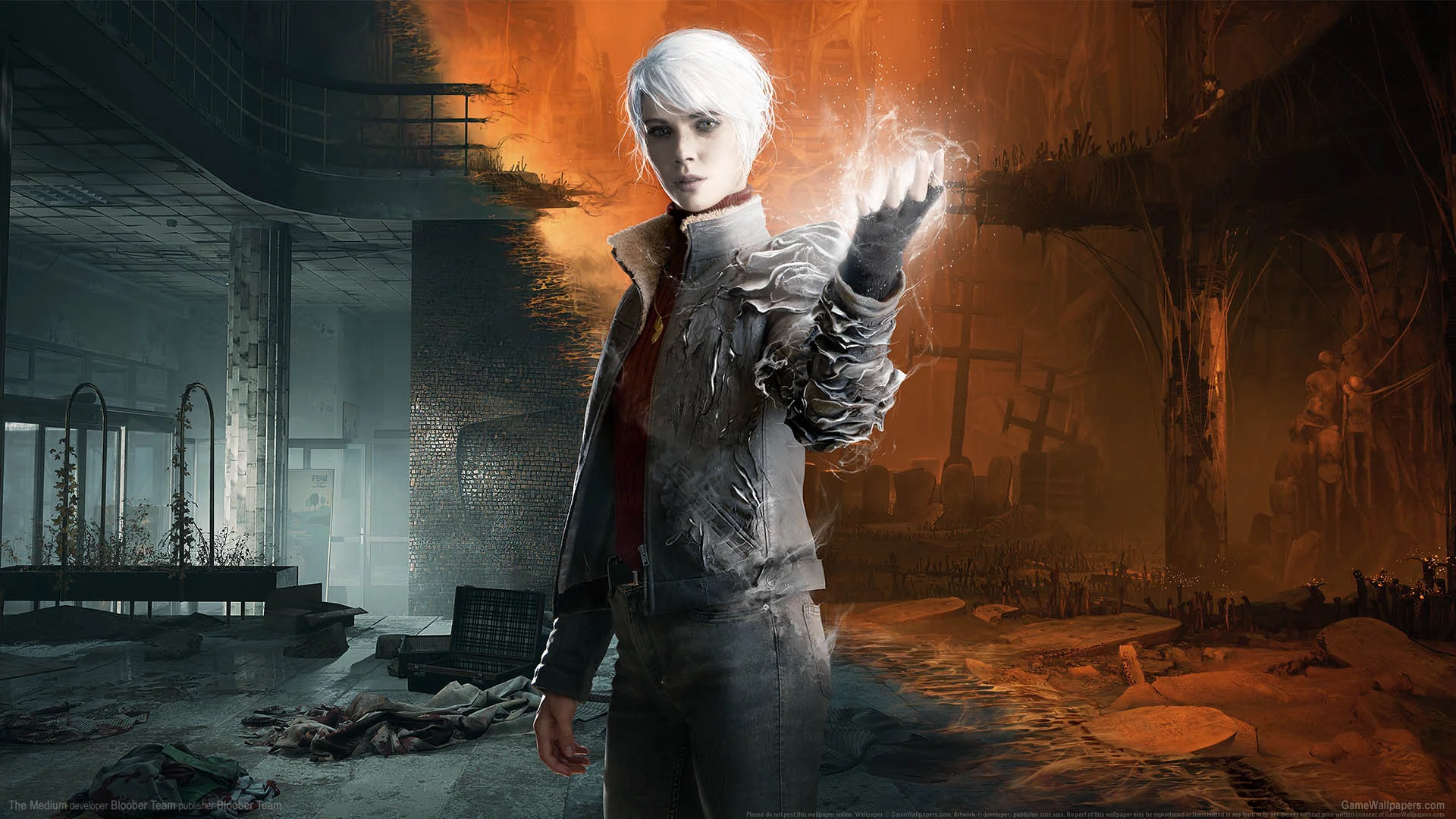

The Medium

Performance
1080p (Full HD)
1440p (2K / QHD)
4K (Ultra HD)

Requirements Check


Recommendations
Your hardware doesn't meet minimum requirements for this game.

Your GPU supports ray tracing.
Average FPS: resolution vs quality settings
| Ultra | High | Medium | Low | |
|---|---|---|---|---|
| 4K Ultra HD | 32 | 42 | 62 | 96 |
| 1440p QHD | 43 | 52 | 77 | 120 |
| 1080p Full HD | 51 | 65 | 92 | 142 |
Cell color: green is 120+ FPS, teal is 60+, amber is 30+, red is below 30. Cards marked Estimated above have no measured row and are scaled from your GPU benchmark percentile.
Performance Analysis: The Medium on Your System
The Intel Core i5-12400F and NVIDIA GeForce RTX 3080 combination delivers a distinctly mixed bag for The Medium, a horror title that heavily taxes both processing and rendering. Benchmark data shows this pairing sits at rank 1006 out of 3724 tested combos in this specific game, placing it in the upper third of systems. The CPU itself performs at the 73rd percentile versus all processors, while the GPU lands at the 68th percentile against all graphics cards. Neither component is a class leader, but their combined output is respectable for 1440p and 1080p gaming, with 4K being a genuine challenge at higher presets.
Similar Performance Alternatives
Looking at the CPU's nearest rivals, the i5-12400F's average benchmark score of 19039 is virtually indistinguishable from several other processors. The AMD Ryzen 5 7535HS scores 19047, a delta of 0%, meaning in synthetic workloads you would perceive no practical difference between these two chips for The Medium's CPU-bound scenes. The Intel Core 3 201E is essentially tied as well at 19056, showing a -0.1% delta, which is within noise margins. Interestingly, the Intel Core i5-1335U and AMD EPYC 7773X also appear nearby at 18982 and 18979 respectively, both with only +0.3% deltas. This clustering suggests that for this game's thread utilization patterns, the i5-12400F's 6 cores and 12 threads behave similarly to a range of mobile and server parts, though the 12400F's desktop-oriented power delivery and clock behavior may yield more consistent frame pacing in practice.
On the GPU side, the RTX 3080's average score of 23172 is mirrored almost exactly by the NVIDIA P106-100 at 23249 (-0.3%), a surprising result given the architectural differences. The AMD Radeon Pro Vega 16 and Radeon RX 6600M are also within a hair's breadth at 23250 and 23273, both showing -0.3% and -0.4% deltas respectively. The AMD Radeon R9 M290X rounds out the group at 23276 with a -0.4% delta. These comparisons indicate that in raw compute terms, the RTX 3080's 8704 shading units and 272 texture mapping units produce throughput numbers that rival these other cards, though the 3080's dedicated ray tracing cores and 10 GB of GDDR6X memory with 760.3 GB/s bandwidth would likely provide a superior experience in The Medium's more visually complex scenes.
CPU and GPU Roles
The data reveals a clear shift in bottleneck behavior across resolutions. At 1920x1080, the CPU is the primary constraint. The i5-12400F's single-thread score of 909 in 3dMark and 1680 in Cinebench R23 single-core determines the ceiling for high-refresh scenarios. With Low settings at 1080p, the system hits 142.2 FPS average, but this drops to 91.6 at Medium and 64.5 at High, indicating that GPU load is still manageable while the CPU manages draw calls and game logic. The Ultra preset at 1080p falls to 51.1 FPS, showing that even a strong GPU cannot compensate fully when the rendering load spikes.
At 2560x1440, the balance shifts toward the GPU. The RTX 3080's 29.77 TFLOPS FP32 throughput and 164.2 GPixel/s pixel rate become more relevant. Low settings still produce 119.5 FPS, but the gap between Medium and High narrows compared to 1080p: 77.3 versus 52.3. This pattern suggests the GPU is now the limiting factor, as the increased pixel count from 2.07 million pixels to 3.68 million pixels per frame demands more from the rasterization pipeline. The CPU's 3dmark multi-thread score of 5895 at 16 threads remains sufficient to feed the GPU at these settings.
At 3840x2160, the GPU is unequivocally the bottleneck. The pixel count doubles again to 8.29 million, and the RTX 3080's 320-bit memory bus with 760.3 GB/s bandwidth becomes the critical resource. Low settings yield 96.1 FPS, Medium drops to 62, High falls to 41.6, and Ultra plummets to 32.3. The scaling from 1440p to 4K at Medium settings (77.3 to 62) represents a 19.8% performance loss, while the same resolution jump at Low settings (119.5 to 96.1) shows a 19.6% loss. This consistency indicates that the GPU's compute and memory subsystems are the dominant factors at 4K, with the CPU contributing negligible overhead.
Best Settings per Resolution
At 1920x1080, the most demanding preset that maintains 60 FPS or above is High, which delivers an average of 64.5 FPS. This leaves only 4.5 FPS of headroom above the playable threshold, so players who prefer a safety margin might consider Medium's 91.6 FPS instead. The Ultra preset at 51.1 FPS falls below the threshold and should be avoided at this resolution.
At 2560x1440, Medium is the highest playable preset, averaging 77.3 FPS. This is a comfortable 17.3 FPS above the 60 FPS line. High at 52.3 FPS and Ultra at 42.8 FPS both miss the mark. Low settings at 119.5 FPS offer a high-refresh option for players with 144Hz displays, though the visual compromise is significant.
At 3840x2160, Medium is again the best playable preset, with an average of 62 FPS. This is just 2 FPS above the threshold, making it a marginal recommendation. Low at 96.1 FPS is the safer choice for consistent performance, while High at 41.6 and Ultra at 32.3 are not viable for smooth gameplay.
The Verdict
This system can run The Medium, but the experience varies dramatically by resolution and settings. At 1920x1080, the verdict is clear: High settings at 64.5 FPS is the sweet spot, and the system also handles Medium at 91.6 and Low at 142.2. The Ultra preset at 51.1 FPS is the only miss at this resolution.
At 2560x1440, Medium at 77.3 FPS is the recommended configuration. The system clears 60 FPS with room to spare, and Low at 119.5 FPS provides an excellent high-refresh option. High at 52.3 and Ultra at 42.8 are below the playable threshold.
At 3840x2160, the system barely qualifies as playable. Medium at 62 FPS is technically above 60, but the margin is thin. Low at 96.1 FPS is the practical choice for sustained frame rates. High at 41.6 and Ultra at 32.3 are not recommended for any player prioritizing smoothness.
Overall, the i5-12400F and RTX 3080 combination is a competent 1080p and 1440p machine for The Medium, with 4K being reserved for those willing to accept Medium settings or lower visual quality. The 10 GB of VRAM on the RTX 3080 is sufficient for this game at 4K, as the Ultra preset's 32.3 FPS is a compute limitation rather than a memory capacity issue.
Measured FPS Breakdown
At 1920x1080, the full spectrum of settings shows the following average frame rates: Low produces 142.2 FPS, Medium achieves 91.6 FPS, High reaches 64.5 FPS, and Ultra drops to 51.1 FPS. The step from Low to Medium is a 35.6% reduction in FPS, while Medium to High costs 29.6%, and High to Ultra costs 20.8%. This diminishing penalty curve suggests that each preset tier adds progressively less visual fidelity per frame time cost.
At 2560x1440, the averages are 119.5 FPS for Low, 77.3 for Medium, 52.3 for High, and 42.8 for Ultra. The transition from Low to Medium is a 35.4% drop, nearly identical to the 1080p pattern, but Medium to High now costs 32.4%, and High to Ultra costs 18.2%. The larger Medium-to-High penalty at 1440p indicates that the higher resolution amplifies the shader complexity of the High preset.
At 3840x2160, the results are 96.1 FPS for Low, 62 for Medium, 41.6 for High, and 32.3 for Ultra. The Low-to-Medium penalty is 35.5%, consistent with the other resolutions, but Medium to High now costs 32.9%, and High to Ultra costs 22.4%. The 4K Ultra preset's 32.3 FPS represents a 47.9% reduction from the Medium setting, making it the largest single-setting penalty in the entire dataset.
The data shows no minimum or maximum FPS values, only averages, which means frame pacing consistency cannot be assessed from this information. Players experiencing stutter or hitches would need to rely on adaptive sync technologies to smooth out fluctuations.
FAQ
Q: Can this PC run The Medium at 4K resolution?
A: Yes, but only at Low and Medium settings. The system delivers 96.1 FPS at Low and 62 FPS at Medium, both above the 60 FPS threshold. High and Ultra settings at 41.6 and 32.3 FPS respectively are not playable.
Q: What is the best settings preset for 1440p gaming?
A: Medium is the highest playable preset at 2560x1440, producing 77.3 FPS average. This provides a comfortable margin above the 60 FPS threshold. High at 52.3 FPS and Ultra at 42.8 FPS both fall below playable levels.
Q: How does the CPU compare to its nearest rivals?
A: The i5-12400F's average benchmark score of 19039 is within 0.4% of the AMD Ryzen 5 7535HS, Intel Core 3 201E, Intel Core i5-1335U, and AMD EPYC 7773X. All of these processors produce nearly identical synthetic performance, meaning no practical difference in The Medium's CPU-bound scenes.
Q: Is the RTX 3080's 10 GB VRAM enough for this game?
A: The data indicates yes. At 4K Ultra, the system still runs at 32.3 FPS, which is a GPU compute limitation rather than a memory constraint. The 10 GB GDDR6X configuration with 760.3 GB/s bandwidth handles the game's texture loads without causing the frame rate to collapse.
Q: What is the playable threshold for this game?
A: The benchmark database defines playable as 60 FPS or above. At 1080p, High, Medium, and Low all exceed this threshold. At 1440p, only Medium and Low qualify. At 4K, only Medium and Low qualify.
Q: How does the RTX 3080 compare to its nearest GPU rivals?
A: The RTX 3080's average benchmark score of 23172 is essentially identical to the NVIDIA P106-100, AMD Radeon Pro Vega 16, AMD Radeon RX 6600M, and AMD Radeon R9 M290X, all within 0.4% delta. Despite this, the 3080's dedicated ray tracing hardware and higher memory bandwidth would likely produce better visual quality in The Medium's ray-traced scenes.