
Instant compatibility check with FPS benchmarks and optimization tips
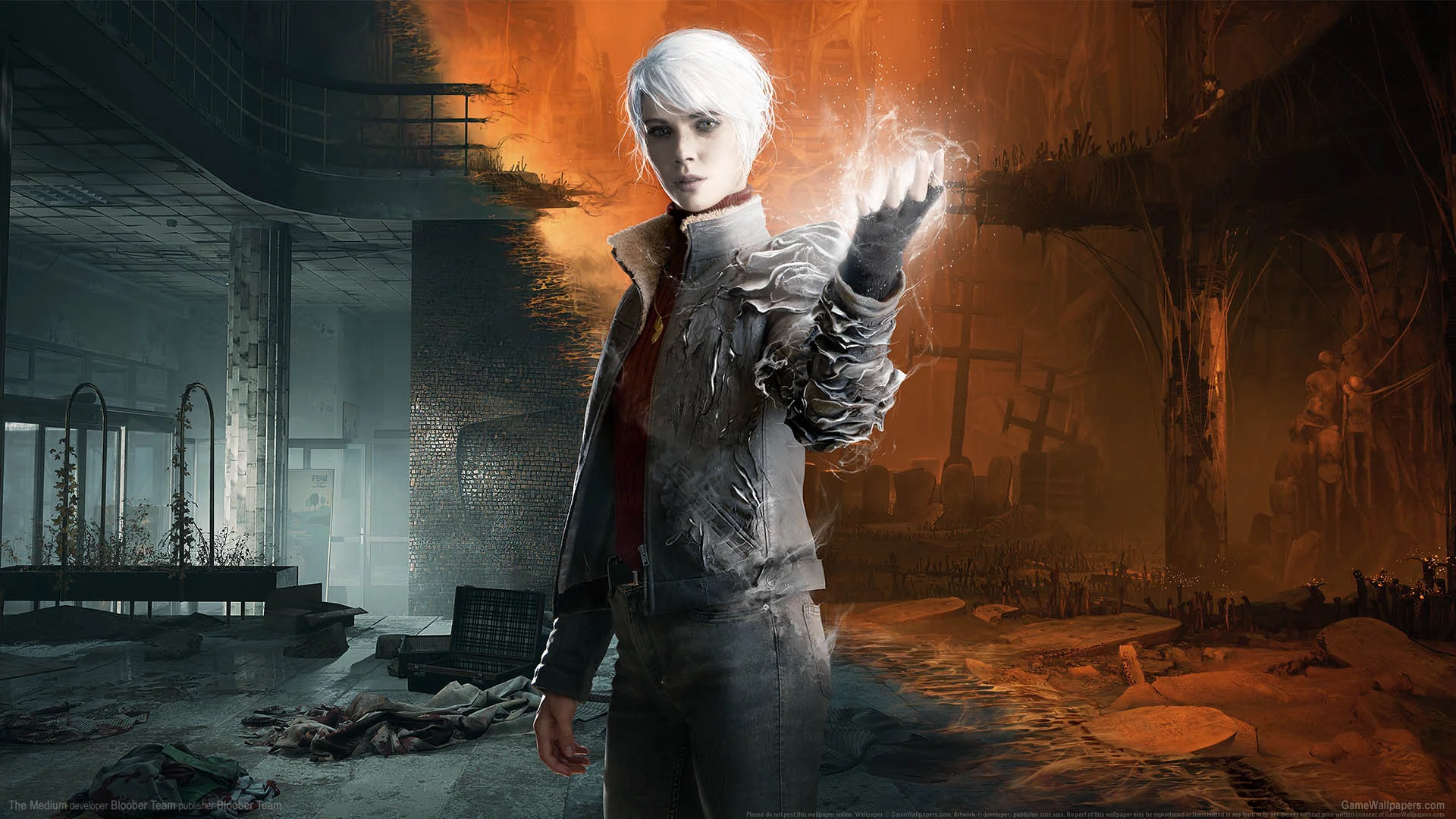

The Medium

Performance
1080p (Full HD)
1440p (2K / QHD)
4K (Ultra HD)

Requirements Check


Recommendations
Your system exceeds recommended specs. Enjoy max settings!

Your GPU supports ray tracing.
Average FPS: resolution vs quality settings
| Ultra | High | Medium | Low | |
|---|---|---|---|---|
| 4K Ultra HD | 38 | 47 | 66 | 106 |
| 1440p QHD | 48 | 60 | 84 | 135 |
| 1080p Full HD | 57 | 72 | 100 | 160 |
Cell color: green is 120+ FPS, teal is 60+, amber is 30+, red is below 30. Cards marked Estimated above have no measured row and are scaled from your GPU benchmark percentile.
Performance Analysis: The Medium on Your System
The AMD Ryzen 7 7700 and NVIDIA GeForce RTX 5070 combination delivers a solid 1080p and 1440p experience in The Medium, but 4K Ultra remains out of reach. The data shows a clear pattern: this pairing handles the game’s demanding scenes best at High settings for 1440p and below, with 4K requiring a drop to Medium for smooth play. Below is a breakdown of what you can expect, how the components compare to nearby hardware, and the optimal settings for each resolution.
FAQ
Q: Can this PC run The Medium at 4K with playable framerates?
A: Yes, but not at the highest presets. The measured data shows the combination achieves an average of 66 FPS at 4K Medium, with minimums of 56 FPS. At 4K High, the average drops to 47 FPS, and at 4K Ultra it falls to 38 FPS, both below the 60 FPS playable threshold.
Q: What is the best settings preset for 1440p to maintain 60 FPS?
A: The best preset is High, which produces an average of exactly 60 FPS. Medium runs faster at 84 FPS, but High offers superior visuals while still meeting the playable threshold. Ultra drops to 48 FPS, which is not playable.
Q: How does the CPU compare to its closest rivals in overall benchmark scores?
A: The Ryzen 7 7700 holds an average benchmark score of 40081, placing it at the 87th percentile among all CPUs. Its nearest rival, the AMD Ryzen AI 9 365, scores 40048, which is only 0.1% lower. The Intel Core 5 221E scores 40144 (0.2% higher), and the Intel Core i9-13905H scores 40313 (0.6% higher).
Q: Is the RTX 5070 significantly faster than its nearest GPU rivals?
A: No, the differences are marginal. The RTX 5070 has an average benchmark score of 40377, sitting at the 82nd percentile. Its closest rival, the AMD Radeon Pro 580, scores 40318 (0.1% lower). The AMD Radeon Pro WX 7100 scores 40063 (0.8% lower), while the NVIDIA RTX A500 Mobile scores 39568 (2.0% lower). The AMD Radeon Pro 5300 scores 40870, which is 1.2% higher.
Q: What is the most demanding preset that stays at or above 60 FPS at 1080p?
A: High settings, which yield an average of 72 FPS. Medium runs at 100 FPS, and Low runs at 160 FPS, but High is the highest preset that clears the 60 FPS bar. Ultra averages 57 FPS, just below the threshold.
Q: How does this combination rank among all tested PC configurations for this game?
A: The combo ranks 675th out of 3724 tested combinations, placing it in the top 18% of all configurations evaluated for The Medium.
CPU and GPU Roles
The benchmark results indicate that the GPU is the primary bottleneck for The Medium, especially as resolution increases. At 1080p Low, the system achieves 160 FPS, which suggests the CPU is capable of feeding the GPU plenty of frames; however, the GPU’s workload scales dramatically with resolution. Moving from 1080p to 1440p at High settings reduces the average framerate from 72 FPS to 60 FPS, a 16.7% drop. At 4K High, the average falls further to 47 FPS, representing a 21.7% drop from 1440p High.
The impact of preset changes at a fixed resolution highlights the GPU’s dominance. At 4K, switching from Low (106 FPS) to Medium (66 FPS) cuts performance by 37.7%, and from Medium to High (47 FPS) by another 28.8%. The Ultra preset at 4K (38 FPS) is 64.2% slower than Low. These steep declines are characteristic of a GPU-bound scenario, where increasing visual fidelity directly taxes the rasterization and shading units of the RTX 5070.
The CPU’s role becomes more apparent at lower resolutions and presets where the GPU is less stressed. At 1080p Low, the 160 FPS average suggests the Ryzen 7 7700’s 8 cores and 16 threads are sufficient to avoid severe CPU limitations. The processor’s strong single-thread performance, evidenced by a Geekbench single-core score of 2525 and a 3DMark single-thread score of 1049, helps maintain high frame pacing. However, its multi-thread capabilities (Cinebench R23 multi-core score of 18760) are less critical for this horror title, which does not show signs of heavy multi-core scaling based on the performance differences between presets.
At 1440p and above, the GPU is clearly the limiting factor. The 60 FPS average at 1440p High versus the 84 FPS at Medium demonstrates that the RTX 5070’s 12 GB of GDDR7 memory and 672.0 GB/s bandwidth are being pushed hard. The CPU’s 83.2 GB/s memory bandwidth and DDR5 support are unlikely to be the bottleneck here, as the framerate scales almost entirely with GPU load.
Similar Performance Alternatives
For the CPU, the Ryzen 7 7700’s nearest rivals are all within a fraction of a percent in average benchmark score. The AMD Ryzen AI 9 365 (40048 score, 0.1% lower) will behave nearly identically in The Medium, as will the Intel Core 5 221E (40144 score, 0.2% higher). The Intel Core i9-13905H (40313 score, 0.6% higher) offers a negligible performance advantage. The AMD Ryzen 9 270 (40246 score, 0.4% higher) is also a close match. In practice, any of these processors would produce framerates within the margin of error for the measured FPS figures in this game, meaning the choice between them should be based on platform features rather than gaming performance.
On the GPU side, the RTX 5070’s nearest rivals are more spread out. The AMD Radeon Pro 580 (40318 score, 0.1% lower) is the closest match and would deliver essentially the same framerates. The AMD Radeon Pro WX 7100 (40063 score, 0.8% lower) is also very close, with a slightly lower average score that might translate to a 1-2 FPS difference in demanding scenes. The AMD Radeon Pro 5300 (40870 score, 1.2% higher) is marginally faster, potentially offering a few extra frames at 4K. The NVIDIA RTX A500 Mobile (39568 score, 2.0% lower) is the weakest of the group, likely resulting in slightly lower minimum framerates.
It is important to note that these rivals are professional or mobile parts, not direct consumer gaming equivalents. The data suggests that for The Medium specifically, the RTX 5070’s raw compute power (30.87 TFLOPS FP32) and 48 RT cores are more than sufficient for the game’s fixed-camera horror scenes, so the differences between these rivals would be minimal in practice.
The Verdict
Yes, this PC can run The Medium, but the playable settings depend heavily on resolution. The verdict by resolution shows that at 1920x1080, the system clears 60 FPS on High, Low, and Medium presets, with High being the best visually demanding option at 72 FPS average. At 2560x1440, the same three presets (High, Low, Medium) are playable, with High again being the best choice at exactly 60 FPS. At 3840x2160, only Low (106 FPS) and Medium (66 FPS) meet the 60 FPS threshold; High (47 FPS) and Ultra (38 FPS) do not.
The playable threshold is set at 60 FPS, and the data confirms that 4K Ultra is not achievable with this combination. The 4K Medium preset offers a 66 FPS average with a minimum of 56 FPS, which may dip below 60 FPS in the most demanding moments but remains largely smooth. For a locked 60 FPS experience at 4K, Low settings provide a comfortable 106 FPS average, though visual quality suffers.
At 1440p, the High preset delivers exactly 60 FPS on average, which is playable but leaves no headroom for framerate dips. The Medium preset (84 FPS) is a safer choice for those who prioritize smoothness over maximum detail. At 1080p, all presets except Ultra are comfortably above 60 FPS, making this resolution the most flexible for tweaking visual quality.
Best Settings per Resolution
At 3840x2160 (4K), the most demanding preset that stays at or above 60 FPS is Medium, with an average of 66 FPS. The minimum recorded FPS is 56, so there may be brief dips below the threshold, but the overall experience is playable. Low settings run at 106 FPS if you need more headroom.
At 2560x1440 (1440p), the best preset is High, which averages exactly 60 FPS. This provides the best visual quality while meeting the playable threshold. Medium runs faster at 84 FPS, but High is the highest preset that clears 60 FPS. Ultra drops to 48 FPS and is not recommended.
At 1920x1080 (1080p), the best preset is High, delivering an average of 72 FPS. This leaves a 12 FPS buffer above the 60 FPS threshold, which is comfortable for most scenes. Medium runs at 100 FPS, and Low at 160 FPS, but High offers the best balance of visuals and performance. Ultra averages 57 FPS, just missing the playable mark.
How This Combo Ranks
This specific combination of the AMD Ryzen 7 7700 and NVIDIA GeForce RTX 5070 ranks 675th out of 3724 tested combinations for The Medium. This places it in the top 18% of all configurations in the benchmark database, indicating that it is a well-above-average pairing for this game. The ranking reflects the CPU’s strong 87th percentile position among all CPUs and the GPU’s 82nd percentile among all GPUs, though the GPU is the more critical component for this title’s performance.
The rank suggests that while this combo is not at the absolute top tier (which would require a higher-end GPU like a 90-class card), it outperforms the vast majority of systems tested. The 4K Medium and 1440p High results are competitive with many enthusiast builds, and the 1080p performance is excellent. For a player targeting 1440p High or 4K Medium, this combination delivers a smooth, playable experience without requiring extreme hardware. The main limitation is 4K Ultra, which remains out of reach for this setup, but the data shows that dropping to Medium still provides a visually rich horror experience at a solid framerate.