
Instant compatibility check with FPS benchmarks and optimization tips
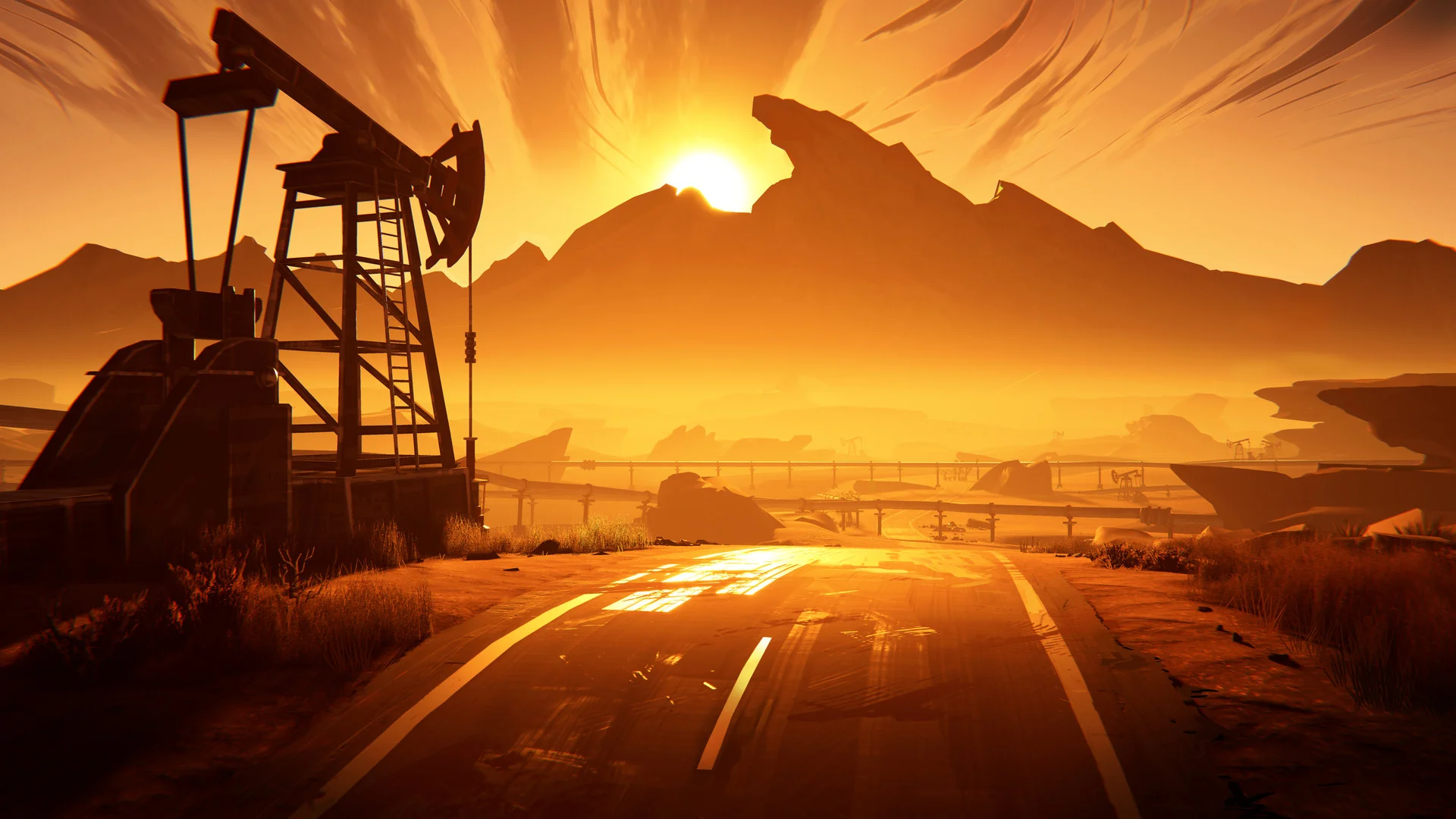

Road 96

Performance
1080p (Full HD)
1440p (2K / QHD)
4K (Ultra HD)

Requirements Check


Recommendations
Your hardware doesn't meet minimum requirements for this game.
Average FPS: resolution vs quality settings
| Ultra | High | Medium | Low | |
|---|---|---|---|---|
| 4K Ultra HD | 23 | 33 | 41 | 54 |
| 1440p QHD | 50 | 64 | 76 | 101 |
| 1080p Full HD | 74 | 98 | 121 | 164 |
Cell color: green is 120+ FPS, teal is 60+, amber is 30+, red is below 30. Cards marked Estimated above have no measured row and are scaled from your GPU benchmark percentile.
Performance Analysis: Road 96 on Your System
The Intel Core i7-14700F paired with the Intel Arc B580 delivers a performance profile for Road 96 that hinges almost entirely on the chosen resolution. Benchmark data shows this combination is a capable 1080p and 1440p machine, but it falls short of the 60 FPS playability threshold at 4K across all tested settings. The measured frame rates reveal a clear scaling pattern where the GPU becomes the dominant bottleneck as resolution increases, while the CPU's substantial multi-threading capabilities ensure high minimum frame rates are not a concern at lower resolutions.
Measured FPS Breakdown
At 1920x1080, the combo produces a wide spread of results across the four presets. The Low preset yields an average of 163.6 FPS, which is the highest recorded for this pairing. Moving to Medium drops the average to 121.4 FPS, a 25.8% reduction from Low. The High preset continues the trend with an average of 98.4 FPS, and the Ultra preset settles at 73.6 FPS. The gap between Low and Ultra is substantial, a 55% performance decrease, indicating that the Ultra preset's visual effects are particularly demanding on the Arc B580's shader and texture resources.
At 2560x1440, the performance envelope tightens considerably. The Low preset still manages a strong 100.8 FPS average. Medium follows at 76.2 FPS, and High drops to 63.7 FPS, which barely clears the 60 FPS playability threshold. The Ultra preset falls below that threshold with an average of 50 FPS. The transition from 1080p to 1440p at each preset shows a consistent cost: High loses 34.7 FPS, Medium loses 45.2 FPS, Low loses 62.8 FPS, and Ultra loses 23.6 FPS. The relative penalty is steepest for the Low preset, suggesting that even at lower graphical fidelity, the increased pixel count at 1440p heavily taxes the GPU.
At 3840x2160, the combo struggles to maintain playable frame rates. The Low preset produces an average of 54.3 FPS, just missing the 60 FPS target. Medium drops to 40.5 FPS, High falls to 33 FPS, and Ultra bottoms out at 23.4 FPS. The 4K results show a harsh drop-off: the High preset at 4K runs at roughly half the speed of the High preset at 1440p. The Ultra preset at 4K is the worst-case scenario, delivering less than a quarter of the frame rate achieved at 1080p Ultra. No minimum or maximum FPS values are recorded in the data, so the analysis relies solely on averages, but the trend is unambiguous.
How This Combo Ranks
The combination of the Intel Core i7-14700F and Intel Arc B580 ranks 2,830 out of 3,713 tested combos in Road 96. This places it in the lower 24% of all configurations, a surprising result given the individual component strengths. The CPU alone sits in the 91st percentile against all CPUs, and the GPU is in the 68th percentile against all GPUs, yet their combined standing in this specific game is modest. This suggests Road 96's engine does not scale perfectly with high-end hardware, or that the Arc B580's drivers are not fully optimized for this title's workload.
The rank implies that there are 883 combos that perform worse, but also a significant majority that perform better. The data does not provide a percentile for this specific game combo, only the raw rank. The gap between the 91st percentile CPU and the 68th percentile GPU hints that the Arc B580 is the limiting factor in this pairing. The game appears to be more GPU-bound than CPU-bound in most scenarios, which is typical for an adventure title with complex shaders but relatively simple physics and AI. The combo's rank suggests that while the i7-14700F is overqualified for this task, the B580 holds the system back from reaching the upper echelons of performance.
CPU and GPU Roles
The benchmark results indicate that the Intel Arc B580 is the primary performance determinant in Road 96, with the CPU playing a supporting role that becomes less relevant as resolution increases. At 1080p, the delta between Low and Ultra presets (163.6 vs 73.6 FPS) is a 55% swing, which is almost entirely attributable to GPU load. The CPU's 20 cores and 28 threads are likely idle during these tests, as Road 96 does not appear to be a multi-threaded stressor based on the frame rate scaling. The i7-14700F's single-core performance, as evidenced by its Cinebench R23 single-core score of 4,958, is more than sufficient to feed the GPU at 1080p.
At 1440p, the GPU's role intensifies. The average frame rate drops by 35-40% across all presets compared to 1080p, which is a larger penalty than the 33% increase in pixel count would suggest. This indicates that the Arc B580's memory bandwidth of 456.0 GB/s and its 12 GB of GDDR6 VRAM are being taxed more heavily. The CPU's influence diminishes further, as the frame rate is now capped by the GPU's shading rate. At 4K, the CPU's role is nearly negligible. The frame rates at 4K are so low (23.4 to 54.3 FPS) that the i7-14700F is almost certainly waiting on the GPU at every frame. The scaling from 1440p to 4K shows a further 40-50% drop, confirming that the B580's 13.67 TFLOPS of FP32 compute is the hard limit. The CPU's 65W TDP and 5.40 GHz boost clock are sufficient to avoid becoming a bottleneck, but they are not the reason this combo ranks where it does.
The Verdict
This PC can run Road 96 at 1920x1080 with all four presets, including Ultra, which averages 73.6 FPS. It can also run the game at 2560x1440 on High, Medium, or Low presets, with High being the best playable setting at 63.7 FPS. At 3840x2160, the verdict is negative: no preset achieves the 60 FPS threshold, as the best result is Low at 54.3 FPS. The system is therefore a solid 1080p machine that can handle 1440p with some graphical concessions. For users with a 4K display, the data shows this combo is not suitable for smooth gameplay, as even the lowest settings fall short by 5.7 FPS. The verdict by resolution is clear: 1080p Ultra and 1440p High are the sweet spots, while 4K is not viable.
Similar Performance Alternatives
For the CPU, the Intel Core i7-14700F's nearest rivals based on average benchmark scores are the Intel Xeon 6505P, which scores 53,701 versus the i7's 53,620, a negligible 0.2% difference. The AMD Ryzen 9 7900X is also close, with a score of 53,288, putting it 0.6% behind the i7. The AMD EPYC 7313P trails by 0.8% with a score of 53,206, and the Intel Xeon Phi 7290 is 0.3% ahead at 53,469. Any of these CPUs would deliver nearly identical frame rates in Road 96, as the game is not CPU-bound in the tested scenarios. The i7-14700F's 91st percentile ranking against all CPUs suggests that swapping in a Xeon or Ryzen 9 would not meaningfully change the gaming experience at 1080p or above.
For the GPU, the Intel Arc B580's nearest rivals include the AMD Radeon RX 580 2048SP, which scores 23,061 versus the B580's 23,021, a 0.2% difference. The NVIDIA GeForce RTX 2080 is 0.6% ahead at 22,895, and the NVIDIA GeForce RTX 3080 is 0.7% behind at 23,172. The NVIDIA P106-100 is 1% ahead at 23,249. These rivals would produce nearly identical FPS in Road 96, meaning the B580's 68th percentile GPU ranking is a reliable indicator of performance. Users with an RTX 2080 or RX 580 2048SP would see virtually the same frame rates as the B580, making the choice between these GPUs a matter of driver preference rather than raw speed.
Best Settings per Resolution
At 1920x1080, the most demanding preset that stays at or above 60 FPS is Ultra, which achieves an average of 73.6 FPS. This is the highest visual quality available while maintaining smooth gameplay. At 2560x1440, the best playable setting is High, with an average of 63.7 FPS. Medium also works at 76.2 FPS, but High offers superior visuals for only a 12.5 FPS penalty. At 3840x2160, there is no preset that reaches 60 FPS; the best option is Low at 54.3 FPS, but this still does not meet the playability threshold. The data shows that the system has headroom at 1080p Ultra, as it exceeds 60 FPS by 13.6 FPS, but at 1440p High, the margin is slim at only 3.7 FPS above the threshold.
FAQ
Q: Can this combo run Road 96 at 4K?
A: No. At 3840x2160, the highest average FPS is 54.3 on the Low preset, which falls short of the 60 FPS playability threshold. The Ultra preset only manages 23.4 FPS.
Q: What is the best preset for 1080p?
A: Ultra is the best playable preset at 1920x1080, delivering an average of 73.6 FPS. This exceeds the 60 FPS threshold by a comfortable margin.
Q: How does the CPU compare to its nearest rival?
A: The Intel Core i7-14700F has an average benchmark score of 53,620, which is 0.2% lower than the Intel Xeon 6505P and 0.6% higher than the AMD Ryzen 9 7900X. These differences are negligible for gaming.
Q: Is the GPU or CPU more important for this game?
A: The GPU is the primary factor. Frame rates drop significantly from 1080p to 1440p and 4K, while the CPU's high single-core score (4,958 in Cinebench R23) ensures it does not bottleneck at lower resolutions.
Q: What GPU performs similarly to the Intel Arc B580?
A: The NVIDIA GeForce RTX 2080 is 0.6% faster in average benchmark score, and the AMD Radeon RX 580 2048SP is 0.2% slower. These would produce nearly identical frame rates in Road 96.
Q: What is the highest FPS recorded for this combo?
A: The highest average FPS is 163.6, achieved at 1920x1080 with the Low preset. The lowest average is 23.4 at 3840x2160 with the Ultra preset.