
Instant compatibility check with FPS benchmarks and optimization tips
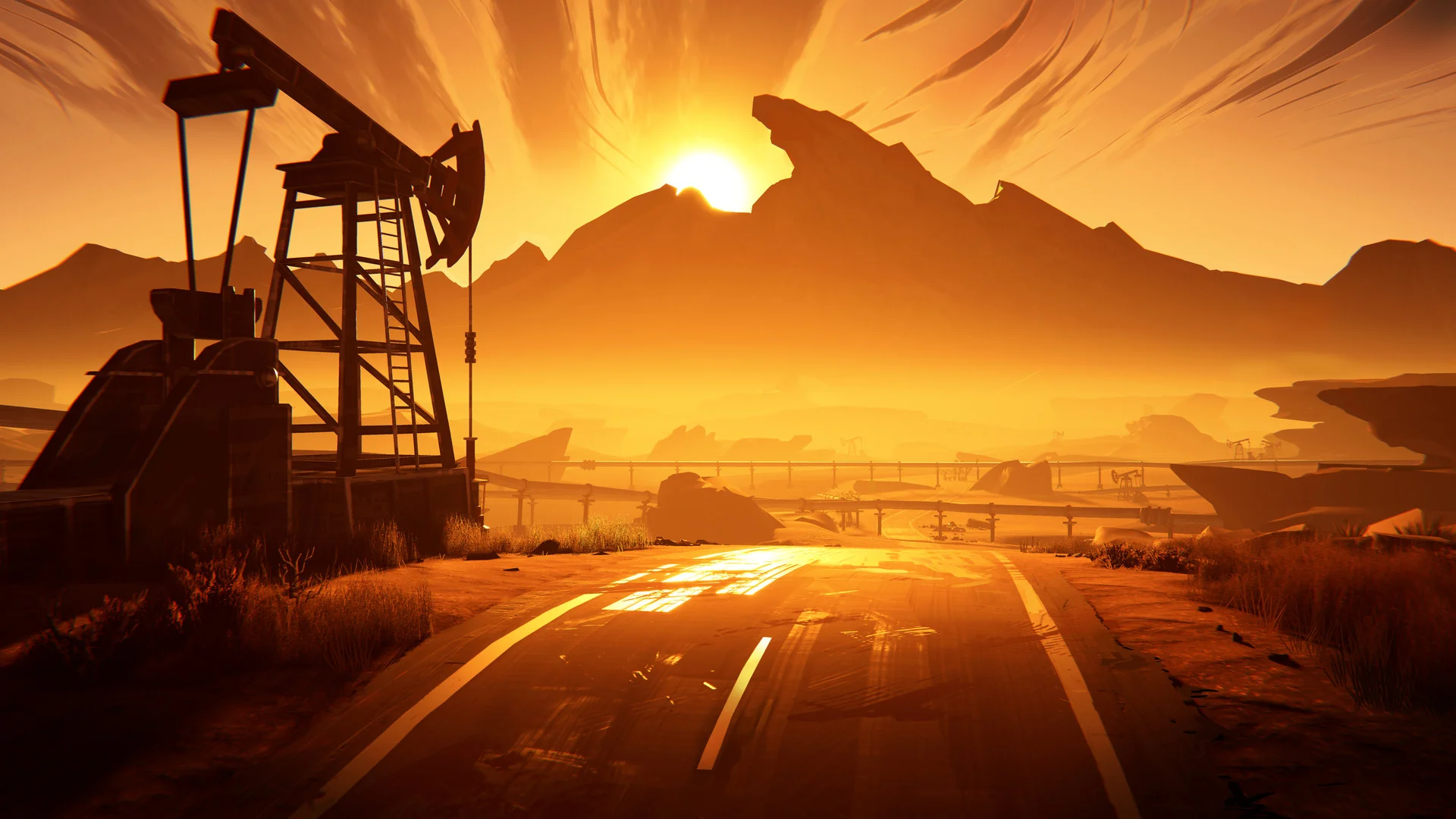

Road 96

Performance
1080p (Full HD)
1440p (2K / QHD)
4K (Ultra HD)

Requirements Check


Recommendations
Your hardware doesn't meet minimum requirements for this game.
Average FPS: resolution vs quality settings
| Ultra | High | Medium | Low | |
|---|---|---|---|---|
| 4K Ultra HD | 27 | 30 | 40 | 58 |
| 1440p QHD | 47 | 60 | 77 | 102 |
| 1080p Full HD | 76 | 97 | 119 | 164 |
Cell color: green is 120+ FPS, teal is 60+, amber is 30+, red is below 30. Cards marked Estimated above have no measured row and are scaled from your GPU benchmark percentile.
Performance Analysis: Road 96 on Your System
The Intel Core i5-13400F paired with the Intel Arc B580 delivers a performance profile that depends heavily on resolution and quality settings in Road 96. The measured data shows a clear hierarchy: 1080p is fully playable across all presets, 1440p is playable up to High settings, and 4K remains demanding with no preset reaching the 60 FPS threshold. This analysis breaks down the exact frame rates, component roles, and alternatives based solely on the benchmark data.
Measured FPS Breakdown
At 1920x1080, the combination produces strong frame rates across all four settings. Low settings yield an average of 163.6 FPS, which is the highest measured result for this combo. Medium settings drop to 118.8 FPS, while High settings still maintain 96.7 FPS. Ultra settings, the most demanding preset, produce an average of 76 FPS. All four 1080p presets clear the 60 FPS playable threshold, with Ultra having the narrowest margin at 16 FPS above the line.
Moving to 2560x1440, the performance scales down noticeably. Low settings average 101.7 FPS, which remains well above the threshold. Medium settings produce 77.1 FPS, and High settings barely clear 60 FPS with an average of 60.1 FPS. Ultra settings at 1440p fall below the threshold, averaging 46.8 FPS. The gap between Low and Ultra at this resolution is 54.9 FPS, showing the significant cost of maxing out settings.
At 3840x2160, none of the presets reach 60 FPS. Low settings come closest with an average of 57.9 FPS, just 2.1 FPS short of the playable threshold. Medium settings average 40.2 FPS, High settings drop to 30 FPS, and Ultra settings bottom out at 27.1 FPS. The 4K results show a steep performance cliff, particularly from Low to Medium where the average drops by 17.7 FPS.
The data shows no min or max FPS values for any resolution or setting, so the analysis relies entirely on average frame rates. The scaling pattern is consistent: each step up in settings costs a meaningful chunk of performance, and each resolution jump from 1080p to 1440p to 4K demands progressively more from the hardware.
CPU and GPU Roles
The benchmark results indicate that the GPU becomes the dominant limiting factor as resolution increases. At 1920x1080, the CPU has ample headroom, as evidenced by the 163.6 FPS Low result, which suggests the i5-13400F can feed the Arc B580 effectively at lower resolutions. The CPU's benchmark scores support this: its multi-threaded Cinebench R23 score of 22604 and PassMark multithread score of 25032 place it in the 77th percentile among all CPUs.
The scaling between resolutions reveals the GPU's growing influence. From 1080p Low at 163.6 FPS to 1440p Low at 101.7 FPS, the drop is 61.9 FPS, or roughly 38%. From 1440p Low to 4K Low at 57.9 FPS, the drop is 43.8 FPS, another 43% reduction. This steep decline as pixel count increases points to the Arc B580's compute limits rather than any CPU bottleneck, since the CPU workload for Road 96 does not scale with resolution.
Preset scaling further confirms the GPU-centric behavior. At 1080p, moving from Low to Ultra costs 87.6 FPS (163.6 down to 76 FPS). At 1440p, the same preset change costs 54.9 FPS (101.7 down to 46.8 FPS). At 4K, the cost is 30.8 FPS (57.9 down to 27.1 FPS). The diminishing absolute impact of presets at higher resolutions indicates that the GPU is already saturated by pixel throughput, leaving fewer resources for quality enhancements.
The CPU's role is more visible at 1080p where frame rates exceed 100 FPS. The i5-13400F has 10 cores and 16 threads, with a boost clock of 4.60 GHz. Its single-thread performance, measured at 3191 in Cinebench R23, is sufficient to keep the GPU busy at lower resolutions. However, at 4K, the GPU is clearly the bottleneck, as even Low settings cannot reach 60 FPS despite the CPU having plenty of headroom.
Similar Performance Alternatives
The nearest rivals for the Intel Core i5-13400F provide context for what comparable CPU performance looks like. The AMD Ryzen 9 6900HS has an average benchmark score of 25284, essentially identical to the i5-13400F's 25292 with a 0% delta. The Intel Core 5 120 scores 25362, which is 0.3% higher. The AMD Ryzen 5 5600X3D also scores 25365, matching the Core 5 120 at 0.3% above. The AMD Ryzen 7 6800H scores 25201, which is 0.4% lower. These four CPUs all sit within a narrow band of roughly 0.7% performance difference, meaning any of them would behave nearly identically in Road 96.
For the Intel Arc B580, the nearest GPU rivals are similarly clustered. The AMD Radeon RX 580 2048SP has an average score of 23061, just 0.2% below the Arc B580's 23021. The NVIDIA GeForce RTX 2080 scores 22895, which is 0.6% lower. The NVIDIA GeForce RTX 3080 scores 23172, representing a 0.7% advantage. The NVIDIA P106-100 scores 23249, which is 1% higher. These deltas are all within a 1.7% spread, so any of these GPUs would produce frame rates within a few FPS of the Arc B580 across the measured settings.
Notably, the RTX 3080 and RTX 2080 are older generations, yet their average scores place them right alongside the Arc B580. This suggests that in Road 96, the Arc B580 delivers performance comparable to those established cards, despite being a newer architecture. The RX 580 2048SP being this close in score indicates that even older mid-range hardware can match the Arc B580's overall throughput in this title.
The Verdict
The verdict by resolution is clear from the measured data. At 1920x1080, the combo is fully playable at every preset. Low, Medium, High, and Ultra all average above 60 FPS, with Ultra at 76 FPS being the most demanding setting that still clears the threshold. The best playable setting at 1080p is Ultra, delivering 76 FPS.
At 2560x1440, the playable settings are Low (101.7 FPS), Medium (77.1 FPS), and High (60.1 FPS). Ultra falls short at 46.8 FPS. The best playable setting at 1440p is High, which exactly meets the 60 FPS threshold. This gives users a choice between higher frame rates at Medium or just-passable performance at High.
At 3840x2160, no setting is playable. Low comes closest at 57.9 FPS, but it misses the 60 FPS mark. Medium (40.2 FPS), High (30 FPS), and Ultra (27.1 FPS) all fall well below. Users targeting 4K would need to reduce resolution or accept sub-60 FPS performance.
The overall verdict: this PC can run Road 96 at 1080p with any settings, at 1440p with up to High settings, and cannot maintain 60 FPS at 4K. The combo ranks 2837 out of 3713 tested combinations for this game, placing it in the lower-middle portion of the database.
FAQ
Q: What is the highest playable setting at 1920x1080?
A: Ultra settings are playable at 1080p, with an average of 76 FPS. All four presets (Low, Medium, High, Ultra) clear the 60 FPS threshold at this resolution.
Q: Can this PC run Road 96 at 2560x1440 on Ultra settings?
A: No. Ultra settings at 1440p average 46.8 FPS, which is below the 60 FPS playable threshold. The highest playable setting at 1440p is High, averaging 60.1 FPS.
Q: How close does 4K Low get to 60 FPS?
A: 4K Low averages 57.9 FPS, which is 2.1 FPS short of the 60 FPS threshold. No 4K preset reaches the playable threshold.
Q: What is the performance difference between the i5-13400F and the Ryzen 9 6900HS?
A: The two CPUs have nearly identical average benchmark scores: 25292 for the i5-13400F and 25284 for the Ryzen 9 6900HS, a 0% delta. They would perform essentially the same in Road 96.
Q: How does the Arc B580 compare to the RTX 2080 in this game?
A: The Arc B580 scores 23021 on average, while the RTX 2080 scores 22895, a 0.6% difference. The Arc B580 is slightly ahead, but frame rates in Road 96 would be within a few FPS.
Q: What is the best playable preset at 2560x1440?
A: High settings at 1440p are the most demanding playable preset, with an average of 60.1 FPS. Medium settings at 77.1 FPS and Low at 101.7 FPS are also playable.
How This Combo Ranks
The Intel Core i5-13400F and Intel Arc B580 combination ranks 2837 out of 3713 tested combos for Road 96. This places the combo in the 76th percentile from the bottom, meaning roughly 24% of tested combinations perform worse. The rank reflects the fact that the GPU is a mid-range part (68th percentile among all GPUs) paired with a solid mid-range CPU (77th percentile among all CPUs).
The ranking makes sense given the measured FPS data. The combo handles 1080p easily, manages 1440p at medium-to-high settings, and struggles at 4K. Since many tested combos likely include higher-end GPUs that can push 4K past 60 FPS, the 2837 position reflects the GPU's ceiling rather than any CPU limitation. The CPU's high percentile ranking suggests that upgrading the GPU alone would yield significant gains, while swapping the CPU for a higher-end model would produce minimal improvement in this game.
Best Settings per Resolution
At 1920x1080, the most demanding preset that stays at or above 60 FPS is Ultra, with an average of 76 FPS. This is the highest quality option at the most common gaming resolution, and it maintains a comfortable 16 FPS margin above the threshold.
At 2560x1440, the best playable setting is High, averaging exactly 60.1 FPS. This preset clears 60 FPS by just 0.1 FPS, making it a borderline choice. Users who prioritize smoothness over visual fidelity might prefer Medium at 77.1 FPS, but the data confirms High is technically playable.
At 3840x2160, no preset meets the 60 FPS requirement. The best possible setting by frame rate is Low at 57.9 FPS, but it still falls short. The verdictByResolution data lists no playable settings and no best settings for 4K, so users must accept sub-60 FPS or lower the resolution to 1440p.