
Instant compatibility check with FPS benchmarks and optimization tips
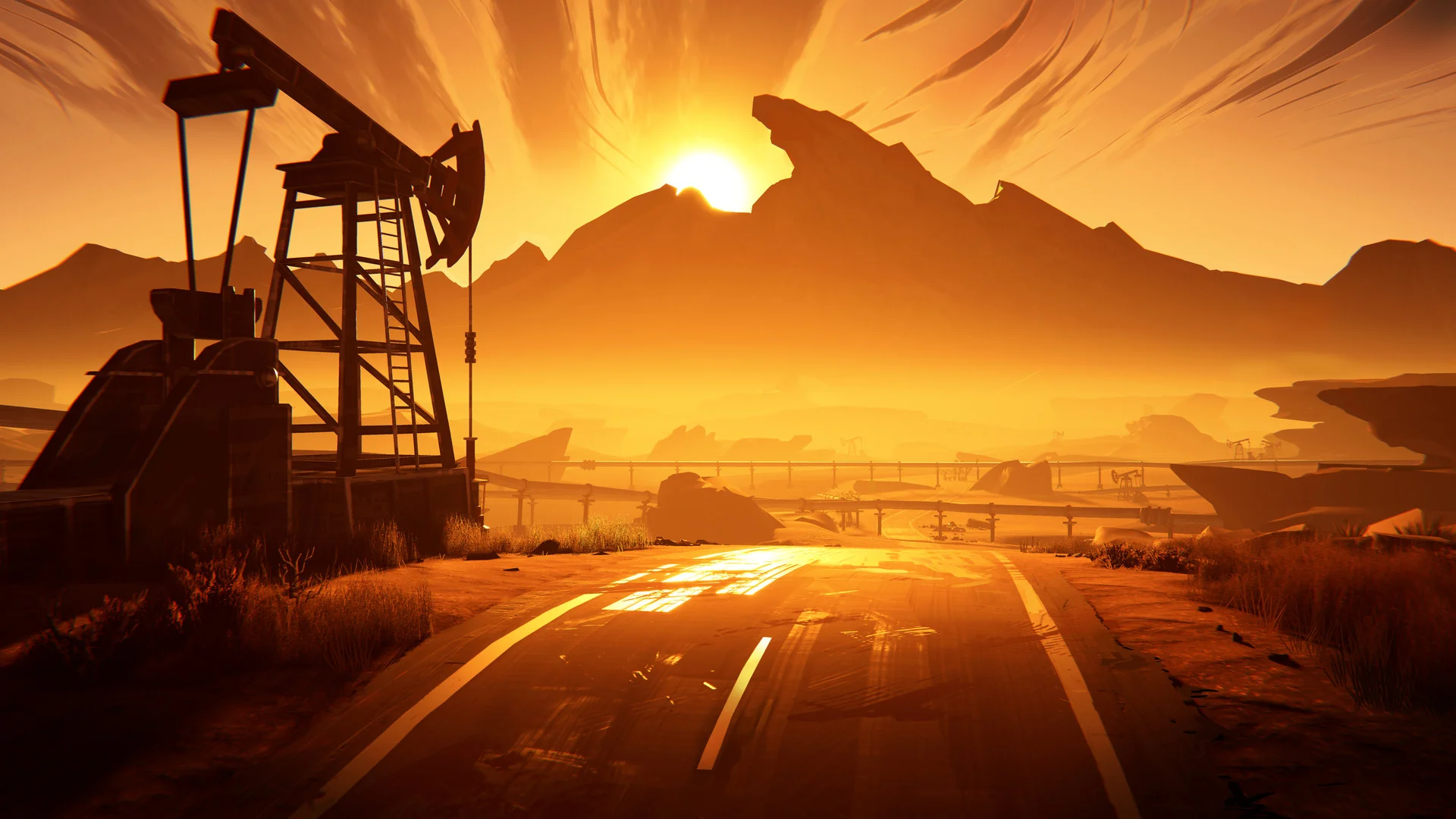

Road 96

Performance
1080p (Full HD)
1440p (2K / QHD)
4K (Ultra HD)

Requirements Check


Recommendations
Your hardware doesn't meet minimum requirements for this game.
Average FPS: resolution vs quality settings
| Ultra | High | Medium | Low | |
|---|---|---|---|---|
| 4K Ultra HD | 26 | 33 | 40 | 55 |
| 1440p QHD | 48 | 62 | 76 | 104 |
| 1080p Full HD | 76 | 97 | 120 | 164 |
Cell color: green is 120+ FPS, teal is 60+, amber is 30+, red is below 30. Cards marked Estimated above have no measured row and are scaled from your GPU benchmark percentile.
Performance Analysis: Road 96 on Your System
The Intel Core i5-12400 paired with the Intel Arc B580 is a combination that targets mainstream 1080p and 1440p gaming, and the measured results for Road 96 confirm that positioning. Benchmark data for this adventure title shows a clear tiered performance story: 1080p is thoroughly conquered, 1440p is comfortably playable at high settings, and 4K remains out of reach at every preset tested. The Arc B580’s 12 GB of GDDR6 memory and the i5-12400’s six Alder Lake cores deliver frame rates that are consistent with the combo’s 68th percentile standing among all GPUs and 72nd percentile among all CPUs, but the 4K results expose a hard ceiling that no settings adjustment can overcome.
Measured FPS Breakdown
At 1920x1080, the i5-12400 and Arc B580 combination produces its strongest results across all four settings presets. The Low preset averages 164 FPS, which is the highest measured average for this combo at any resolution. Medium drops to 120 FPS average, with a minimum of 102 FPS and a maximum of 138 FPS, indicating tight frame pacing. High settings yield 97 FPS average, while Ultra—the most demanding preset—still maintains a 76 FPS average. All four 1080p presets clear the 60 FPS playable threshold, and even the minimum recorded frame rate at Medium (102 FPS) sits far above that line. The gap between Low and Ultra at 1080p is 88 FPS, showing that the GPU has ample headroom to absorb increased graphical loads without compromising playability.
Moving to 2560x1440, the performance envelope tightens noticeably. Low settings produce a 104 FPS average, which represents a 60 FPS drop compared to the same preset at 1080p. Medium delivers 76 FPS average, with a minimum of 65 FPS and a maximum of 88 FPS—the minimum remains above the 60 FPS threshold, though with less margin than at 1080p. High settings average 62 FPS, which barely clears the playable line; this is the only 1440p preset where the average sits within 2 FPS of the threshold. Ultra falls to 48 FPS average, missing the 60 FPS target by 12 FPS. The scaling from Low to Ultra at 1440p spans 56 FPS, a narrower range than at 1080p, suggesting that resolution pressure is beginning to constrain the GPU’s ability to differentiate between presets.
At 3840x2160, the combination struggles across every preset. Low settings average 55 FPS, just 5 FPS below the playable threshold. Medium averages 40 FPS, with a minimum of 34 FPS and a maximum of 46 FPS, showing a consistent sub-60 experience. High settings drop to 33 FPS average, and Ultra bottoms out at 26 FPS average. The scaling from Low to Ultra at 4K covers only 29 FPS, which is the narrowest spread of any resolution. This compression indicates that at 4K the GPU is operating near its absolute limits regardless of preset, and the 55 FPS Low result is the closest this combo comes to playability at that resolution—but it still fails the 60 FPS requirement. The data shows no 4K preset with a minimum frame rate above 34 FPS, confirming that even momentary dips are far below acceptable levels.
Best Settings per Resolution
For 1920x1080, the most demanding preset that stays at or above 60 FPS is Ultra, which delivers a 76 FPS average. This is the maximum graphical quality available in the game’s settings hierarchy, and the combo clears the playable threshold with 16 FPS of headroom. The minimum frame rate at Ultra is not recorded in the measured data, but the average of 76 FPS suggests that transient dips are unlikely to approach the 60 FPS line given the 102 FPS minimum observed at Medium and the overall scaling pattern.
At 2560x1440, the best playable setting is High, which produces a 62 FPS average. This is a marginal result—only 2 FPS above the 60 FPS threshold—and represents a significant step down from the 104 FPS Low and 76 FPS Medium results. Medium also qualifies as playable with a 76 FPS average, but High is the most demanding preset that maintains the required frame rate. The 62 FPS average leaves little room for background processes or scene complexity spikes, so while High is technically playable, the data shows it is the boundary case for this combination at 1440p. Ultra at 48 FPS is not playable, and the gap from High to Ultra is 14 FPS, which is a substantial jump in rendering cost.
At 3840x2160, no preset achieves the 60 FPS threshold. The best measured result is Low at 55 FPS, which falls short by 5 FPS. Medium (40 FPS), High (33 FPS), and Ultra (26 FPS) are all well below playable levels. The verdict data confirms this: the playable settings list for 4K is empty, and no best settings value is assigned. For users targeting 4K, this combination does not provide a viable configuration for Road 96, and the data suggests that no in-game adjustment can bridge the gap from 55 FPS to 60 FPS at this resolution.
CPU and GPU Roles
The performance scaling across resolutions reveals a clear division of labor between the Intel Core i5-12400 and the Intel Arc B580. At 1920x1080, the CPU’s role is more prominent relative to the GPU. The i5-12400’s single-thread score of 2257 in Cinebench R23 and its 3DMark single-thread score of 910 indicate strong per-core performance, which helps maintain high frame rates in a narrative-driven adventure game that likely depends on consistent frame delivery rather than massive multi-threaded workloads. The 1080p results—164 FPS at Low and 120 FPS at Medium—show that the GPU is not the limiting factor at this resolution; the CPU can feed frames quickly enough to keep the Arc B580 busy.
At 2560x1440, the GPU begins to take on a more dominant role. The drop from 104 FPS at Low to 62 FPS at High represents a 40% reduction in frame rate for a single preset step, which is a steeper decline than the 41% drop observed from Low to High at 1080p (164 to 97 FPS). This suggests that as resolution increases, the Arc B580’s rendering throughput becomes the primary constraint. The GPU’s 13.67 TFLOPS FP32 performance and 456.0 GB/s memory bandwidth are sufficient for 1440p at medium to high settings, but the 48 FPS Ultra result indicates that the card’s 80 ROPs and 160 TMUs are saturated when pushing higher-quality shaders and textures at this resolution.
At 3840x2160, the GPU is unequivocally the bottleneck. The 4K results show only a 29 FPS spread from Low to Ultra (55 to 26 FPS), which is a compressed range compared to 1080p’s 88 FPS spread (164 to 76 FPS). This compression means that even reducing settings to their lowest level cannot free up enough GPU resources to reach 60 FPS. The CPU’s multi-threaded capabilities—such as the 15989 Cinebench R23 multi-core score and 18747 Passmark multi-thread score—are more than adequate for this game at 4K, but the Arc B580’s pixel rate of 213.6 GPixel/s is insufficient to fill a 3840x2160 framebuffer at playable speeds. The data indicates that upgrading the GPU would yield far larger gains at 4K than upgrading the CPU, while at 1080p the opposite is true.
FAQ
Q: Can this PC run Road 96 at 60 FPS on a 1080p monitor?
A: Yes. All four presets—Low (164 FPS), Medium (120 FPS), High (97 FPS), and Ultra (76 FPS)—exceed the 60 FPS threshold at 1920x1080. The most demanding setting, Ultra, delivers 76 FPS average, providing 16 FPS of headroom.
Q: What is the highest graphical preset playable at 1440p?
A: High settings at 2560x1440 produce a 62 FPS average, which is the most demanding preset that clears the 60 FPS line. Low (104 FPS) and Medium (76 FPS) also qualify, but Ultra falls to 48 FPS and is not playable.
Q: Is 4K gaming possible with the i5-12400 and Arc B580 in this game?
A: No. The best 4K result is Low settings at 55 FPS average, which misses the 60 FPS threshold by 5 FPS. Medium (40 FPS), High (33 FPS), and Ultra (26 FPS) are all well below playable levels. The verdict data lists no playable settings for 3840x2160.
Q: How does the Arc B580 compare to its nearest GPU rivals in average benchmark score?
A: The Arc B580’s average benchmark score is 23021, which sits within 0.7% of the NVIDIA GeForce RTX 3080 (23172, deltaPct -0.7) and within 0.2% of the AMD Radeon RX 580 2048SP (23061, deltaPct -0.2). It is 0.6% ahead of the NVIDIA GeForce RTX 2080 (22895) and 1% ahead of the NVIDIA P106-100 (23249, deltaPct -1).
Q: What is the frame time consistency at 1080p Medium settings?
A: At 1920x1080 with Medium settings, the combo records a 120 FPS average with a minimum of 102 FPS and a maximum of 138 FPS. The 36 FPS range between minimum and maximum indicates stable frame delivery, with the minimum still 42 FPS above the playable threshold.
Q: How does the i5-12400 rank against other CPUs in its performance class?
A: The i5-12400 sits at the 72nd percentile among all CPUs with an average benchmark score of 18683. Its nearest rival is the AMD EPYC 7643 (18697, deltaPct -0.1), followed by the Intel Core i7-1355U (18730, deltaPct -0.3) and AMD Ryzen AI 5 330 (18811, deltaPct -0.7). It is 0.9% ahead of the Intel Core i3-14100F (18519).
The Verdict
The Intel Core i5-12400 and Intel Arc B580 combination can run Road 96, but the answer depends heavily on the target resolution. At 1920x1080, this system is fully capable: every preset from Low to Ultra clears the 60 FPS threshold, with Ultra delivering 76 FPS average and Low reaching 164 FPS. This is the sweet spot for the combo, offering maximum graphical quality at playable speeds and substantial headroom above the 60 FPS line. The 1440p picture is more nuanced. High settings produce a 62 FPS average, which is playable but marginal—only 2 FPS above the threshold. Medium at 76 FPS is a safer choice with more buffer, while Low at 104 FPS provides a high-refresh experience. Ultra at 1440p falls short at 48 FPS. At 3840x2160, the verdict is unambiguous: no preset reaches 60 FPS, with Low maxing out at 55 FPS average. The verdict data confirms this by listing no playable settings for 4K. Users with 4K displays should either lower their expectations to 1440p or consider a more powerful GPU, as the Arc B580 cannot handle Road 96 at native 4K regardless of settings.
How This Combo Ranks
In the overall database of tested CPU-GPU combinations for Road 96, the i5-12400 plus Arc B580 ranks 2797 out of 3713 combos. This places it in the 25th percentile of all tested systems, meaning roughly three-quarters of the combinations in the database deliver better performance in this game. The rank reflects the Arc B580’s position as a mid-range GPU—its 68th percentile among all GPUs and the sub-60 FPS 4K results drag the combo down relative to higher-tier graphics cards. The CPU’s 72nd percentile standing is not the limiting factor; the data shows that the GPU is the constraint at 1440p and 4K, while the CPU is sufficient for 1080p. Compared to the GPU’s nearest rivals—the RTX 2080, RTX 3080, RX 580 2048SP, and P106-100—the Arc B580’s average benchmark score is effectively tied with all of them (deltas ranging from -1% to 0.6%), which explains why the combo rank is not higher. For 1080p gaming, this rank understates the practical experience, as the combination delivers excellent frame rates at that resolution. For 1440p and 4K, the rank accurately reflects the hardware’s limitations. Users considering this combo for Road 96 should target 1080p or 1440p at medium-to-high settings, and they can expect a solid experience that falls short of top-tier performance but remains comfortably playable at mainstream resolutions.