
Instant compatibility check with FPS benchmarks and optimization tips
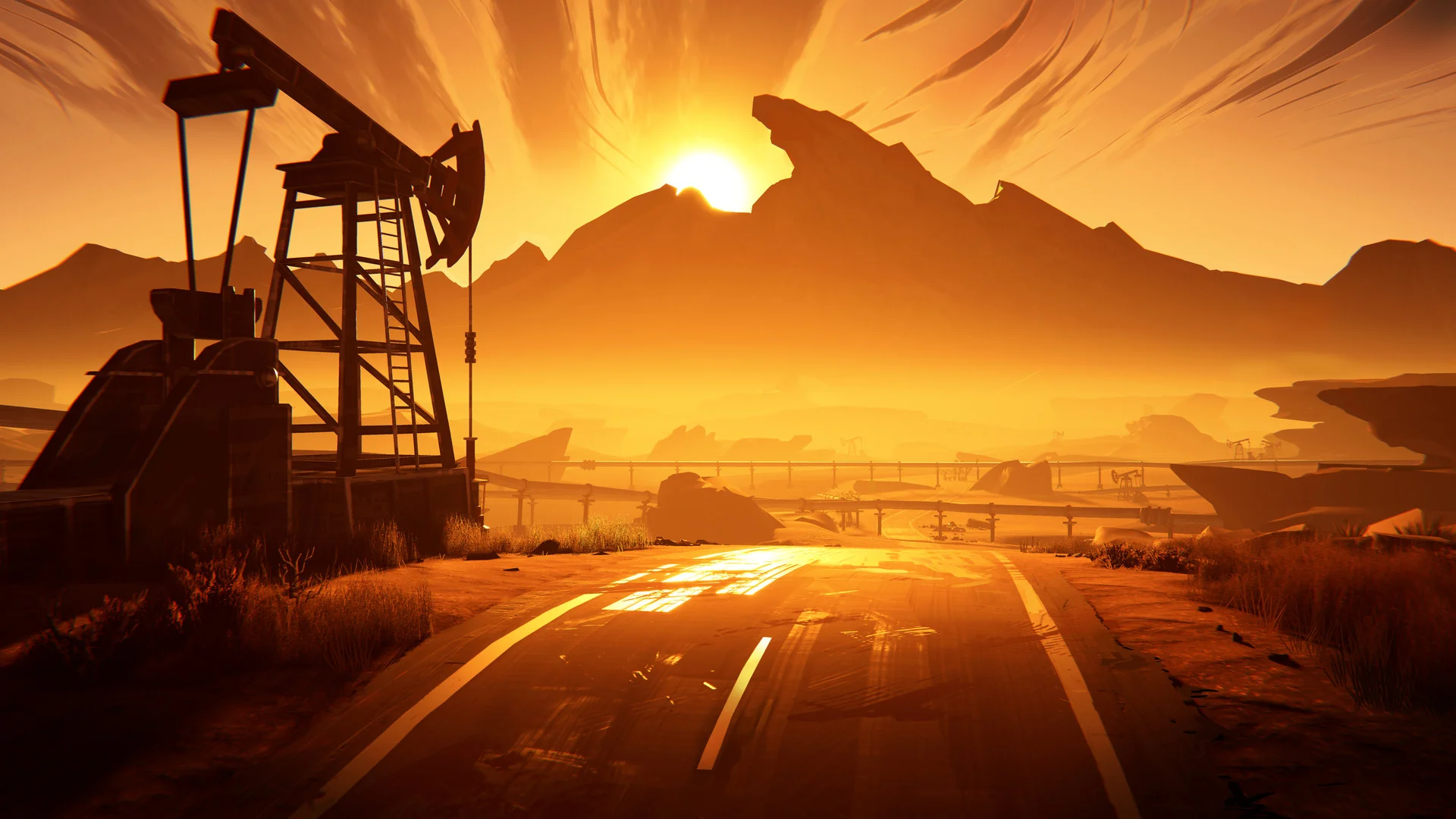

Road 96

Performance
1080p (Full HD)
1440p (2K / QHD)
4K (Ultra HD)

Requirements Check


Recommendations
Your hardware doesn't meet minimum requirements for this game.
Average FPS: resolution vs quality settings
| Ultra | High | Medium | Low | |
|---|---|---|---|---|
| 4K Ultra HD | 15 | 19 | 23 | 32 |
| 1440p QHD | 28 | 35 | 44 | 60 |
| 1080p Full HD | 43 | 56 | 69 | 94 |
Cell color: green is 120+ FPS, teal is 60+, amber is 30+, red is below 30. Cards marked Estimated above have no measured row and are scaled from your GPU benchmark percentile.
Performance Analysis: Road 96 on Your System
Intel Core i5-11400F and Intel Arc B390 form an unusual pairing for Road 96, a 2021 adventure release, and the recorded data tells a story of a CPU comfortably above average paired with graphics hardware near the bottom of the database charts. The pairing ranks 3302 out of 3713 tested combinations for this game, which immediately signals that the GPU side of the equation is the constraint. The i5-11400F sits in the 71st percentile of all CPUs with an average benchmark score of 17177, while the Arc B390, an integrated graphics solution built on Intel's Xe3-LPG architecture at 3 nm, lands in just the 9th percentile of all GPUs with an average score of 1482. That gap defines the experience.
Similar Performance Alternatives
On the processor side, the Core i5-11400F's average score of 17177 places it in a tight cluster of chips that would deliver near-identical results in Road 96. The AMD EPYC 7H12 scores 17120, a difference of only 0.3 percent. The Intel Core i5-12450H averages 17239, 0.4 percent ahead. The AMD Ryzen 3 PRO 8300G sits 0.6 percent ahead at 17278, and the Intel Core Ultra 7 164U trails by 0.6 percent at 17074. Any of these processors would behave effectively the same as the i5-11400F in this game, because Road 96's frame rates here are gated by graphics throughput rather than CPU muscle. The i5-11400F brings 6 cores and 12 threads with a 4.40 GHz boost clock, a Cinebench R23 multi-core score of 14340, and a single-core score of 2024, all of which exceed what this adventure title demands.
The graphics side is where alternatives matter. The Arc B390's 3DMark Steel Nomad DX12 score of 1482 puts it within 1.3 percent of the NVIDIA GeForce GT 520MX (1463), 1.5 percent of the NVIDIA GeForce 800M (1460), 2.5 percent of the NVIDIA GeForce GT 625 OEM (1446), and 2.7 percent of the NVIDIA GeForce GT 710 (1443). Systems built around any of these graphics solutions would produce Road 96 frame rates within a few percent of the numbers recorded here. The Arc B390 offers 1536 shading units, 12 ray tracing cores, a 2500 MHz boost clock, 7.680 TFLOPS of FP32 compute, and DirectX 12 Ultimate support, yet its percentile placement shows where that lands in absolute terms: near the entry level of the entire database.
FAQ
Q: Can this PC run Road 96 at 1080p?
A: Yes. At 1920x1080, the Low preset averages 94 FPS and Medium averages 69 FPS, both clearing the 60 FPS threshold. High averages 56 FPS and Ultra averages 43 FPS, so the two top presets fall short at that resolution.
Q: Is Road 96 playable at 1440p on this hardware?
A: Barely. The Low preset at 2560x1440 averages exactly 60 FPS, meeting the playable threshold with no headroom. Medium drops to 44 FPS, High to 35 FPS, and Ultra to 28 FPS.
Q: Can this configuration handle 4K?
A: No. At 3840x2160, frame rates range from 32 FPS on Low down to 15 FPS on Ultra, with Medium at 23 FPS and High at 19 FPS. No preset at 4K comes close to 60 FPS.
Q: How stable are frame rates at Medium settings?
A: The recorded Medium data includes minimum and maximum figures. At 1080p, Medium runs between 59 and 79 FPS around an average of 69. At 1440p, Medium spans 37 to 50 FPS around an average of 44. At 4K, Medium sits between 20 and 27 FPS around an average of 23.
Q: How does the CPU compare to the GPU in this pairing?
A: The CPU is far stronger relative to its class. The i5-11400F ranks in the 71st percentile of all CPUs, while the Arc B390 ranks in the 9th percentile of all GPUs. The CPU is not the limiting factor in Road 96 at any tested resolution.
Q: What generation of hardware is this?
A: The Core i5-11400F is a Rocket Lake desktop processor released in March 2021, built on Intel's 14 nm process with a 65 W TDP and a Socket 1200 interface. The Arc B390 is an integrated graphics solution on the Panther Lake architecture, using a 3 nm process, with an 80 W TDP and system-shared memory.
Measured FPS Breakdown
At 1920x1080, the Arc B390 manages 94 FPS average on the Low preset, 69 FPS on Medium with a recorded range of 59 to 79 FPS, 56 FPS on High, and 43 FPS on Ultra. The Medium result is the sweet spot: it clears 60 FPS on average, though the minimum of 59 shows the frame rate occasionally dips just below the threshold during more demanding scenes.
At 2560x1440, performance compresses significantly. Low delivers 60 FPS, precisely at the playable line. Medium falls to 44 FPS with a 37 to 50 FPS range, High drops to 35 FPS, and Ultra manages 28 FPS. The Medium frame-time envelope at 1440p never touches 60 even at its recorded maximum, meaning dips below 40 FPS are part of the experience at that setting.
At 3840x2160, the results make 4K impractical. Low averages 32 FPS, Medium 23 FPS with a range of 20 to 27, High 19 FPS, and Ultra 15 FPS. Even the fastest 4K result is barely half the 60 FPS target.
The scaling pattern across presets is consistent at every resolution. At 1080p, moving from Low to Ultra costs 51 FPS, a drop of more than half. At 1440p, Low to Ultra costs 32 FPS. At 4K, Low to Ultra costs 17 FPS. Resolution scaling shows a similar pattern: Low drops from 94 FPS at 1080p to 32 FPS at 4K, meaning rendering at four times the pixel count costs roughly two-thirds of the frame rate.
The Verdict
Yes, this PC can run Road 96, but only at reduced settings. The playable threshold is 60 FPS, and the verdict data shows which combinations clear it.
At 1920x1080, both Low and Medium qualify as playable, with Medium the best settings at an average of 69 FPS. That is the recommended configuration for this hardware: full HD resolution at Medium detail delivers a frame rate comfortably above the threshold with only rare dips, per the 59 FPS recorded minimum.
At 2560x1440, only the Low preset qualifies, averaging exactly 60 FPS. That is a pass, but with zero margin, and the absence of headroom means any scene heavier than the test sequence could push the average below the line.
At 3840x2160, no preset is playable. The list of qualifying settings at 4K is empty, with the best result being 32 FPS on Low. Road 96 at 4K on this pairing is not a viable option.
The overall combination rank of 3302 out of 3713 reinforces the conclusion: this is a low placement driven almost entirely by the graphics side, and the game is enjoyable only if the resolution and preset are chosen carefully.
CPU and GPU Roles
Road 96 is a graphics-bound game on this configuration at every resolution tested. The evidence is in the scaling. If the CPU were the bottleneck, raising the resolution would change little and lowering graphics settings would not help much. Instead, the data shows massive sensitivity to both.
From 1080p to 1440p at Medium, the average falls from 69 to 44 FPS, a loss of 25 FPS from the resolution increase alone. From 1440p to 4K at Medium, it falls again from 44 to 23 FPS, nearly halving. The same Medium preset loses two-thirds of its frame rate between 1080p and 4K, which is the signature of a GPU-limited scenario: the render load grows with pixel count, and the graphics solution cannot keep pace.
Preset scaling tells the same story. At 1080p, dropping from Ultra to Low nearly doubles the frame rate, from 43 to 94 FPS. At 1440p, Low to Ultra spans 60 down to 28 FPS. A CPU-limited configuration would show compressed results across presets, because the processor's per-frame work does not change much with detail settings. Here the spread is enormous.
The Core i5-11400F has ample headroom for this title. Its single-thread results, including a Cinebench R23 single-core score of 2024, a Geekbench single-core score of 1777, and a PassMark single-thread score of 2981, are strong, and its multi-thread results, including 14340 in Cinebench R23 multi-core, 7737 in Geekbench multi-core, and 16908 in PassMark multithread, far exceed the demands of an adventure game. Its 3DMark CPU scaling data, from 868 single-thread up to 5652 at max threads, shows a processor ready to feed far faster graphics hardware. The Arc B390, with its system-shared memory and 9th percentile ranking, is decisively the component holding frame rates down. Upgrading the graphics side while keeping this CPU would transform the Road 96 experience; the reverse would change nothing.
Best Settings per Resolution
At 1920x1080, the best settings are Medium, delivering an average of 69 FPS. This is the most demanding preset that stays at or above 60 FPS at full HD, and it clears the threshold by 9 FPS, enough to absorb the dips implied by the 59 FPS recorded minimum.
At 2560x1440, the best settings are Low, delivering an average of 60 FPS. Low is the only preset that reaches the threshold at 1440p, and it does so exactly, with no recorded headroom.
At 3840x2160, there are no best settings. No preset, from Low upward, reaches 60 FPS, with Low topping out at 32 FPS. The optimal play configuration for this hardware is 1920x1080 at Medium, and players who want extra smoothness can drop to Low for the 94 FPS average recorded at that setting.