
Instant compatibility check with FPS benchmarks and optimization tips
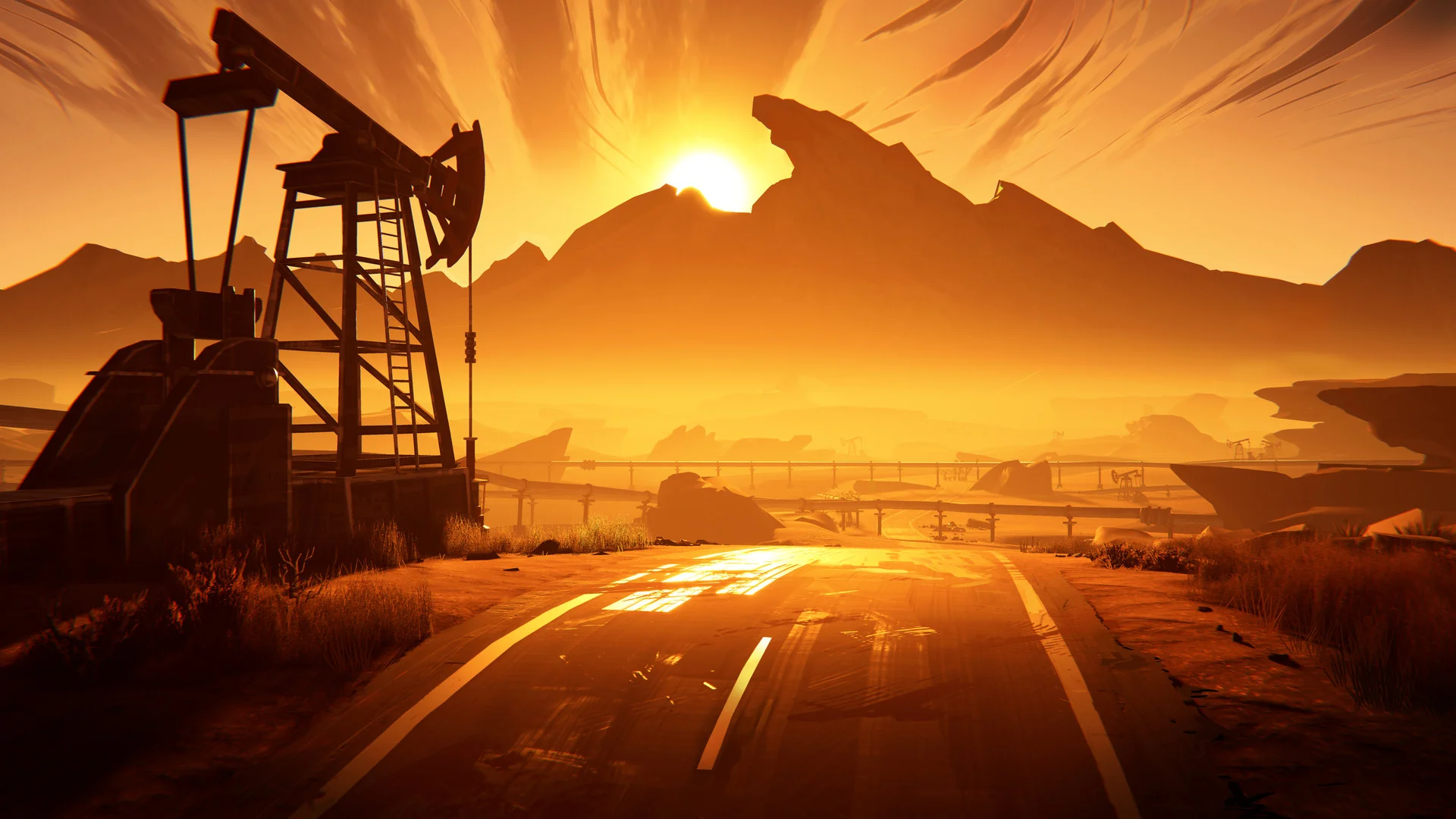

Road 96

Performance
1080p (Full HD)
1440p (2K / QHD)
4K (Ultra HD)

Requirements Check


Recommendations
Your hardware doesn't meet minimum requirements for this game.
Average FPS: resolution vs quality settings
| Ultra | High | Medium | Low | |
|---|---|---|---|---|
| 4K Ultra HD | 15 | 19 | 23 | 32 |
| 1440p QHD | 28 | 35 | 44 | 60 |
| 1080p Full HD | 43 | 56 | 69 | 94 |
Cell color: green is 120+ FPS, teal is 60+, amber is 30+, red is below 30. Cards marked Estimated above have no measured row and are scaled from your GPU benchmark percentile.
Performance Analysis: Road 96 on Your System
The AMD Ryzen 5 8400F paired with the Intel Arc B390 presents a highly specific performance profile in Road 96. The recorded data shows a system that is heavily constrained by its graphics component, with playable performance only achievable at lower resolutions and settings. The Arc B390, operating as an integrated-class solution, delivers frame rates that are workable for a narrative-driven adventure title, but only when the graphical load is kept modest.
Measured FPS Breakdown
The benchmark results for this combination in Road 96 show a clear and predictable decline in performance as resolution and graphical fidelity increase. At 1920x1080, which is the most common gaming resolution, the system delivers its strongest results. With the Low preset, the average frame rate is 94 FPS, providing a very smooth experience. Moving up to the Medium preset, the average drops to 69 FPS, with recorded minimum and maximum values of 59 FPS and 79 FPS respectively. This suggests that while the average is solidly above the 60 FPS threshold, the occasional dip to 59 FPS means it is right on the edge of perfect smoothness. The High preset at this resolution yields an average of 56 FPS, which is just below the playable threshold, while the Ultra preset drops further to an average of 43 FPS, showing a significant performance cost for the highest settings.
At 2560x1440, the performance impact of the higher resolution is substantial. The Low preset is the only setting that achieves a playable average frame rate, coming in at exactly 60 FPS. This indicates that the system is working at its limit to maintain this level of performance. The Medium preset at this resolution averages 44 FPS, with a minimum of 37 FPS and a maximum of 50 FPS, demonstrating noticeable frame pacing inconsistencies. The High preset averages 35 FPS, and the Ultra preset falls to an average of 28 FPS. These figures illustrate a steep drop-off as settings are increased beyond Low.
At 3840x2160, 4K resolution, the system is clearly overwhelmed. Even the Low preset only manages an average of 32 FPS, which is far from a smooth experience. The Medium preset averages 23 FPS, with minimum and maximum values of 20 FPS and 27 FPS. The High preset averages 19 FPS, and the Ultra preset drops to a lowly 15 FPS. The data confirms that this combination is not suitable for 4K gaming, as all presets result in frame rates well below the playable threshold.
How This Combo Ranks
In the database's overall rankings for Road 96, this specific combination of the AMD Ryzen 5 8400F and Intel Arc B390 holds a rank of 3302 out of 3713 tested combos. This places it in the lower percentile of systems tested for this game, which is consistent with the performance data. The rank indicates that while there are systems that perform worse, a significant majority of hardware combinations tested will provide a better experience in Road 96. This low rank is almost entirely attributable to the GPU, which is a limiting factor at all resolutions. The CPU, by contrast, is a modern 6-core, 12-thread processor that performs its role without being a bottleneck, but it cannot compensate for the graphics card's lack of rendering power.
Best Settings per Resolution
Based on the recorded data, the optimal settings for a playable experience, defined as maintaining an average of at least 60 FPS, are as follows.
At 1920x1080, the most demanding preset that stays at or above 60 FPS is Medium, with an average frame rate of 69 FPS. This is the recommended choice for a balanced experience at this resolution, as it offers a significant visual improvement over the Low preset while still maintaining a comfortable frame rate cushion above the 60 FPS target.
At 2560x1440, the only playable preset is Low, which achieves an average of exactly 60 FPS. This is the best setting that can be used at this resolution. While it will provide a smooth experience, users will have to accept the lowest level of graphical detail to achieve it. Higher presets at this resolution all fall below the playable threshold.
At 3840x2160, there are no playable settings. The verdict data confirms that no preset at this resolution can maintain an average of 60 FPS, making 4K gaming unfeasible with this hardware combination.
Similar Performance Alternatives
Looking at the nearest rivals in the database provides context for how this hardware performs relative to other components. The Intel Arc B390's benchmark score of 1482 in 3DMark Steel Nomad is very closely matched by several older NVIDIA GPUs. The NVIDIA GeForce GT 520MX has an average score of 1463, a delta of 1.3% from the Arc B390. The NVIDIA GeForce 800M scores 1460, a 1.5% difference, and the NVIDIA GeForce GT 625 OEM scores 1446, a 2.5% delta. The NVIDIA GeForce GT 710 is also very close, with a score of 1443, a 2.7% difference. This indicates that the Arc B390's raw graphics performance is comparable to these older, low-end discrete GPUs, despite being a newer integrated design.
On the CPU side, the AMD Ryzen 5 8400F is a much stronger performer. Its average benchmark score of 25005 is nearly identical to its closest rivals. The AMD Ryzen 5 7500F scores 24964, a negligible 0.2% difference. The Intel Core i7-11850H scores 24935, a 0.3% delta, and the Intel Core i7-13620H scores 24911, a 0.4% delta. The AMD EPYC 9474F is slightly ahead with a score of 25103, a -0.4% delta from the 8400F. This suggests that in terms of processing power, the 8400F is on par with these other capable CPUs, and any differences in gaming performance would be minimal and well within the margin of error. The performance ceiling of this combo is firmly set by the GPU, not the CPU.
CPU and GPU Roles
The performance data clearly delineates the roles of the CPU and GPU in this system for Road 96. The GPU is the dominant factor in determining frame rates, and its limitations are exposed at every resolution. This is evident from the dramatic scaling of performance as resolution increases. At 1080p with the Low preset, the average frame rate is 94 FPS. When the resolution is increased to 1440p with the same Low preset, the frame rate drops to 60 FPS, a 36% reduction. Moving to 4K Low, the frame rate falls to 32 FPS, a 66% reduction from 1440p. This steep decline is a textbook sign of a GPU-bound scenario, where the graphics processor is unable to handle the increasing pixel count.
The CPU's role is secondary, but still important for maintaining a stable experience. The Ryzen 5 8400F is more than capable of feeding the GPU with frame data. Its high benchmark scores and strong single-thread performance ensure that it is not the bottleneck at lower resolutions. The fact that the system can achieve 94 FPS at 1080p Low suggests the CPU can handle high frame rates; it is the GPU that cannot keep up with more demanding settings. As settings are increased, the load on the GPU grows, and the frame rate drops accordingly, further confirming the GPU's role as the primary constraint. The CPU's performance is sufficient, but it cannot mitigate the GPU's hardware limitations.
The Verdict
This PC can run Road 96, but with significant caveats. The data shows that it is not a high-performance gaming system, and its capabilities are strictly limited by the Intel Arc B390 graphics solution.
At 1920x1080, the system is playable. The Medium preset is the best option, delivering an average of 69 FPS, which clears the 60 FPS threshold. The Low preset is also playable and offers much higher performance at 94 FPS. The High preset, with an average of 56 FPS, and the Ultra preset, with 43 FPS, are not recommended if a smooth experience is desired.
At 2560x1440, the system is barely playable. The only viable setting is Low, which achieves an average of exactly 60 FPS. This is the absolute limit of the hardware. Users at this resolution will have to sacrifice visual quality for performance.
At 3840x2160, the system is not playable. No preset reaches the 60 FPS target, with the best result being 32 FPS on Low. This resolution is not a realistic option for this hardware combination.
In summary, the AMD Ryzen 5 8400F and Intel Arc B390 can run Road 96 smoothly, but only at 1080p with Medium or Low settings, or at 1440p with Low settings. The processor is a solid foundation, but the graphics component is the definitive bottleneck, making this a system for lower-resolution, lower-fidelity gaming.