
Instant compatibility check with FPS benchmarks and optimization tips
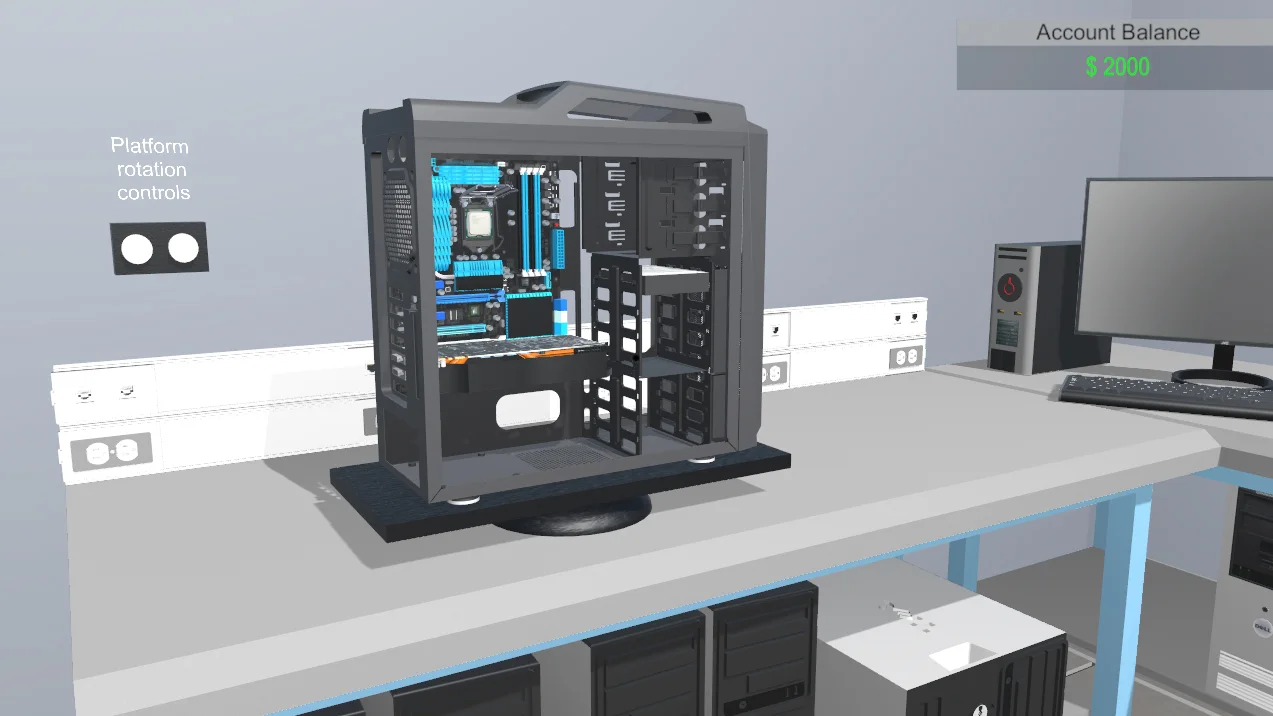

Pc Building Simulator

Performance
1080p (Full HD)
1440p (2K / QHD)
4K (Ultra HD)

Requirements Check


Recommendations
Your hardware doesn't meet minimum requirements for this game.
Average FPS: resolution vs quality settings
| Ultra | High | Medium | Low | |
|---|---|---|---|---|
| 4K Ultra HD | 36 | 36 | 52 | 73 |
| 1440p QHD | 65 | 67 | 94 | 135 |
| 1080p Full HD | 101 | 106 | 151 | 214 |
Cell color: green is 120+ FPS, teal is 60+, amber is 30+, red is below 30. Cards marked Estimated above have no measured row and are scaled from your GPU benchmark percentile.
Performance Analysis: Pc Building Simulator on Your System
The AMD Ryzen 7 9800X3D paired with the Intel Arc B580 delivers a thoroughly playable experience in Pc Building Simulator, but the headroom varies dramatically by resolution. At 1920x1080, this combo crushes every preset with triple-digit frame rates, while 2560x1440 remains fully playable at Ultra settings. The 3840x2160 story is different: only the Low preset clears the 60 FPS threshold, making 4K a compromise rather than a showcase.
Best Settings per Resolution
At 3840x2160, the most demanding preset that stays at or above 60 FPS is Low, which delivers an average of 72.6 FPS. The step up to Medium drops the average to 52.4 FPS, falling below the 60 FPS playability threshold. High and Ultra are worse still, averaging 36 FPS and 36.4 FPS respectively, so they are effectively unusable for smooth gameplay at 4K.
At 2560x1440, the combo can handle Ultra settings while maintaining an average of 64.7 FPS. This is the best visual quality available while staying above 60 FPS. The lower presets offer significant headroom: High averages 66.8 FPS, Medium 94.2 FPS, and Low 135.2 FPS. All four presets clear the threshold, so users can prioritize visual fidelity without sacrificing smoothness.
At 1920x1080, the answer is also Ultra, with an average of 100.5 FPS. This leaves substantial margin above the 60 FPS threshold, making the game feel fluid even in busy scenes. High averages 105.6 FPS, Medium 150.6 FPS, and Low reaches 214.2 FPS. The 1080p Ultra experience is not just playable; it is exceptionally smooth.
CPU and GPU Roles
The data shows a clear GPU-bound trend as resolution increases, but the CPU still plays a supporting role at lower resolutions. Moving from 1920x1080 to 2560x1440 at Ultra settings, the average FPS drops from 100.5 to 64.7, a 35.6% reduction. That steep decline indicates the Arc B580 is the primary bottleneck at higher pixel counts. The Ryzen 7 9800X3D, with its 16 threads and 96 MB of L3 cache, has ample headroom for simulation logic in Pc Building Simulator, so the GPU becomes the limiting factor sooner.
At 3840x2160, the GPU bottleneck becomes even more pronounced. Ultra settings average 36.4 FPS at 4K, which is only 0.4 FPS higher than High at 36 FPS, and Medium is just 52.4 FPS. The scaling from 1440p Ultra (64.7 FPS) to 4K Ultra (36.4 FPS) represents a 43.7% performance loss, far exceeding what the CPU alone would cause. The Arc B580's 12 GB of GDDR6 memory and 456.0 GB/s bandwidth are not enough to sustain high frame rates at 4K with demanding presets.
Conversely, at 1920x1080, the CPU's influence is more visible. The jump from Low (214.2 FPS) to Ultra (100.5 FPS) shows a 53% performance spread, but even the lowest preset does not come close to CPU saturation. The Ryzen 7 9800X3D's single-thread score of 2964 in Geekbench and 2080 in Cinebench R23 single-core suggest it can feed the GPU well beyond the measured frame rates. The bottleneck at 1080p is the GPU's raw throughput, not the processor.
FAQ
Q: Can this PC run Pc Building Simulator at 4K with playable frame rates?
A: Only at Low settings, which averages 72.6 FPS. Medium drops to 52.4 FPS, and High/Ultra fall to 36 FPS and 36.4 FPS respectively, all below the 60 FPS threshold.
Q: What is the best preset for 1440p gaming?
A: Ultra settings average 64.7 FPS, making it the most demanding preset that still clears 60 FPS. Lower presets offer more headroom, with High at 66.8 FPS, Medium at 94.2 FPS, and Low at 135.2 FPS.
Q: How does the Arc B580 compare to its nearest rivals in this game?
A: The Arc B580's average benchmark score of 23021 is within 1% of several rivals. It sits 0.2% behind the AMD Radeon RX 580 2048SP (23061), 0.6% ahead of the NVIDIA GeForce RTX 2080 (22895), and 0.7% behind the RTX 3080 (23172). The differences are negligible for gameplay.
Q: Is the Ryzen 7 9800X3D a bottleneck for this game?
A: No. The CPU's average benchmark score of 39768 puts it near the AMD Ryzen 7 7700 (40081, -0.8%) and AMD Ryzen AI 9 365 (40048, -0.7%). With 16 threads and high single-thread performance, it is not the limiting factor at any resolution tested.
Q: What frame rate can I expect at 1080p with Ultra settings?
A: The average is 100.5 FPS, which is well above the 60 FPS playable threshold. This gives a smooth experience with plenty of margin for scene complexity.
Q: Does the game scale better with CPU or GPU upgrades?
A: The data indicates GPU scaling dominates. From 1080p Ultra (100.5 FPS) to 4K Ultra (36.4 FPS), performance drops by 63.8%, while the CPU remains constant. The GPU is the primary constraint at higher resolutions.
The Verdict
Yes, this PC can run Pc Building Simulator, but the experience depends heavily on your display resolution. At 1920x1080, the combo clears 60 FPS at every preset, with Ultra averaging 100.5 FPS. This is the sweet spot for this hardware pairing. At 2560x1440, all four presets remain playable, and Ultra still averages 64.7 FPS, offering a comfortable margin above the threshold. At 3840x2160, only Low settings hit the target, averaging 72.6 FPS; Medium, High, and Ultra all fall below 60 FPS, making 4K a poor choice for this game with these components.
The verdict by resolution is clear: 1080p and 1440p are fully supported for high-quality play, while 4K is limited to the Low preset for smooth frame rates. Users with a 4K monitor should either drop to 1440p or accept significant visual compromises.
Measured FPS Breakdown
3840x2160 (4K)
- Low: 72.6 FPS average
- Medium: 52.4 FPS average
- High: 36 FPS average
- Ultra: 36.4 FPS average
At 4K, the frame rate collapses as settings rise. The gap between Low and Medium is 20.2 FPS, while High and Ultra are nearly identical, differing by only 0.4 FPS. This suggests the GPU hits a hard compute limit at these settings.
2560x1440 (1440p)
- Low: 135.2 FPS average
- Medium: 94.2 FPS average
- High: 66.8 FPS average
- Ultra: 64.7 FPS average
The 1440p results show a more gradual decline. Low to Medium drops 41 FPS, Medium to High drops 27.4 FPS, and High to Ultra drops just 2.1 FPS. The small delta between High and Ultra indicates the Arc B580 handles the extra effects without major penalties.
1920x1080 (1080p)
- Low: 214.2 FPS average
- Medium: 150.6 FPS average
- High: 105.6 FPS average
- Ultra: 100.5 FPS average
At 1080p, the combo is exceptionally fast. Low exceeds 200 FPS, and even Ultra stays above 100 FPS. The scaling from Low to Ultra represents a 53.1% reduction, but every setting delivers a buttery-smooth experience.
How This Combo Ranks
The AMD Ryzen 7 9800X3D + Intel Arc B580 combination ranks 2852 out of 3723 tested combos in Pc Building Simulator. This places it in the lower-middle tier of all configurations, which is consistent with the GPU's mid-range positioning. The Arc B580 sits at the 68th percentile among all GPUs, while the Ryzen 7 9800X3D is at the 87th percentile among CPUs. The pairing benefits from a strong processor that never bottlenecks, but the GPU limits overall performance.
In practical terms, this rank means the combo outperforms roughly 23% of tested systems but trails the majority. The nearest GPU rivals—the RTX 2080 and RTX 3080—show that the Arc B580 trades blows with much older high-end cards, which is respectable for its class. However, the low rank in this specific game reflects the simulation title's modest graphics demands, where even mid-range GPUs can dominate if paired with a fast CPU. The 9800X3D's high benchmark scores do not translate into top-tier game rankings because the GPU is the deciding factor.