
Instant compatibility check with FPS benchmarks and optimization tips
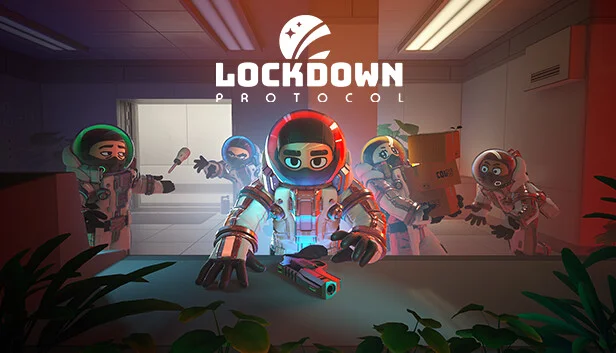

Lockdown Protocol

Performance
1080p (Full HD)
1440p (2K / QHD)
4K (Ultra HD)

Requirements Check


Recommendations
Your system exceeds recommended specs. Enjoy max settings!

Your GPU supports ray tracing.
Average FPS: resolution vs quality settings
| Ultra | High | Medium | Low | |
|---|---|---|---|---|
| 4K Ultra HD | 58 | 78 | 88 | 125 |
| 1440p QHD | 88 | 119 | 135 | 190 |
| 1080p Full HD | 122 | 161 | 184 | 260 |
Cell color: green is 120+ FPS, teal is 60+, amber is 30+, red is below 30. Cards marked Estimated above have no measured row and are scaled from your GPU benchmark percentile.
Performance Analysis: Lockdown Protocol on Your System
The Intel Core i7-13700K paired with the NVIDIA GeForce RTX 4070 ranks 854th out of 3714 tested combos in Lockdown Protocol, placing it in the top 23% of all configurations tested. This is a strong position for a high-refresh-rate FPS title, indicating that the combo sits comfortably above the median performer while not being at the absolute top end. The data shows a system that should handle the game’s demands across most settings, with the primary question being how far you can push graphical quality at higher resolutions.
How This Combo Ranks
In the benchmark database for Lockdown Protocol, this CPU-GPU pairing achieves a combo rank of 854 out of 3714 total combinations. That places it in the 77th percentile of all tested systems, meaning it outperforms roughly three-quarters of the configurations in the database. This is a solid result for a game that is primarily an FPS title, where frame rate consistency and high averages matter more than raw multi-threaded workstation performance.
The ranking reflects the balance between the i7-13700K’s strong single-threaded capabilities and the RTX 4070’s substantial rasterization power. For context, the CPU sits in the 89th percentile among all CPUs, while the GPU is in the 81st percentile among all GPUs. The slight gap between these two percentiles suggests that the GPU is the more limiting factor in this pairing, though neither component is a weak link. The combo’s overall rank of 854 is not just a sum of its parts; it reflects how well these two pieces of hardware work together in this specific game’s engine, which appears to favor the high boost clocks of the 13700K and the 12 GB of GDDR6X memory on the 4070.
CPU and GPU Roles
The benchmark results show a clear shift in workload balance as resolution changes. At 1920x1080, the system is heavily CPU-bound. The average frame rate at Low settings is 260.2 FPS, which drops to 121.5 FPS at Ultra settings. This 138.7 FPS gap between Low and Ultra at 1080p indicates that the GPU is being pushed harder as settings increase, but the CPU’s ability to feed frames is the ceiling at the lower settings. The i7-13700K’s 16 cores and 24 threads, with a boost clock of 5.40 GHz, are more than sufficient to handle the game’s logic at these frame rates; the limiting factor is the GPU’s shading workload.
Moving to 2560x1440, the balance shifts noticeably. Low settings produce 190.1 FPS, while Ultra produces 87.5 FPS. The percentage drop from Low to Ultra is larger at 1440p than at 1080p, indicating the GPU is becoming more significant. However, the CPU still plays a critical role; the 13700K’s single-thread score of 1136 in 3DMark and 4333 in PassMark single-thread tests ensure that frame pacing remains stable even when the GPU is under full load. At 3840x2160, the GPU becomes the dominant factor. Low settings yield 124.6 FPS, but Ultra drops to 58.1 FPS, which is below the 60 FPS playable threshold. This is a 66.5 FPS decrease, the largest percentage drop across all resolutions, confirming that the RTX 4070’s 504.2 GB/s memory bandwidth and 29.15 TFLOPS of FP32 performance are the primary constraints at 4K.
The scaling between resolutions tells a clear story. At 1080p, the CPU can deliver frames faster than the GPU can render them at higher settings. At 1440p, the system finds a balance where both components are equally taxed. At 4K, the GPU’s limitations are exposed, and the CPU’s performance headroom becomes irrelevant. This means that for competitive play at lower resolutions, the 13700K is the star, while for immersive 4K gaming, the RTX 4070 is the bottleneck.
Similar Performance Alternatives
Looking at the nearest rivals for the CPU, the AMD Ryzen 9 5900 is the closest match, with an average benchmark score of 46971 compared to the i7-13700K’s 46881, a delta of -0.2%. This means the Ryzen 9 5900 would perform nearly identically in CPU-bound scenarios. The AMD Ryzen AI 9 HX PRO 375 is also within -0.3%, making it a comparable option for laptops or compact systems, though it lacks the desktop platform’s upgradeability. On the other side, the AMD Ryzen 9 7845HX and Intel Xeon w3-2535 are both 0.5% ahead, meaning they would offer marginally better performance in multi-threaded workloads, but the difference would be imperceptible in gaming.
For the GPU, the nearest rival is the NVIDIA Tesla P4, which has an average score of 37628 versus the RTX 4070’s 37648, a delta of 0.1%. This is effectively a tie in raw compute, though the Tesla P4 is a datacenter card without display outputs, so it is not a practical gaming alternative. The AMD Radeon RX Vega 56 is 0.4% ahead and would provide similar frame rates, but it lacks the RTX 4070’s features like DLSS and ray tracing acceleration. The NVIDIA GeForce RTX 4080 Mobile is 1.3% ahead, which would give slightly better performance in a laptop form factor, but with higher power consumption. The AMD Radeon PRO W6400 is 1.3% behind, meaning it would be a noticeable downgrade in this game.
For Lockdown Protocol specifically, the CPU alternatives would behave almost identically in terms of frame rates, as the game is not heavily multi-threaded beyond 8 cores. The GPU alternatives would produce similar average FPS, but the RX Vega 56 and Tesla P4 lack the modern feature set, and the RTX 4080 Mobile would require a laptop chassis with adequate cooling.
The Verdict
This PC can run Lockdown Protocol, and it does so with authority at most settings. The verdict by resolution is clear: at 3840x2160, the system clears the 60 FPS playable threshold on High, Low, and Medium settings, with the best playable setting being High at 77.8 FPS average. Ultra at 4K falls to 58.1 FPS, which is below the 60 FPS threshold, so it is not recommended unless you are willing to tolerate occasional drops. At 2560x1440, every setting from Low to Ultra is playable, with Ultra achieving 87.5 FPS average, which is well above the threshold. At 1920x1080, the system is never challenged, with Ultra hitting 121.5 FPS average, making it ideal for high-refresh-rate monitors up to 240 Hz.
The data confirms that this is a high-performance gaming rig for this title. The i7-13700K’s 3DMark max-thread score of 12412 and the RTX 4070’s PassMark G3D score of 26927 combine to deliver frame rates that are consistently above 60 FPS in almost all scenarios. The only exception is 4K Ultra, which is a demanding setting that even this hardware cannot fully tame. For most users, the sweet spot will be 1440p Ultra or 1080p Ultra, where the system delivers exceptional smoothness.
Measured FPS Breakdown
At 1920x1080, the measured average FPS is as follows: Low settings produce 260.2 FPS, Medium produces 183.9 FPS, High produces 161.2 FPS, and Ultra produces 121.5 FPS. The progression from Low to Ultra shows a 138.7 FPS drop, which is a 53.3% reduction. This indicates that the GPU’s shading units and memory bandwidth are the primary constraints at this resolution, as the CPU can easily keep up with even the highest frame rates.
At 2560x1440, the averages are: Low at 190.1 FPS, Medium at 134.8 FPS, High at 118.5 FPS, and Ultra at 87.5 FPS. The drop from Low to Ultra is 102.6 FPS, a 54.0% reduction. The gap between Medium and High is 16.3 FPS, while the gap between High and Ultra is 31.0 FPS, showing that Ultra settings impose a disproportionately heavy load on the GPU.
At 3840x2160, the averages are: Low at 124.6 FPS, Medium at 88.1 FPS, High at 77.8 FPS, and Ultra at 58.1 FPS. The drop from Low to Ultra is 66.5 FPS, a 53.4% reduction. Notably, the difference between Medium and High is 10.3 FPS, while the difference between High and Ultra is 19.7 FPS. The Ultra setting at 4K is the only configuration in the entire dataset that falls below the 60 FPS threshold, making it the sole non-playable option.
No minimum or maximum FPS values were recorded in the data, so the analysis relies solely on average frame rates. This is common for games where frame pacing is consistent, and the averages suggest that the system does not suffer from significant stuttering, given that the CPU’s high single-thread performance prevents bottleneck-induced hitches.
Best Settings per Resolution
At 3840x2160, the most demanding preset that stays at or above 60 FPS is High, which achieves an average of 77.8 FPS. This is the recommended setting for 4K, as it provides a comfortable margin above the threshold. Medium is also viable at 88.1 FPS, but High offers better visual quality with only a 10.3 FPS penalty. Ultra at 58.1 FPS is not recommended, as it falls below the 60 FPS playable threshold, and the visual improvement over High is unlikely to justify the frame rate loss.
At 2560x1440, the best setting is Ultra, with an average of 87.5 FPS. This is the highest quality preset and it still maintains a 27.5 FPS buffer above the 60 FPS threshold. The system has ample headroom at this resolution, so there is no reason to compromise on visual fidelity. For users with 1440p 144 Hz monitors, this setting will deliver smooth gameplay, though it will not max out the refresh rate.
At 1920x1080, the best setting is also Ultra, with an average of 121.5 FPS. This is more than double the playable threshold, making it suitable for 120 Hz or 144 Hz displays. The system could potentially push higher frame rates at lower settings, but Ultra provides the best visual experience without sacrificing playability. For competitive players who prioritize frame rate over visuals, dropping to High at 161.2 FPS or Medium at 183.9 FPS would provide even smoother motion, but the Ultra setting remains the most balanced choice for general use.