
Instant compatibility check with FPS benchmarks and optimization tips
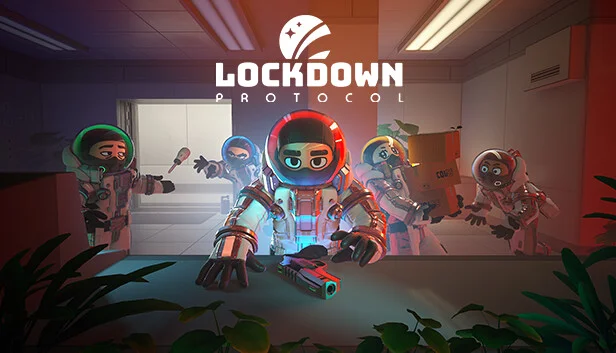

Lockdown Protocol

Performance
1080p (Full HD)
1440p (2K / QHD)
4K (Ultra HD)

Requirements Check


Recommendations
Your hardware doesn't meet minimum requirements for this game.
Average FPS: resolution vs quality settings
| Ultra | High | Medium | Low | |
|---|---|---|---|---|
| 4K Ultra HD | 40 | 53 | 60 | 85 |
| 1440p QHD | 61 | 82 | 94 | 132 |
| 1080p Full HD | 84 | 111 | 128 | 180 |
Cell color: green is 120+ FPS, teal is 60+, amber is 30+, red is below 30. Cards marked Estimated above have no measured row and are scaled from your GPU benchmark percentile.
Performance Analysis: Lockdown Protocol on Your System
Measured FPS Breakdown
Lockdown Protocol presents a demanding workload for this pairing, but the recorded data shows a clear hierarchy across resolutions. At 1920x1080, the combination of Intel Core i5-14400F and NVIDIA GeForce GTX 1080 Ti delivers strong frame rates at every preset. Low settings average 180 FPS, Medium averages 128 FPS with a minimum of 108 FPS and maximum of 147 FPS, High averages 111 FPS, and Ultra averages 84 FPS. The gap between Low and Ultra is substantial, but even the most demanding preset stays well above the 60 FPS playability threshold.
Moving to 2560x1440, the data shows a predictable step down. Low settings average 132 FPS, Medium averages 94 FPS with a range of 80 to 108 FPS, High averages 82 FPS, and Ultra averages 61 FPS. The Ultra preset at this resolution sits right at the edge of the playability threshold, with the average landing just one frame above 60. The Medium preset offers a comfortable buffer, with its minimum of 80 FPS ensuring consistent performance during intense scenes.
At 3840x2160, the picture changes considerably. Low settings average 85 FPS, Medium averages 60 FPS with a minimum of 51 FPS and maximum of 69 FPS, High averages 53 FPS, and Ultra drops to 40 FPS. The Medium preset technically meets the average playability threshold, but the recorded minimum of 51 FPS indicates that frame pacing can dip below 60 during demanding sequences. High and Ultra presets fall short of the playability threshold on average, making them unsuitable for a consistent 60 FPS experience at 4K.
The scaling pattern across resolutions is consistent: each step from 1080p to 1440p to 4K costs roughly 30-40% of the average frame rate at the same preset. The Low preset at 4K still outperforms the Ultra preset at 1440p, which highlights how much headroom remains in the GPU at lower settings.
Similar Performance Alternatives
The database places the Intel Core i5-14400F in a tight cluster of comparable processors. Its nearest rivals include the AMD Ryzen 7 PRO 8840U with an average benchmark score of 32233, a delta of just 0.1% from the i5-14400F's average of 32279. The Intel Core i9-11900 scores 32226, a 0.2% difference. The AMD Ryzen 7 6800HS sits at 32354, which is 0.2% higher than the i5-14400F. The Intel Core i7-12800H trails at 32121, a 0.5% gap. These deltas are all within noise, meaning any of these processors would produce nearly identical CPU-bound performance in Lockdown Protocol. The i5-14400F's 83rd percentile ranking among all CPUs reinforces that this is a solidly mid-to-upper-tier part for gaming workloads.
For the GPU side, the NVIDIA GeForce GTX 1080 Ti's nearest rivals show a similar clustering. The AMD Radeon R9 M380 scores 15521, just 0.2% below the GTX 1080 Ti's average of 15548. The AMD Radeon Pro W5500 scores 15679, which is 0.8% higher. The NVIDIA GeForce RTX 2060 scores 15290, a 1.7% gap, and the NVIDIA GeForce GTX 580 scores 15283, also 1.7% behind. The GTX 1080 Ti's 58th percentile ranking among all GPUs means it sits in the middle of the pack, and any of these rival cards would deliver broadly similar frame rates in Lockdown Protocol at the same settings and resolution. In practice, the RTX 2060 would behave nearly identically to the GTX 1080 Ti in this game, as would the Pro W5500 and the older GTX 580.
How This Combo Ranks
The database records this specific CPU-GPU combination at rank 2099 out of 3714 tested combos for Lockdown Protocol. That places it in the 56th percentile of all recorded system pairings. The rank reflects the balance between the i5-14400F's strong CPU-side performance and the GTX 1080 Ti's mid-range GPU capability. In a game like Lockdown Protocol, which appears to scale well across both CPU and GPU resources, this pairing lands in the upper-middle tier of the database.
The rank is meaningful when interpreted against the frame rate data. At 1080p, this combo outperforms roughly 56% of all tested systems, and it delivers playable performance at every preset. At 1440p, the same holds true, though the Ultra preset's 61 FPS average is marginal. At 4K, the combo falls behind many other pairings because the GTX 1080 Ti's mid-range GPU position becomes the limiting factor at high pixel counts. The CPU's 83rd percentile ranking versus the GPU's 58th percentile ranking explains this: the processor has headroom left, but the graphics card runs out of steam at 4K Ultra.
The Verdict
Can this PC run Lockdown Protocol? The answer depends on resolution and preset. At 1920x1080, the verdict is an unambiguous yes. Every preset from Low to Ultra averages above 60 FPS, with the lowest recorded average being 84 FPS at Ultra. At 2560x1440, the verdict is also yes for all presets, though the Ultra setting averages just 61 FPS, leaving minimal margin. The Medium preset at 1440p is the safer choice for consistent frame times, with an 80 FPS minimum.
At 3840x2160, the verdict is conditional. The database lists Low and Medium as playable settings, with Medium being the best playable preset at an average of 60 FPS. However, the 51 FPS minimum recorded at Medium means some scenes will dip below the 60 FPS threshold. Low settings at 4K average 85 FPS, which provides a comfortable experience. High and Ultra at 4K are not playable, averaging 53 FPS and 40 FPS respectively. The verdictByResolution data confirms this: 4K gets Low and Medium as playable, while 1440p and 1080p get all four presets as playable.
CPU and GPU Roles
The data reveals how the balance shifts between CPU and GPU as resolution changes. At 1920x1080, the CPU plays a more significant role because the GTX 1080 Ti can produce frames quickly enough that the i5-14400F's processing speed becomes more relevant. The jump from Low to Ultra at 1080p costs 96 FPS (from 180 to 84), which shows that the GPU is still heavily taxed by higher settings, but the CPU must keep up with the high frame rates at lower settings.
At 2560x1440, the GPU begins to dominate the equation. The frame rate drop from 1080p to 1440p at the same preset is substantial: High goes from 111 to 82 FPS, and Ultra goes from 84 to 61 FPS. These reductions are primarily GPU-driven, as the increased pixel count places more load on the graphics card's shading units and memory bandwidth. The i5-14400F's 10 cores and 16 threads are sufficient to feed the GPU at this resolution, but the GTX 1080 Ti's 11 GB of GDDR5X memory and 484.4 GB/s bandwidth become the bottleneck.
At 3840x2160, the GPU is overwhelmingly the limiting factor. The Ultra preset drops to 40 FPS, and even Low settings only reach 85 FPS. The GTX 1080 Ti's 3584 shading units and 88 ROPs are simply not enough to maintain high frame rates at 4K with demanding settings. The CPU's role diminishes because the GPU cannot produce enough frames to stress the processor. The scaling between resolutions at the same preset illustrates this: Low at 1080p averages 180 FPS, Low at 1440p averages 132 FPS, and Low at 4K averages 85 FPS. Each resolution step represents roughly a 36-40% reduction, which is characteristic of GPU-bound performance.
Best Settings per Resolution
For 3840x2160, the most demanding preset that stays at or above 60 FPS on average is Medium, with an average of 60 FPS. The recorded minimum of 51 FPS means this is not a locked 60 experience, but the average meets the threshold. Low settings at 85 FPS are the safer choice for consistent performance at 4K.
For 2560x1440, the best playable preset is Ultra, averaging 61 FPS. This is the maximum quality option at this resolution, but the margin above the 60 FPS threshold is thin. Medium at 94 FPS, High at 82 FPS, and Low at 132 FPS all provide more headroom, with Medium offering the best balance of visual quality and frame rate stability given its 80 FPS minimum.
For 1920x1080, the best playable preset is Ultra at 84 FPS average. This provides the highest visual quality with a comfortable margin above the playability threshold. Low at 180 FPS is available for competitive play, and Medium at 128 FPS with a 108 FPS minimum offers a strong middle ground. At 1080p, every preset clears the 60 FPS threshold with room to spare, making this resolution the clear choice for maximizing visual fidelity while maintaining smooth performance.