
Instant compatibility check with FPS benchmarks and optimization tips
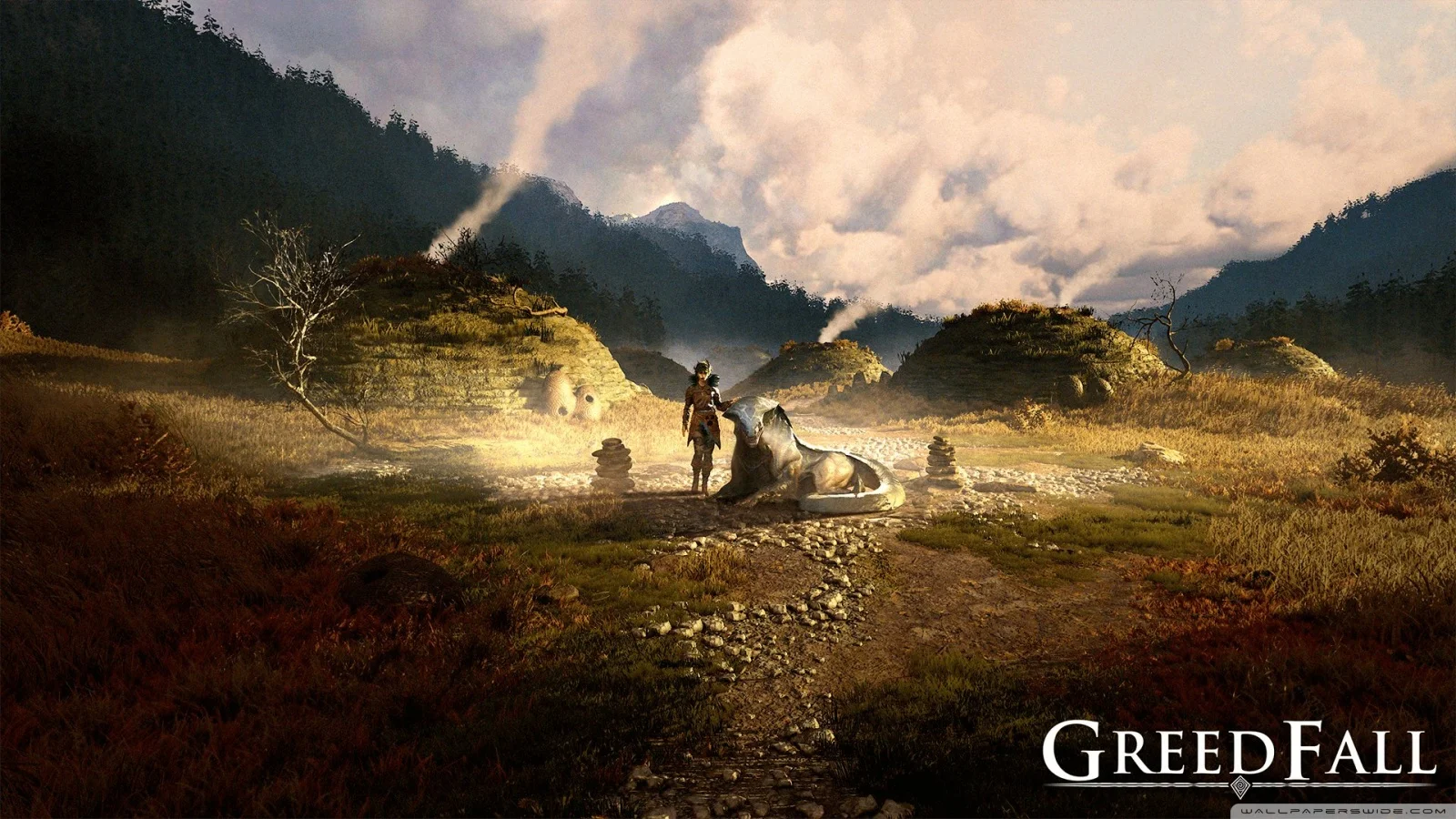

Greedfall

Performance
1080p (Full HD)
1440p (2K / QHD)
4K (Ultra HD)

Requirements Check


Recommendations
Your hardware doesn't meet minimum requirements for this game.
Average FPS: resolution vs quality settings
| Ultra | High | Medium | Low | |
|---|---|---|---|---|
| 4K Ultra HD | 27 | 46 | 47 | 61 |
| 1440p QHD | 48 | 71 | 79 | 104 |
| 1080p Full HD | 68 | 104 | 113 | 148 |
Cell color: green is 120+ FPS, teal is 60+, amber is 30+, red is below 30. Cards marked Estimated above have no measured row and are scaled from your GPU benchmark percentile.
Performance Analysis: Greedfall on Your System
The Intel Core i7-14700F and Intel Arc B580 combination produces a predictable but revealing performance curve in Greedfall, with the GPU becoming the dominant constraint as resolution climbs. At 1920x1080, the pairing is overwhelmingly capable, delivering 147.5 FPS at Low settings and still maintaining 68.4 FPS at Ultra. Moving to 2560x1440, the system remains comfortably playable across most presets, but the Ultra preset drops to 48 FPS, exposing the Arc B580’s limits. At 3840x2160, only the Low preset clears the 60 FPS threshold, with High and Medium falling to 45.6 and 47.2 FPS respectively, and Ultra collapsing to 27.2 FPS. The data indicates a hardware pairing that excels at mainstream resolutions but requires significant settings compromises for 4K gaming.
Measured FPS Breakdown
The measured frame rates for this combination in Greedfall show a clear pattern of scaling across resolutions and settings. At 1920x1080, the system delivers exceptional performance, with the Low preset producing 147.5 FPS average, Medium at 112.5 FPS, High at 103.5 FPS, and Ultra at 68.4 FPS. The gap between High and Ultra is substantial—a 35.1 FPS drop—suggesting that Ultra settings introduce rendering features that disproportionately tax the Arc B580. Even at the most demanding preset, the 68.4 FPS average comfortably exceeds the 60 FPS playable threshold, indicating that 1080p gaming is entirely unconstrained by this hardware.
At 2560x1440, the performance hierarchy remains intact but the margins tighten. Low settings yield 103.9 FPS, Medium drops to 78.8 FPS, and High settles at 71 FPS. The Ultra preset, however, falls to 48 FPS, a 23 FPS decline from High. This 1440p Ultra result is notably below the 60 FPS threshold, making it the first setting combination where the hardware fails to maintain playable frame rates. The relative consistency between Medium and High at this resolution—a difference of only 7.8 FPS—suggests that the Arc B580’s rasterization throughput is sufficient for moderate graphical loads, but the added complexity of Ultra settings pushes it past its effective limit.
The 3840x2160 results reveal the sharpest performance cliff. Low settings produce 61.2 FPS, which barely crosses the playable threshold. Medium drops to 47.2 FPS, High to 45.6 FPS, and Ultra plummets to 27.2 FPS. The transition from Low to Medium at 4K represents a 14 FPS loss, while the jump from High to Ultra costs 18.4 FPS. This data indicates that the Arc B580’s 12 GB memory buffer and 456.0 GB/s bandwidth are adequate for basic 4K rendering, but the compute demands of higher presets—particularly in an Action RPG with dense environments—quickly overwhelm the GPU’s 13.67 TFLOPS FP32 throughput.
FAQ
*Q: Can this PC run Greedfall at 60 FPS on Ultra settings at 1920x1080?*
A: Yes. The measured average FPS at 1920x1080 Ultra is 68.4, which exceeds the 60 FPS playable threshold by 8.4 FPS. This is the highest preset that achieves playable performance at this resolution.
Q: What is the best playable setting at 2560x1440?
A: High settings deliver 71 FPS average at 1440p, making it the most demanding preset that stays above 60 FPS. The Ultra preset at this resolution drops to 48 FPS, which is below the playable threshold.
Q: Is 4K gaming viable with this hardware combination?
A: Only at Low settings, which produce 61.2 FPS average at 3840x2160. All other presets—Medium at 47.2 FPS, High at 45.6 FPS, and Ultra at 27.2 FPS—fall below the 60 FPS threshold.
Q: How does the Intel Arc B580 compare to nearby GPUs in synthetic benchmarks?
A: The Arc B580’s average benchmark score of 23021 places it within 0.7% of the NVIDIA GeForce RTX 3080 (23172) and 0.6% ahead of the NVIDIA GeForce RTX 2080 (22895). It trails the AMD Radeon RX 580 2048SP by 0.2% (23061).
Q: What is the CPU’s performance percentile relative to all tested processors?
A: The Intel Core i7-14700F ranks in the 91st percentile across all CPUs, with an average benchmark score of 53620. Its nearest rivals include the AMD Ryzen 9 7900X (53288, 0.6% slower) and AMD EPYC 7313P (53206, 0.8% slower).
Q: Does the 14700F bottleneck the Arc B580 at any resolution?
A: The data does not indicate a CPU bottleneck. At 1080p, the frame rates scale consistently with GPU load, and the 14700F’s 20 cores and 28 threads with a 35122 Cinebench R23 multi-core score provide ample headroom. The performance drops at higher resolutions are attributable to GPU limits.
Similar Performance Alternatives
For the Intel Core i7-14700F, the nearest rivals based on average benchmark scores include the Intel Xeon 6505P (53701, 0.2% faster), Intel Xeon Phi 7290 (53469, 0.3% slower), AMD Ryzen 9 7900X (53288, 0.6% slower), and AMD EPYC 7313P (53206, 0.8% slower). All four processors sit within a 1% performance band of the 14700F, meaning any of these would deliver nearly identical CPU-bound behavior in Greedfall. The Ryzen 9 7900X is the most relevant consumer alternative, offering comparable multi-threaded performance for gaming workloads.
For the Intel Arc B580, the nearest GPU rivals are the AMD Radeon RX 580 2048SP (23061, 0.2% faster), NVIDIA GeForce RTX 3080 (23172, 0.7% faster), NVIDIA GeForce RTX 2080 (22895, 0.6% slower), and NVIDIA P106-100 (23249, 1% faster). The RTX 3080 and RTX 2080 are particularly interesting comparisons—both are older NVIDIA architectures that bracket the Arc B580’s performance. In Greedfall, a system with an RTX 3080 would likely produce nearly identical frame rates at each resolution and preset, while the RTX 2080 would be marginally slower but still within the same playability envelope.
The practical implication is that users with any of these alternative components would see similar gameplay experiences. The 14700F’s per-core performance, evidenced by its 4958 Cinebench R23 single-core score, ensures that even the slower rival CPUs would not meaningfully alter frame rates in this GPU-bound title. Similarly, the Arc B580’s position among these GPUs means that swapping to an RTX 2080 or RX 580 2048SP would not change the fundamental conclusion about which settings are playable at each resolution.
The Verdict
This PC can run Greedfall at playable frame rates across most common configurations, but the verdict depends heavily on resolution. At 1920x1080, the system achieves playable performance at all four presets—Low (147.5 FPS), Medium (112.5 FPS), High (103.5 FPS), and Ultra (68.4 FPS)—with every setting clearing the 60 FPS threshold. This makes 1080p gaming fully unrestricted, allowing users to enable maximum graphical fidelity without sacrificing smoothness.
At 2560x1440, the system remains playable at Low (103.9 FPS), Medium (78.8 FPS), and High (71 FPS), but the Ultra preset at 48 FPS falls below the 60 FPS threshold. Users targeting 1440p must choose between High settings at 71 FPS or Ultra at 48 FPS, with the former providing a better balance of visual quality and responsiveness.
At 3840x2160, only the Low preset (61.2 FPS) achieves playable performance. Medium (47.2 FPS), High (45.6 FPS), and Ultra (27.2 FPS) all fail to reach 60 FPS, making 4K gaming practical only with substantial graphical compromises. The 27.2 FPS Ultra result at 4K is particularly notable—it represents a 60.2% reduction from the 1080p Ultra score, highlighting the GPU’s inability to handle extreme pixel counts with high-detail settings.
Best Settings per Resolution
At 1920x1080, the best settings are Ultra, which produce 68.4 FPS average. This is the most demanding preset that stays at or above 60 FPS, and the 8.4 FPS margin provides adequate headroom for minor frame time spikes without dropping below playability.
At 2560x1440, the best settings are High, delivering 71 FPS average. This preset balances visual quality with performance, offering a 23 FPS improvement over Ultra (48 FPS) while still exceeding the 60 FPS threshold by a healthy margin.
At 3840x2160, the best settings are Low, which yield 61.2 FPS average. This is the only playable option at 4K, and the 1.2 FPS margin above the 60 FPS threshold is slim, meaning users should expect occasional dips below 60 FPS during demanding scenes.
How This Combo Ranks
This Intel Core i7-14700F + Intel Arc B580 combination ranks 2811 out of 3703 tested combos for Greedfall, placing it in the 24th percentile of all systems evaluated. This ranking reflects the Arc B580’s mid-tier position—its percentileVsAllGpus of 68 indicates it outperforms 68% of GPUs, but the combination still sits in the lower quartile of all CPU-GPU pairings tested for this game.
The rank is driven primarily by GPU performance. The 14700F’s 91st percentile CPU ranking contributes strong processor headroom, but Greedfall’s GPU-intensive rendering at higher resolutions means the Arc B580’s 68th percentile standing becomes the limiting factor. The 2811th rank suggests that while this system is fully capable of playing the game at 1080p and 1440p, many other tested combinations—particularly those with higher-tier GPUs—achieve superior frame rates at 4K and Ultra settings.
The gap between this combo’s CPU and GPU percentiles is instructive. A CPU in the 91st percentile paired with a GPU in the 68th percentile creates a system where processor headroom is largely unused at higher resolutions. The data implies that users seeking better Greedfall performance should prioritize GPU upgrades over CPU upgrades, as the 14700F is unlikely to be the bottleneck in any scenario.
CPU and GPU Roles
The division of labor between the Intel Core i7-14700F and Intel Arc B580 in Greedfall shifts dramatically across resolutions. At 1920x1080, the CPU’s strong single-thread performance—evidenced by its 4958 Cinebench R23 single-core score—ensures that frame rates are not processor-limited. The scaling from Low (147.5 FPS) to Ultra (68.4 FPS) at 1080p shows a 79.1 FPS range, indicating that the GPU is the primary determinant of performance across presets.
At 2560x1440, the GPU’s role becomes more pronounced. The frame rate range narrows to 55.9 FPS (from 103.9 at Low to 48 at Ultra), and the Ultra preset’s drop below 60 FPS confirms that the Arc B580’s compute resources are the limiting factor. The 14700F’s 20 cores and 28 threads provide ample capacity for the game’s AI, physics, and world simulation, but these workloads do not scale with resolution—meaning the CPU’s contribution remains constant while the GPU’s load increases.
At 3840x2160, the GPU is overwhelmingly dominant. The frame rate range compresses to 34 FPS (61.2 at Low to 27.2 at Ultra), and even the Low preset barely clears the 60 FPS threshold. The pixel throughput required at 4K—roughly 4 times that of 1080p—places enormous strain on the Arc B580’s 213.6 GPixel/s pixel rate and 13.67 TFLOPS FP32 compute. The CPU’s role here is reduced to feeding the GPU with draw calls and game logic, which the 14700F handles without issue given its 41317 Passmark multi-thread score.
The data suggests that in Greedfall, the CPU matters most at 1080p where high frame rates approach 150 FPS, but the GPU becomes the sole bottleneck at 1440p and 4K. The scaling pattern—where frame rates drop by roughly 30-40% when moving from 1080p to 1440p at the same settings, and another 40-50% from 1440p to 4K—indicates a GPU-bound workload. Users with this combination should focus GPU tuning efforts on higher resolutions, while CPU performance is sufficient for all tested configurations.