
Instant compatibility check with FPS benchmarks and optimization tips
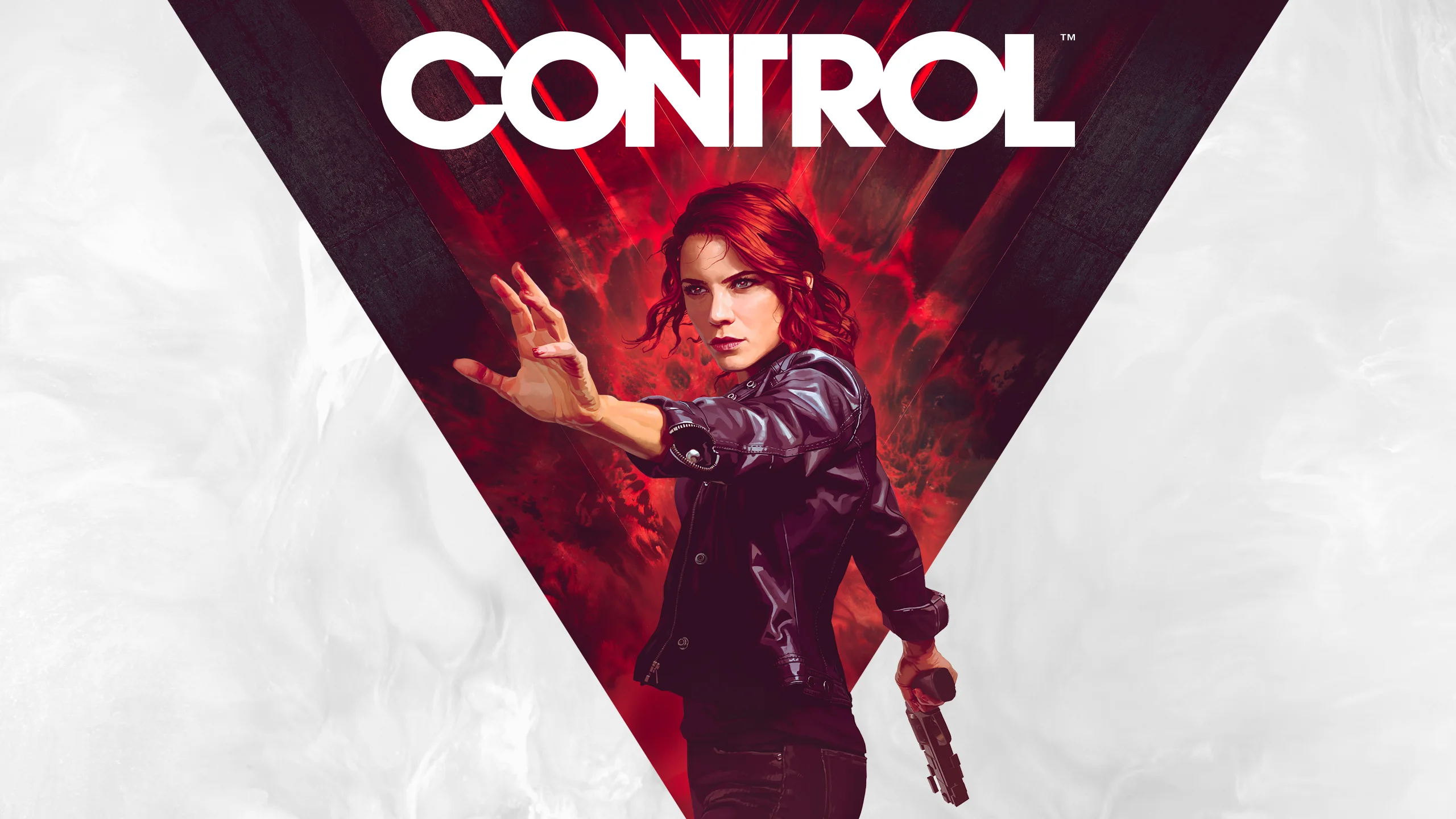

Control

Performance
1080p (Full HD)
1440p (2K / QHD)
4K (Ultra HD)

Requirements Check


Recommendations
Your hardware doesn't meet minimum requirements for this game.
Average FPS: resolution vs quality settings
| Ultra | High | Medium | Low | |
|---|---|---|---|---|
| 4K Ultra HD | 18 | 21 | 24 | 33 |
| 1440p QHD | 27 | 31 | 35 | 50 |
| 1080p Full HD | 36 | 41 | 46 | 65 |
Cell color: green is 120+ FPS, teal is 60+, amber is 30+, red is below 30. Cards marked Estimated above have no measured row and are scaled from your GPU benchmark percentile.
Performance Analysis: Control on Your System
The Intel Core i5-12400F paired with the Intel Arc B390 is a lopsided combination for Control. The CPU sits in the 73rd percentile of all processors in the database, a capable six-core, twelve-thread Alder Lake part with a 2.50 GHz base clock, a 4.40 GHz boost clock, and an 18 MB shared L3 cache. The GPU, by contrast, lands in just the 9th percentile of all graphics hardware measured, an integrated Xe3-LPG design on Intel's 3 nm Panther Lake silicon with 1536 shading units and no dedicated video memory of its own. The measured frame rates recorded for this pairing in Control reflect that imbalance: the processor is rarely the constraint, while the graphics side struggles everywhere except one narrow corner of the settings grid. The database contains real measurements, not estimates, and they tell a consistent story.
How This Combo Ranks
Out of 3720 tested hardware combinations in this game, this pairing ranks 3311. That places it deep in the bottom tier, and the reason is not the CPU. The Core i5-12400F carries an average benchmark score of 19039 across the database, which puts it in a statistical dead heat with processors like the AMD Ryzen 5 7535HS and effectively level with the Intel Core i5-1335U, the Intel Core 3 201E, and even the AMD EPYC 7773X on aggregate score. In single-threaded work it posts 909 points in 3DMark, 1680 in Cinebench R23 single-core, and 1964 in Geekbench single-core, all comfortably adequate for a 2019 action adventure title. Its multi-threaded credentials are equally solid: 12380 in Cinebench R23 multi-core, 9472 in Geekbench multi-core, and 19433 in PassMark multithreaded.
The Arc B390 is the anchor dragging the combination down. Its sole recorded 3DMark score of 1482 in the Steel Nomad DirectX 12 test puts it only marginally ahead of ancient hardware: roughly one percent ahead of the NVIDIA GeForce GT 520MX, about two percent ahead of the NVIDIA GeForce 800M and GT 625 OEM, and under three percent ahead of the GT 710. Those are not competitors a modern game wants to be measured against. The 80 W thermal design power and the system-shared memory arrangement mean the GPU borrows bandwidth from dual-channel system RAM, and Control's demanding Northlight engine exposes that weakness immediately.
Ranking 3311 of 3720 means the large majority of tested systems run this game better. The data is unambiguous about where the fault lies, and it is not in the Alder Lake processor.
FAQ
Q: Can the Core i5-12400F and Arc B390 run Control at 1080p?
A: Yes, but only at the lowest preset. At 1920x1080 on Low settings, the measured average is 65 FPS, the single result in the entire dataset that clears the 60 FPS playability threshold. Medium at 1080p averages 46 FPS, High averages 41 FPS, and Ultra averages 36 FPS.
Q: Is 1440p playable on this setup?
A: No. At 2560x1440 the best recorded result is 50 FPS on Low, followed by 35 FPS on Medium, 31 FPS on High, and 27 FPS on Ultra. None of these reach 60 FPS.
Q: Can this system handle 4K in Control?
A: Not even close. At 3840x2160 the averages are 33 FPS on Low, 24 FPS on Medium, 21 FPS on High, and 18 FPS on Ultra. The 4K verdict in the database lists zero playable settings.
Q: Which component is the bottleneck here?
A: The graphics side, clearly. The Core i5-12400F ranks in the 73rd percentile of all CPUs in the database, while the Arc B390 sits in the 9th percentile of all GPUs. The processor's benchmark scores rival far pricier chips on aggregate, but the integrated GPU trails even the GeForce GT 710 by only a small margin.
Q: Does the i5-12400F have an integrated GPU of its own as a fallback?
A: No. The F suffix marks this as the variant without integrated graphics, and the database lists its integrated graphics field as empty. In this pairing, the Arc B390 is the display adapter, and it is an IGP-class part sharing system memory over the dual-channel memory bus.
Q: Is the frame rate stable at playable settings?
A: At 1080p Medium, the recorded range runs from a minimum of 40 FPS to a maximum of 53 FPS, which is fairly tight but averages below the threshold. At 1080p Low, the 65 FPS average with no recorded dips below the playability line is the most consistent experience this combination offers in Control.
CPU and GPU Roles
Control at these settings is almost entirely a GPU problem for this hardware. The scaling data makes this plain. Moving from 1080p Low at 65 FPS down to 1440p Low at 50 FPS and then 4K Low at 33 FPS shows the frame rate collapsing as pixel count rises, which is the classic signature of a graphics-bound system. If the Core i5-12400F were the limiter, resolution changes would barely move the frame rate, since the CPU does the same work regardless of output resolution.
The preset scaling tells the same story from a different angle. At 1080p, dropping from Medium at 46 FPS to Low at 65 FPS recovers a large chunk of performance, and that gain comes from reducing the rendering workload, not the simulation workload. The i5-12400F, with six cores, twelve threads, and a 4.40 GHz boost clock, is more than sufficient for a 2019-release title in this genre. Its PassMark physics score of 1202 and its strong single-threaded results indicate the game logic, physics, and draw-call side of the equation is well covered.
The GPU is where the demands land. The Arc B390 is built on the Xe3-LPG architecture with 12 ray tracing cores and support for DirectX 12 Ultimate, so it technically exposes every feature Control uses, including its signature ray-traced effects at the Ultra preset. But feature support and throughput are different things. With 7.680 TFLOPS of FP32 compute, 60.00 GPixel/s of pixel fill, and system-shared memory with system-dependent bandwidth, the hardware simply cannot push Control's rasterization and ray tracing load at mainstream resolutions. That is why Ultra at 1080p lands at 36 FPS and why no setting at 1440p or 4K comes near 60.
The Verdict
The verdict by resolution is blunt. At 3840x2160, the list of playable settings is empty, and there is no best setting to recommend. At 2560x1440, the same applies: no preset clears 60 FPS. At 1920x1080, exactly one configuration qualifies, Low settings, delivering a measured 65 FPS average.
So, can this PC run Control? Technically yes, in the narrow sense that the game launches, renders, and produces playable frame rates in one specific configuration: 1080p at the Low preset. Anything beyond that, higher resolutions, richer presets, or the ray-traced Ultra experience the game is known for, is off the table on this hardware. Buyers expecting the full Control showcase, with its destructible environments and ray-traced reflections, should understand that the recorded data rules that out completely. This is a Low-settings, 1080p machine for this title, full stop.
Measured FPS Breakdown
All numbers below are measured averages from the database. Where minimum and maximum frame rates were recorded, they are noted; unmarked entries have no min/max data in the record.
1920x1080:
- Low: 65 FPS average, the only playable result in the entire dataset
- Medium: 46 FPS average, with a minimum of 40 and a maximum of 53
- High: 41 FPS average
- Ultra: 36 FPS average
2560x1440:
- Low: 50 FPS average, ten frames short of the threshold
- Medium: 35 FPS average, with a minimum of 30 and a maximum of 40
- High: 31 FPS average
- Ultra: 27 FPS average
3840x2160:
- Low: 33 FPS average, roughly half the playability target
- Medium: 24 FPS average, with a minimum of 20 and a maximum of 27
- High: 21 FPS average
- Ultra: 18 FPS average
The pattern is remarkably consistent. Each step up in resolution costs roughly a third of the frame rate at a given preset, and each step up in preset costs a handful of frames at a given resolution. The Medium rows, the only ones with recorded frame-time spread, show tight ranges: no more than thirteen frames between minimum and maximum at 1080p, ten at 1440p, and seven at 4K. That consistency means the experience is stable, just consistently slow once you leave the single playable configuration.
Best Settings per Resolution
1920x1080: Low is the answer, and the only answer. It delivers 65 FPS on average, the sole measured result at or above the 60 FPS threshold. Medium falls short at 46 FPS.
2560x1440: No preset qualifies. The best available is Low at 50 FPS, which still misses the threshold by ten frames. If 1440p is mandatory, the game will run below playable frame rates at every setting level on this hardware.
3840x2160: Nothing works. Low at 33 FPS is the ceiling, barely above half the target. The database records zero playable settings at this resolution.
The practical takeaway: this combination turns Control into a 1080p Low-settings game. The Core i5-12400F is doing its job, matching processors that rank far higher in price tiers on aggregate benchmark scores, but the Arc B390 cannot keep pace with a 2019 title that still stresses modern hardware. Anyone building around this CPU for gaming should treat a stronger discrete graphics solution as the first upgrade priority, because the recorded data shows the processor has headroom the current graphics configuration cannot use.